🧭 Factsheet
Route: From Lerwick to Kirkwall
Period: 18 May to 5 June 2026
Log: 128 nautical miles
Highlight: Tidal navigation course
📍 Our route & legs
Leg: Lerwick → Sumburgh (Grutness Voe)

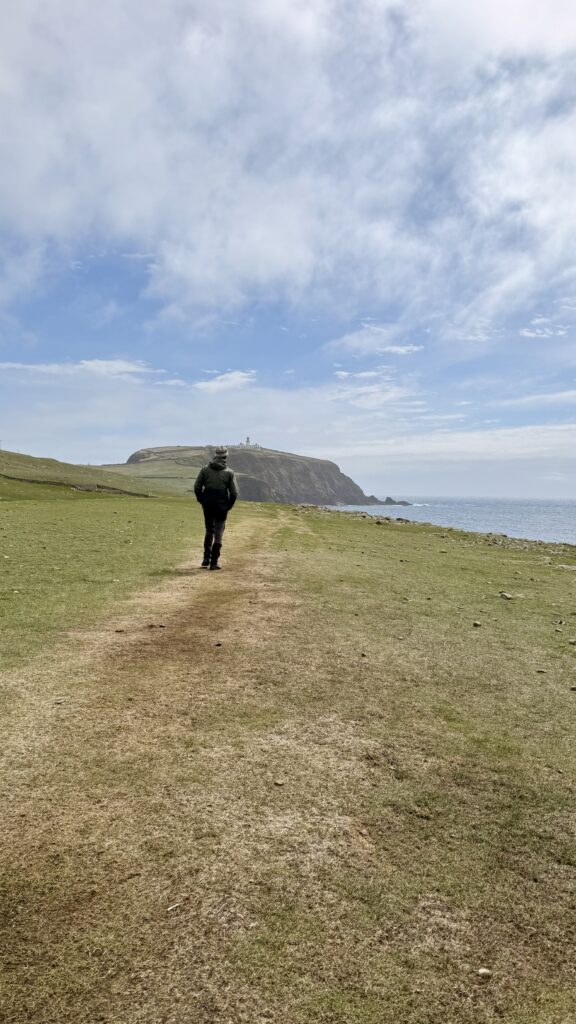
We had a lovely time in Shetland. We stayed in Lerwick and explored the archipelago from there on foot and by bus. What stressed us quite a bit was the fact that the wind was more or less constantly blowing from the south and we had to reach the Scottish mainland by mid-June. Otherwise we would definitely have used the southerly wind to explore a bit more of the north. We are saving that for our next visit.
Lerwick also brought us lots of nice and interesting encounters, especially with Martin from ONWO ONOC and the Kirchbergers, who have already sailed their Belle Epoche all around the world.
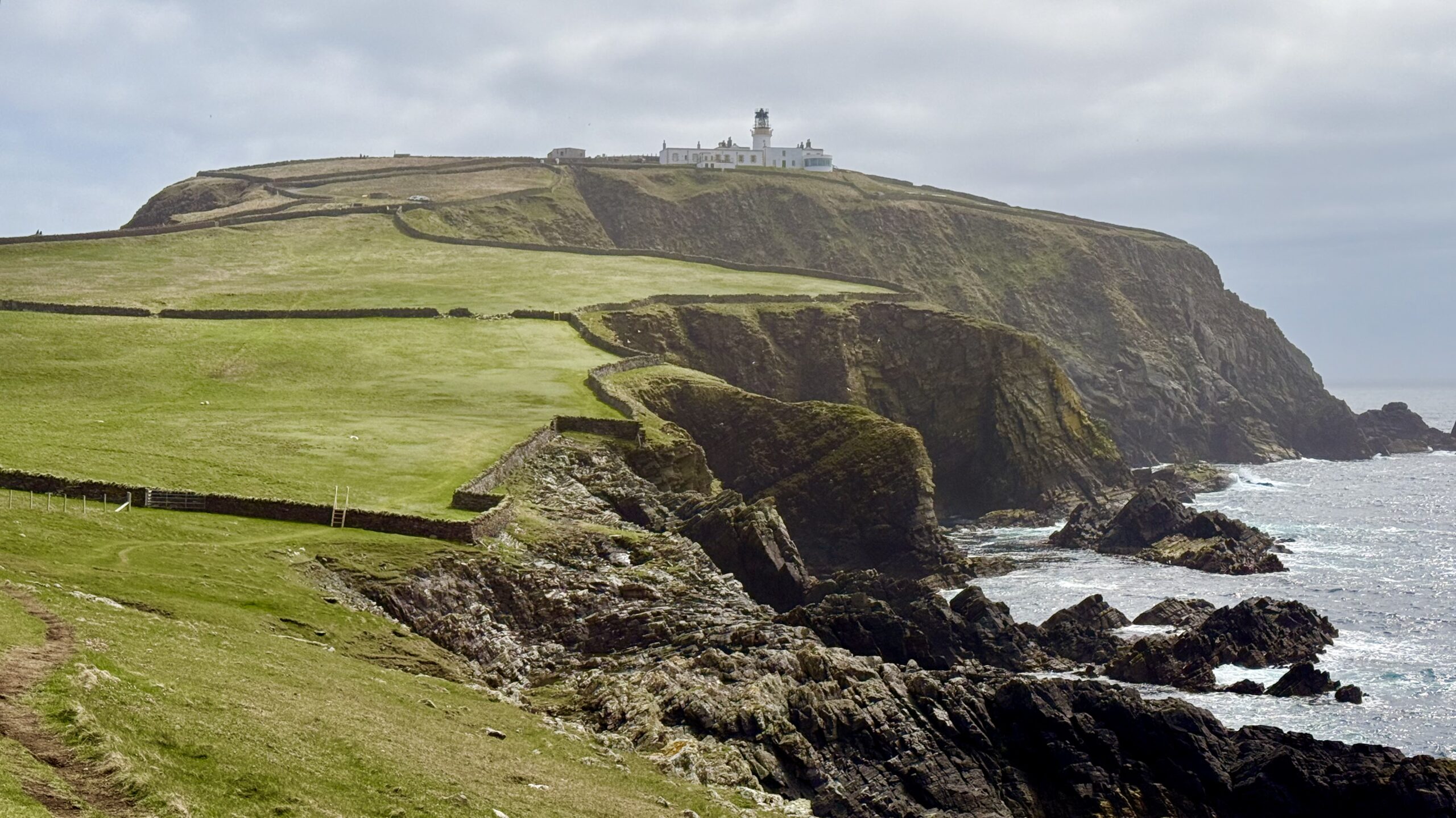
After a week in the harbour, it was time to move on and we set off for the Orkneys. With a south-westerly around 20 knots and sunshine we sailed down the coast – under genoa alone in the second reef – reaching up to 7 knots. On the way we thought: good that we do not have to go into a harbour. The anchorage by Sumburgh Airport offered us sufficient protection from the swell for the night. In terms of wind you are not really sheltered there because of the flat topography. It was a bit noisy with planes and helicopters taking off and landing, but also exciting. Fortunately, there were no flights at night.
Leg: Sumburgh (Shetland) → Whitehall (Orkney)
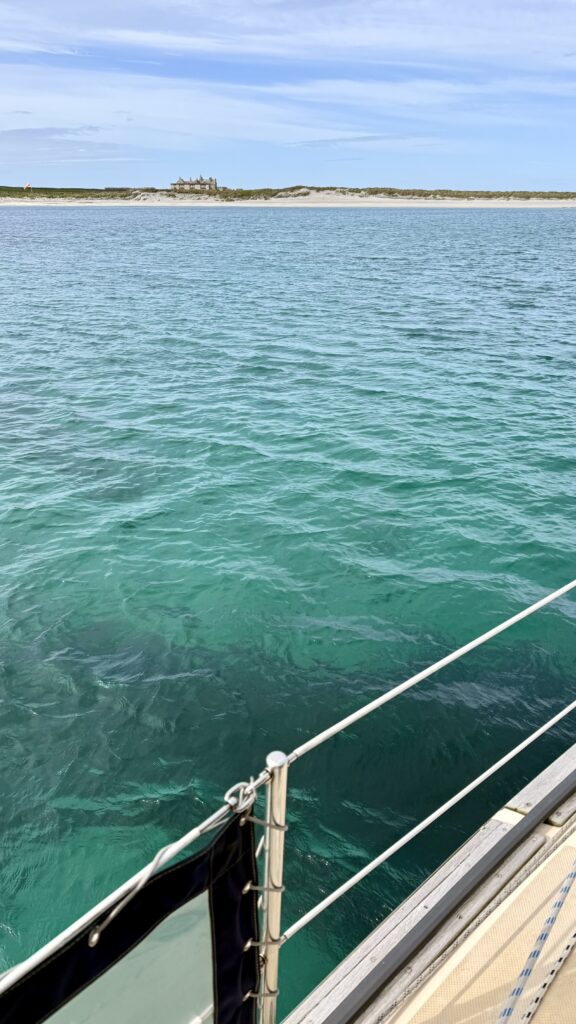
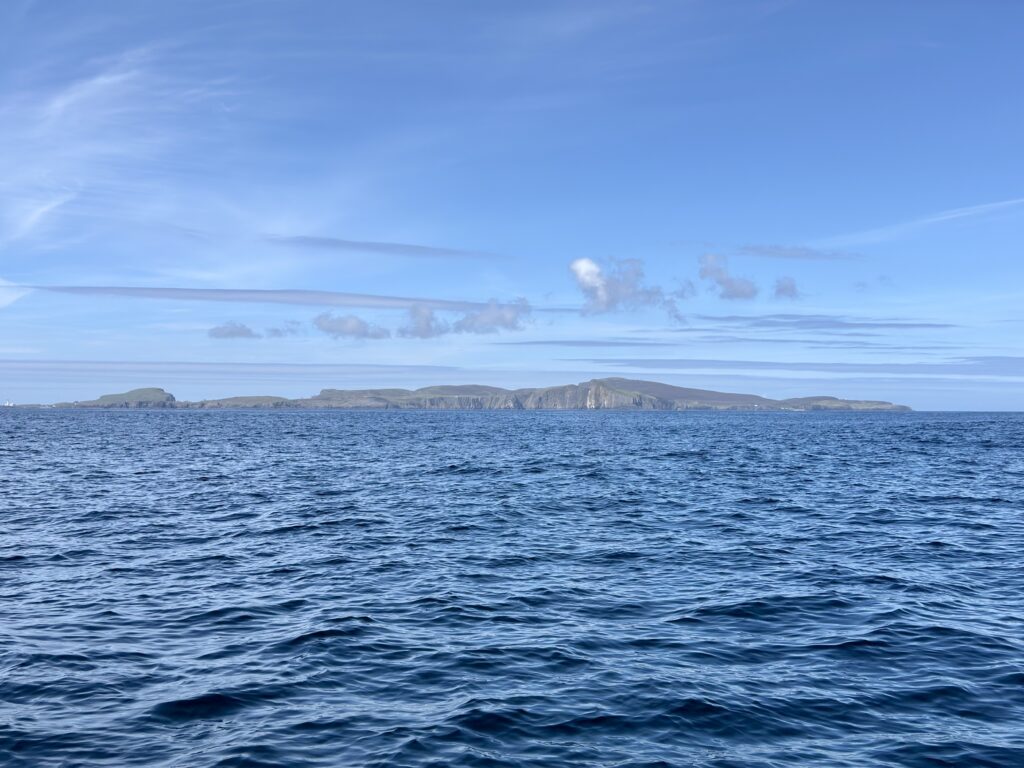
The next day we set course for the Orkneys. We had actually planned a stopover at beautiful Fair Isle, but there were works going on in the harbour basin, so the already scarce space at the pier was taken up by workboats and the bay suitable for anchoring had turned into a construction site. So we had to pass by and sail the 65 miles to the Orkneys in one go. At least we had chosen an (almost) perfect day for it. Almost, because the wind completely died shortly after we left. At times it was not even 5 knots, so we quickly ditched the idea of hoisting the gennaker. On the way we could watch puffins, gannets and guillemots and had a very relaxed time in the cockpit. In the evening I cooked us tasty ready-to-fry udon noodles with vegetables and tofu. A really good passage meal that you can prepare quickly without any prep. At 9 p.m. – with the typical mooring wind, of course – we picked up one of the visitors’ buoys off the coast of Whitehall (Stronsay).
Leg: Whitehall → Pierowall
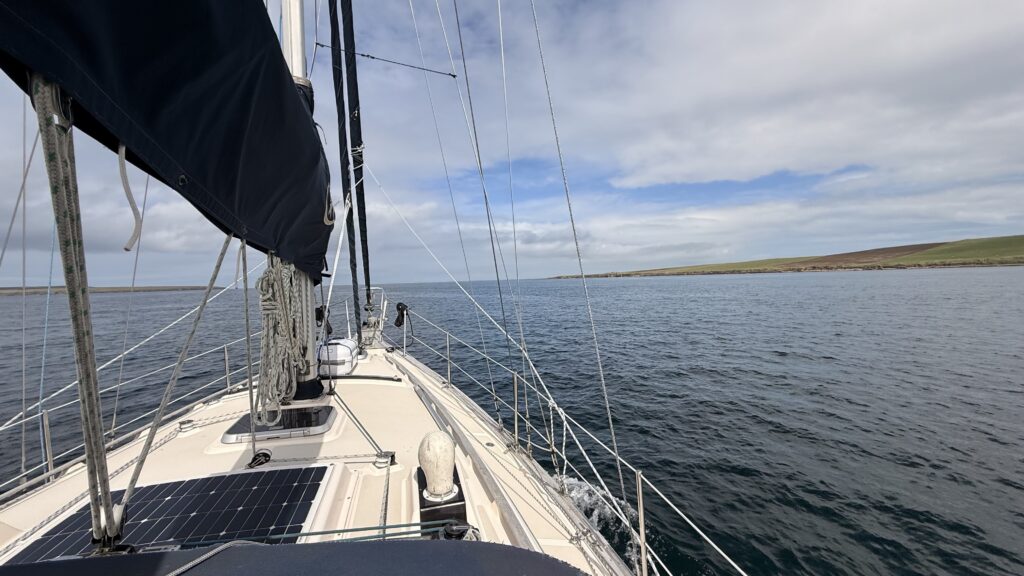
After three days of storm, which we safely rode out on the well-maintained buoy, we ventured for the first time into the tide-dominated island world of the Orkneys. We looked at the stream atlas and the tidal information in Navionics and planned our trip to the island of Westray. The stream was supposed to run with us the whole time and give us a brisk passage. As we turned into Eday Sound, the current became stronger. We were prepared for that as well.
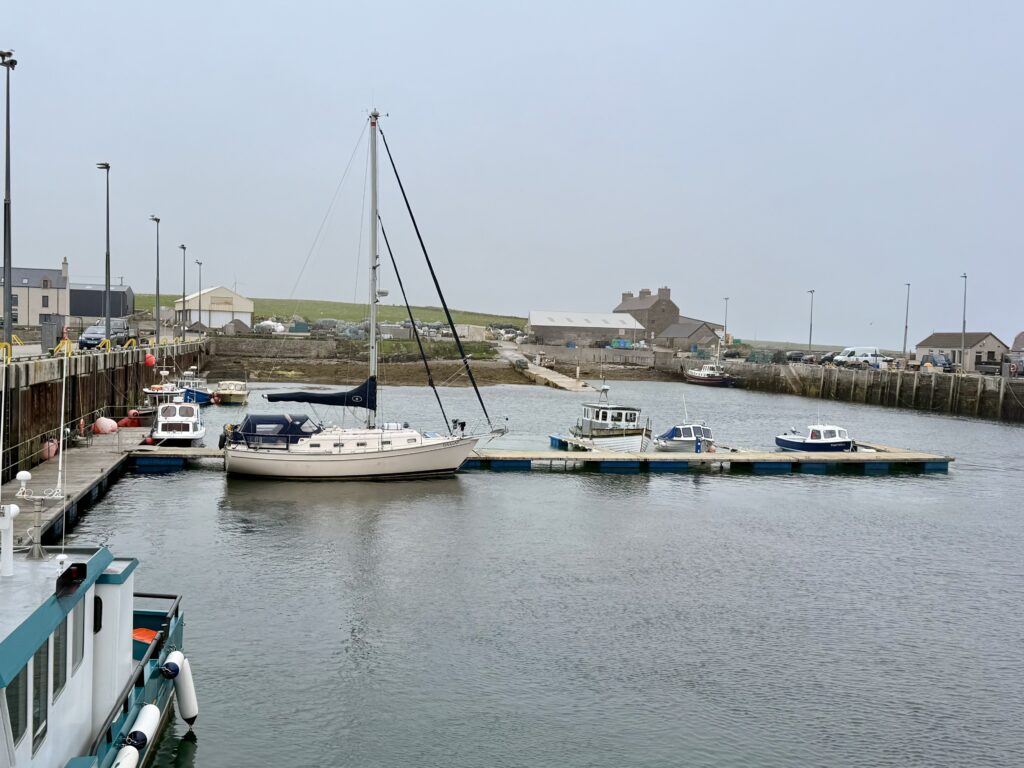
Ahead of us we saw breaking waves in the distance. We checked the chart but could not see any shallows that might have caused them. The tide was pushing us along at about 4 to 5 knots. From outside the North Sea met us with a long swell of around half a meter height. And only a few minutes later we learned the hard way what the sea and tides are capable of. Fortunately still within a rather moderate framework. The swell, actually quite harmless, piled up against the strong opposing current at the narrows in Lashy Sound into short, steep waves 1.5 to 2 metres high. When we saw the waves, I could only quickly dash below to get the lifejackets, and we clipped in in a hurry while Tommy bravely steered into them. A few waves broke over the bow, but our little TIAMAT took it in her stride. Just a few minutes later everything was calm again. Wow, lessons learned! We would never have considered this swell problematic. Hard to imagine what it is like here when it is higher or the wind is stronger. Once we felt safe again, we called Pierowall and were told that there was plenty of space in the small marina and we could just pick ourselves a berth alongside. Said and done.

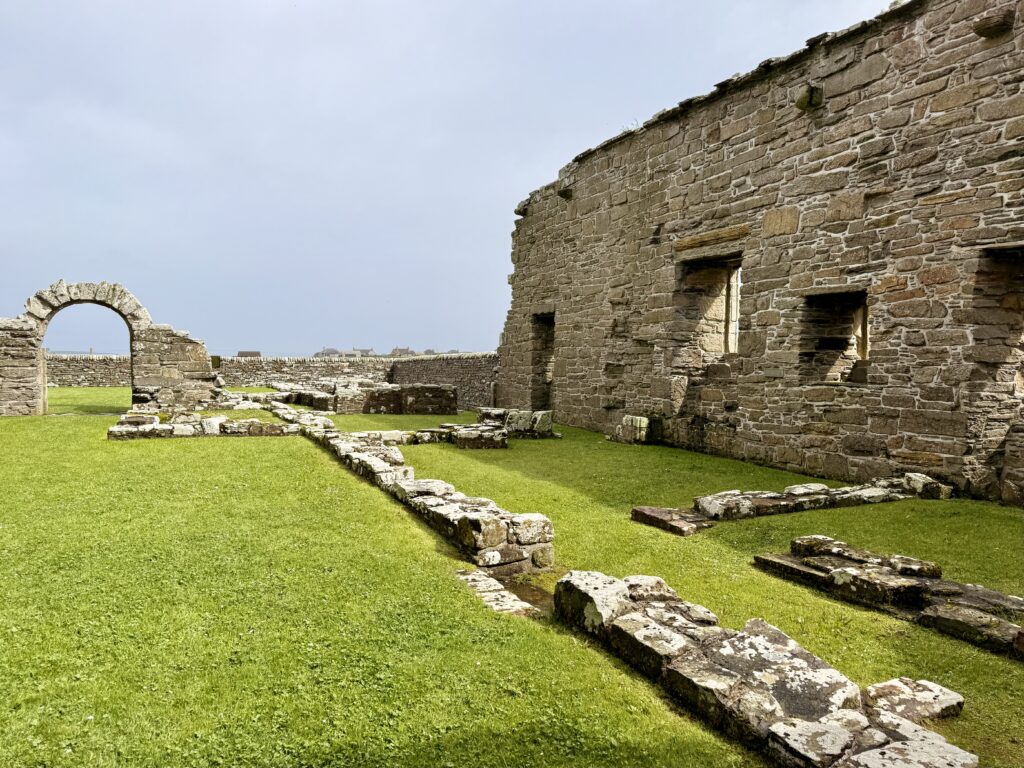
Leg: Pierowall → Kirkwall
After our lesson in tidal navigation, we did not want to leave anything to chance on our next trip. After all, our passage to Kirkwall would again take us through a few narrows and close to some tricky spots. And it happened to be full moon, so spring tide with extra strong currents. We waited a few more days just to be on the safe side. The weather was not right either.
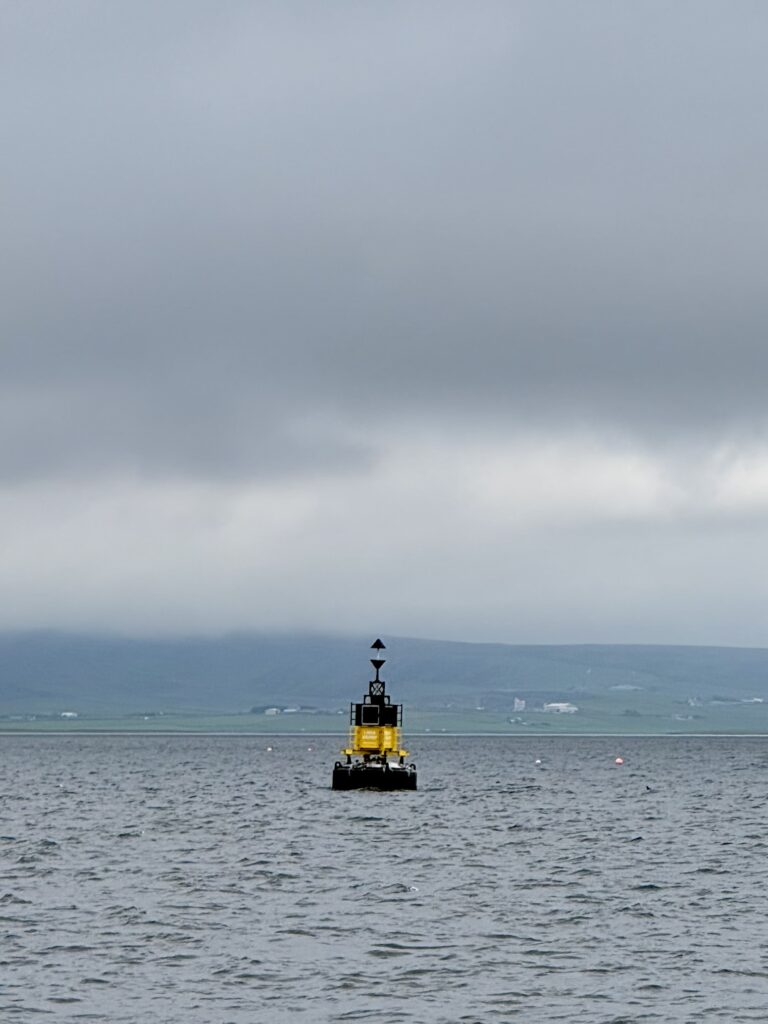
Along the coast of Westray we had virtually no current any more. Unfortunately the wind was more on the nose than we had expected, so the sails had to be packed away yet again. One critical point was the Faray Sound. We did not want any current against us there. It turns 1 h 45 m after HW Dover. So we planned our trip around this. That also fitted with the flow conditions in Westray Firth, which was to carry us on with moderate speeds all the way to Kirkwall Bay. That all worked very well. At the end of Faray Sound the stream pushed us into Westray Firth with 2 knots. Fog came in, but luckily we still had half to one nautical mile of visibility.
Unfortunately we did not manage to enter Kirkwall in time for high water, so we had to push against about half a knot of falling water. And of course, once again we had mooring wind right on the nose. We called Kirkwall Harbour on the radio and received the okay to enter. We had already been assigned a berth. After three attempts – which is what it takes to get a long-keeler without bow thruster into a box in a crosswind – we were tied up in Orkney’s capital.
🗺️ Special experiences & learnings
- Advanced tidal navigation: Until now we only knew it from the Wadden Sea. That was more like the basic course. Here we landed straight in the advanced class.
⚓ Our favourite place on this trip
- Lerwick
💡 Practical tips for fellow sailors
- Tide info: Easytide form the British Admiralty provides reliable tidal data.
🖼️ Gallery
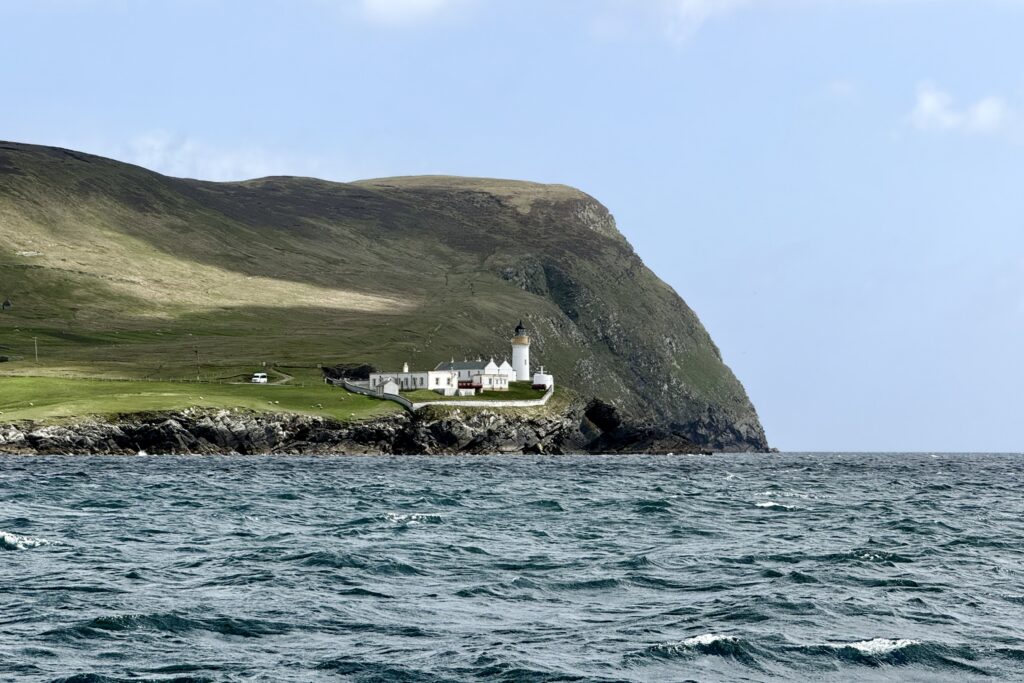
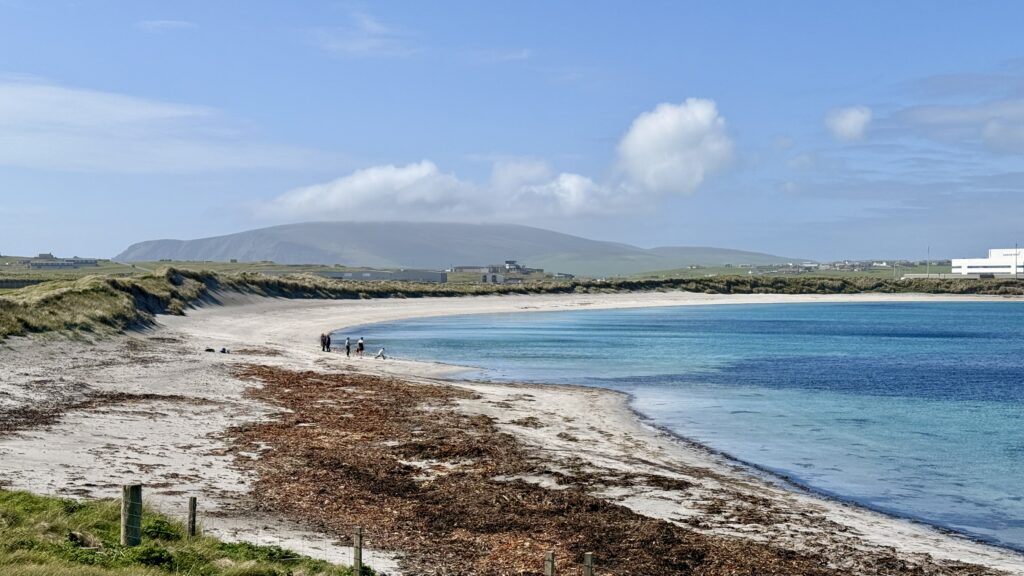
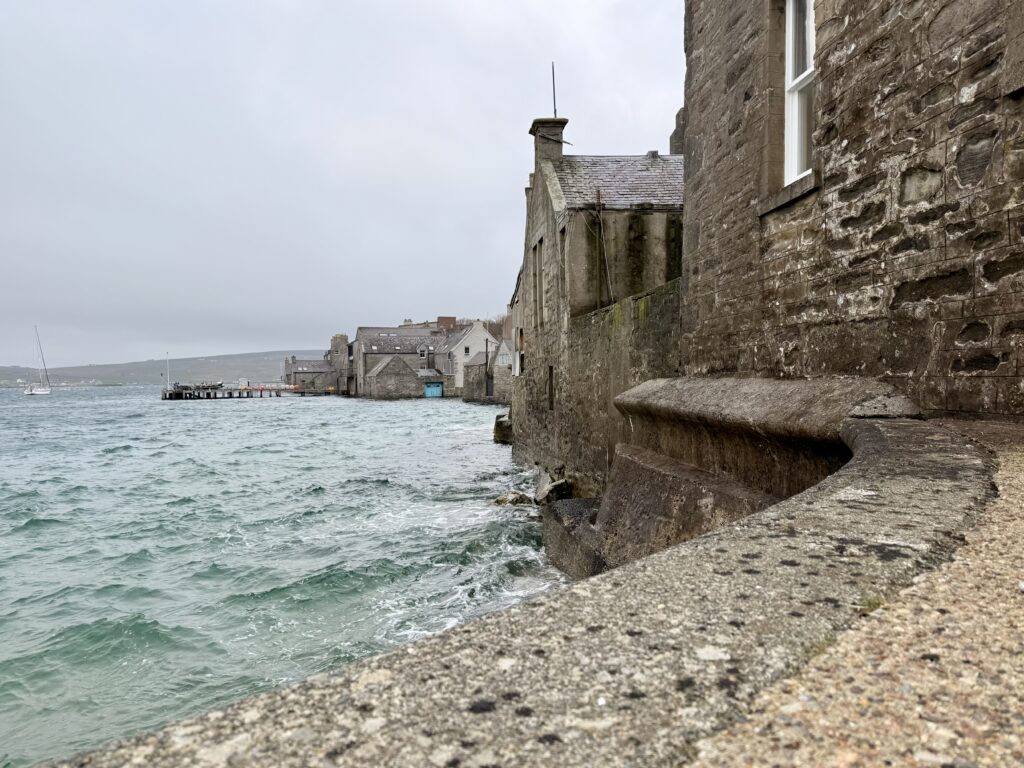
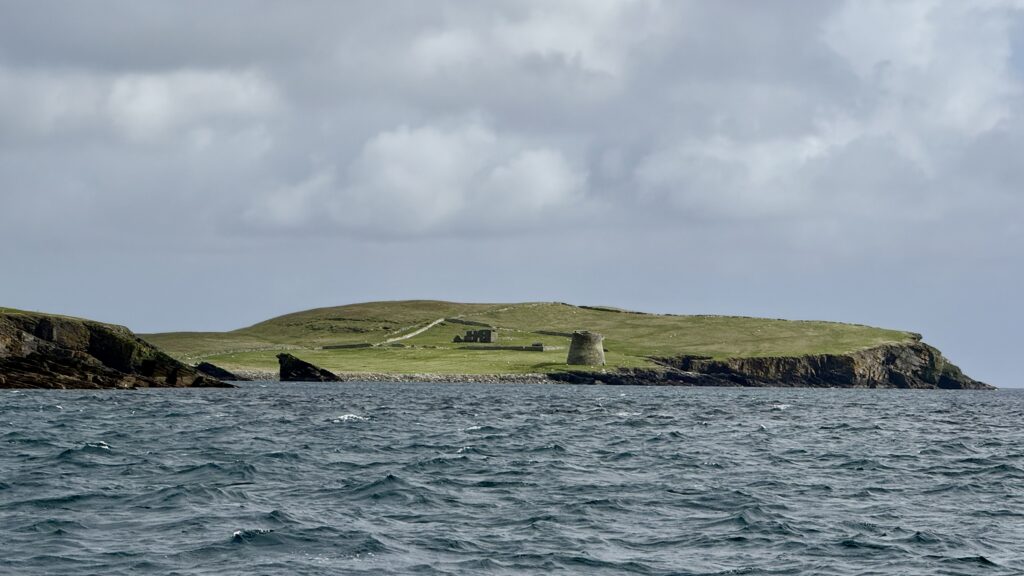
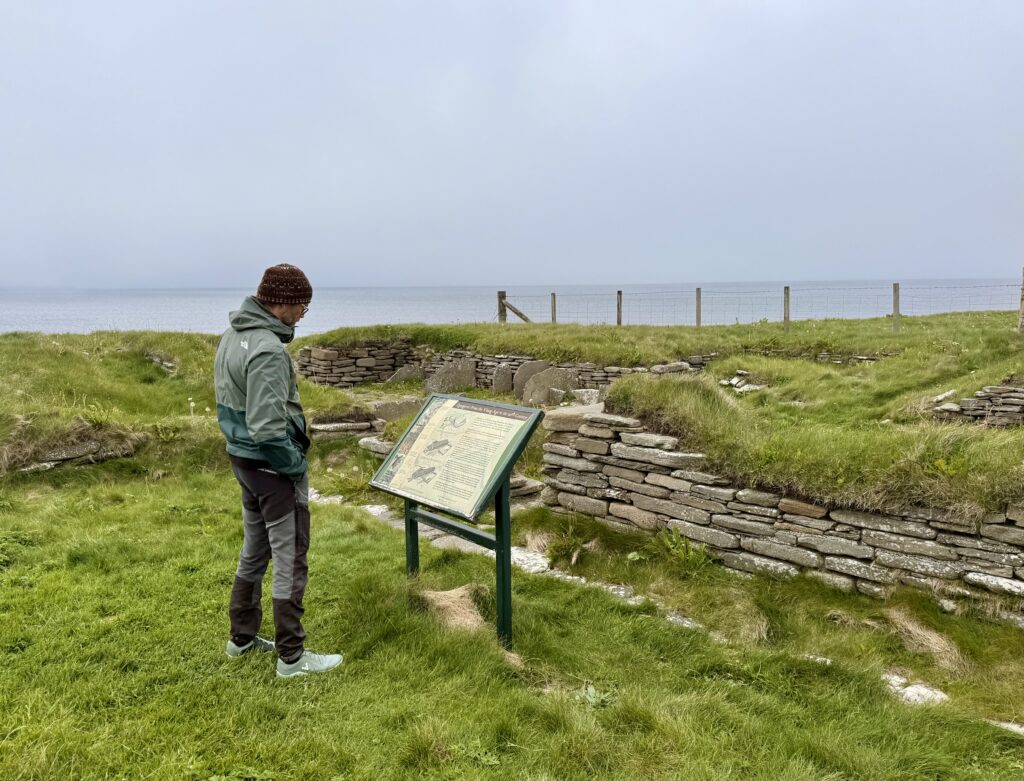
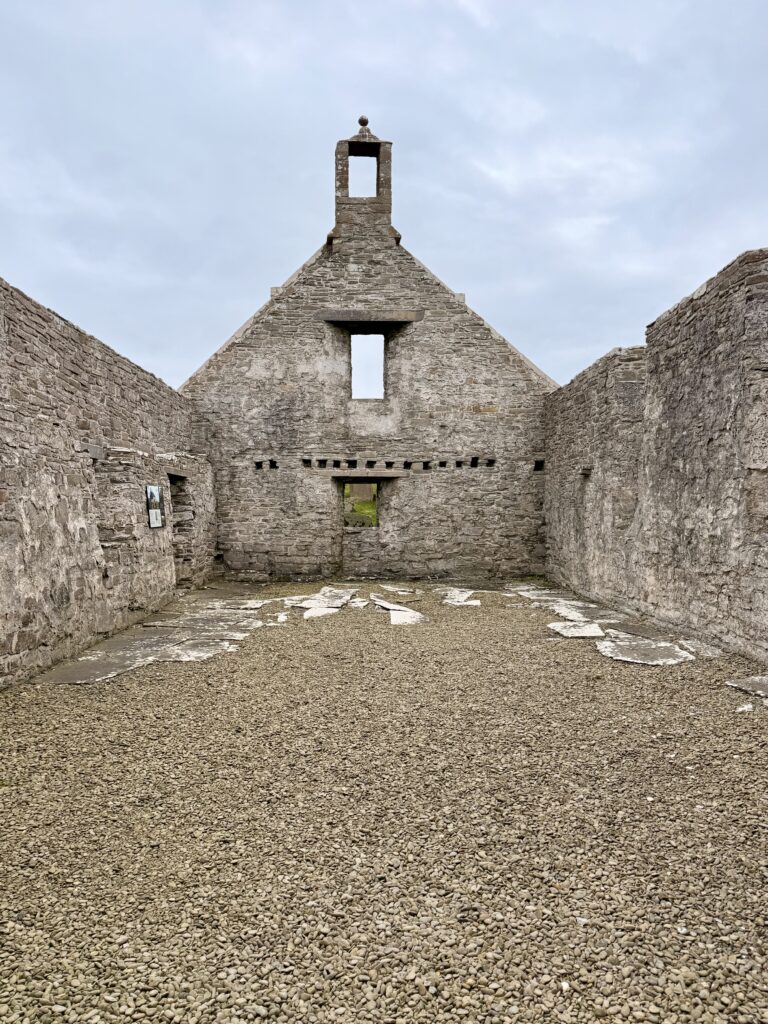
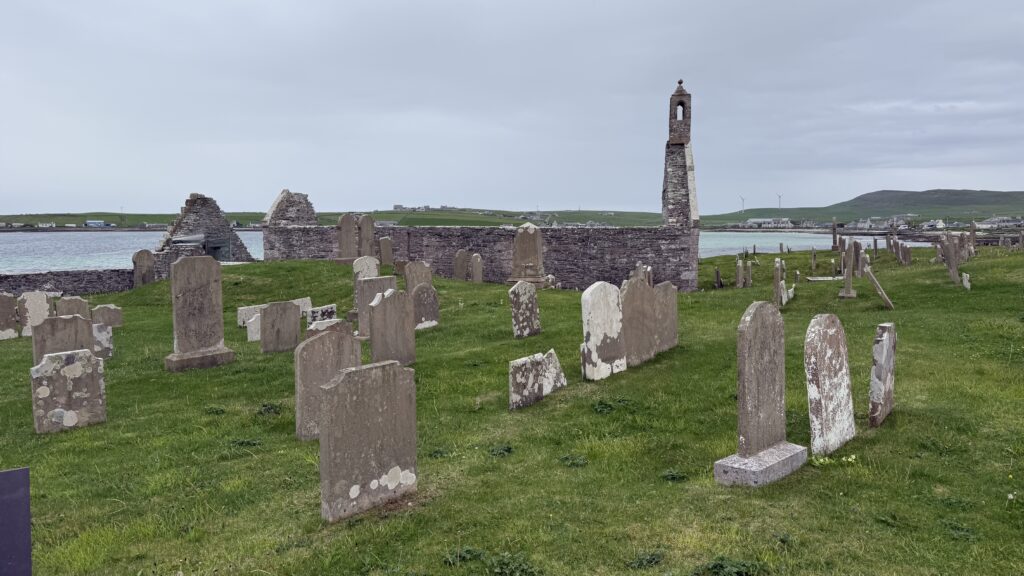
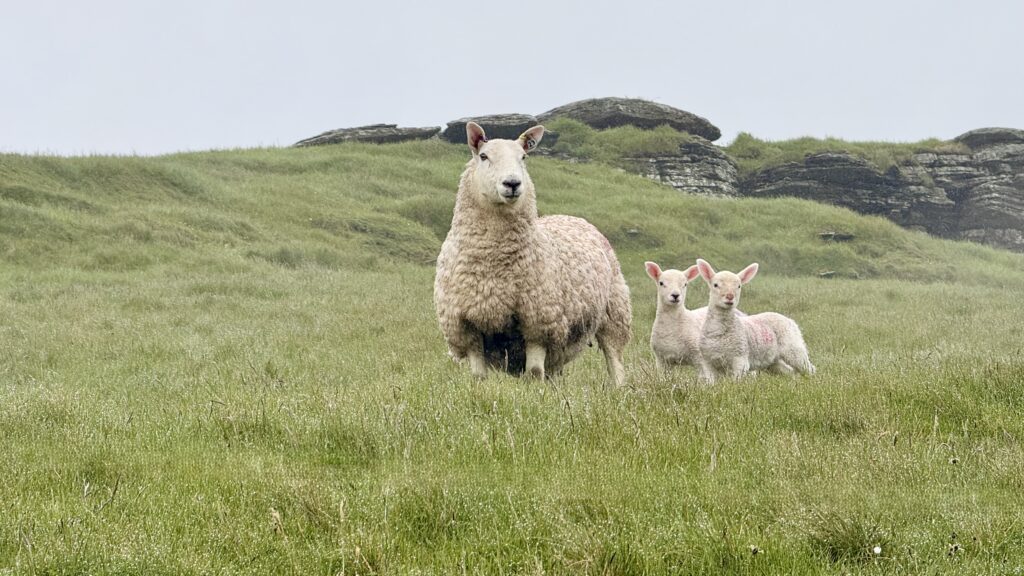
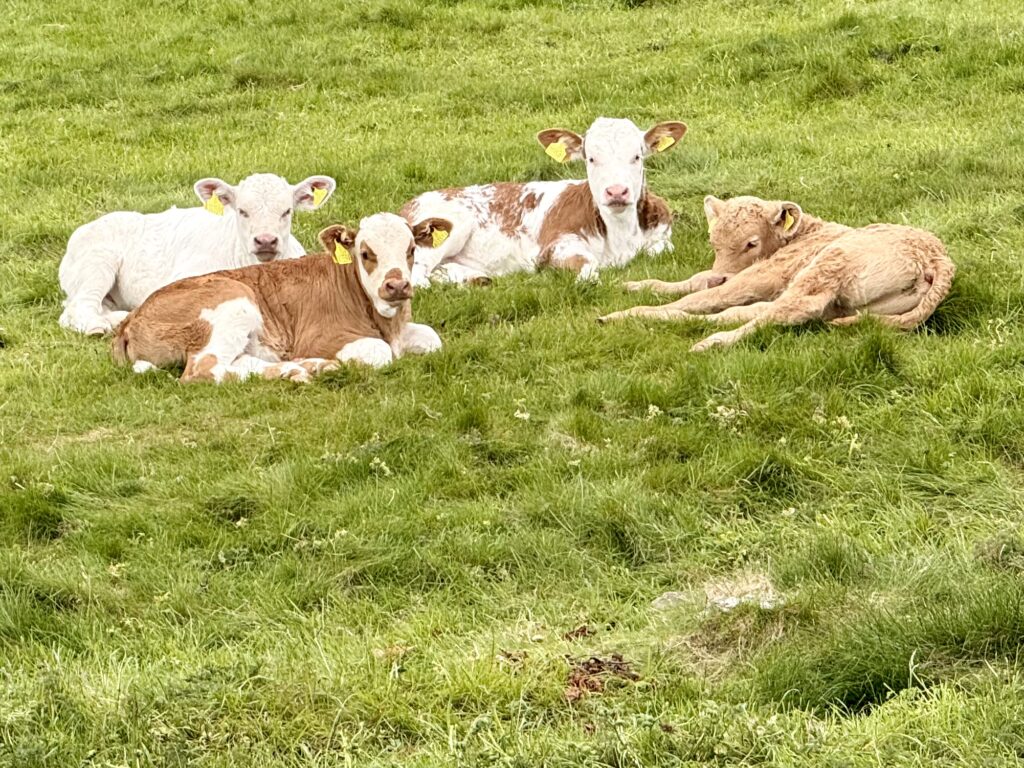
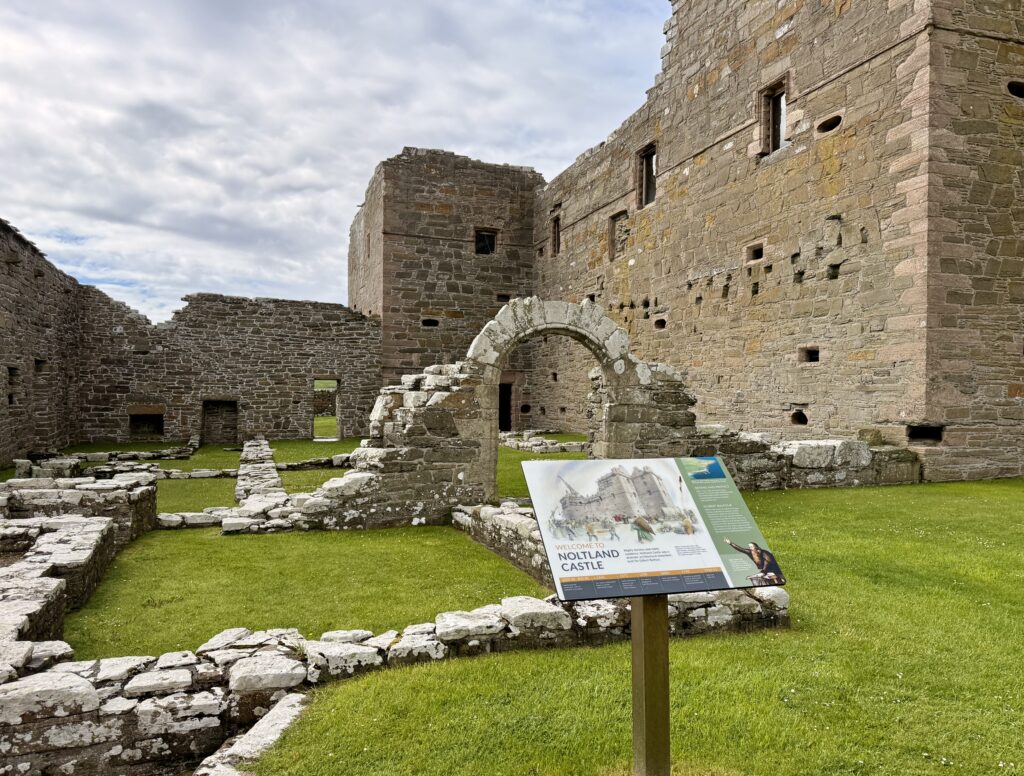
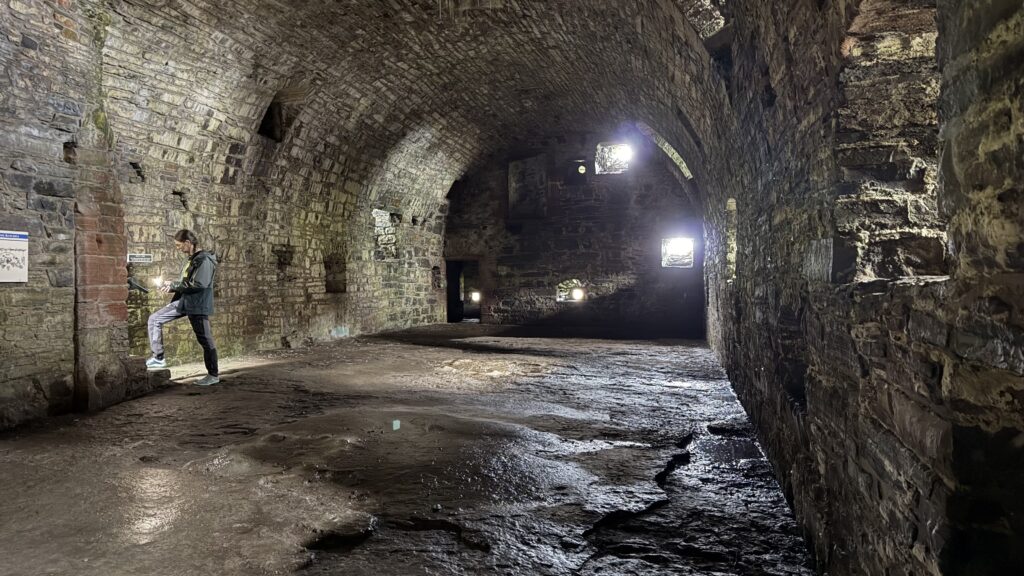
Our trip in pictures: From Lerwick to the Orkney Islands