🧭 Factsheet
Route: From Fedje to Lerwick
Period: 17 to 18 May 2026
Log: 185 nautical miles
Highlights: Set off from Fedje to a cannon salute, slalomed between oil platforms, cleared in for the first time
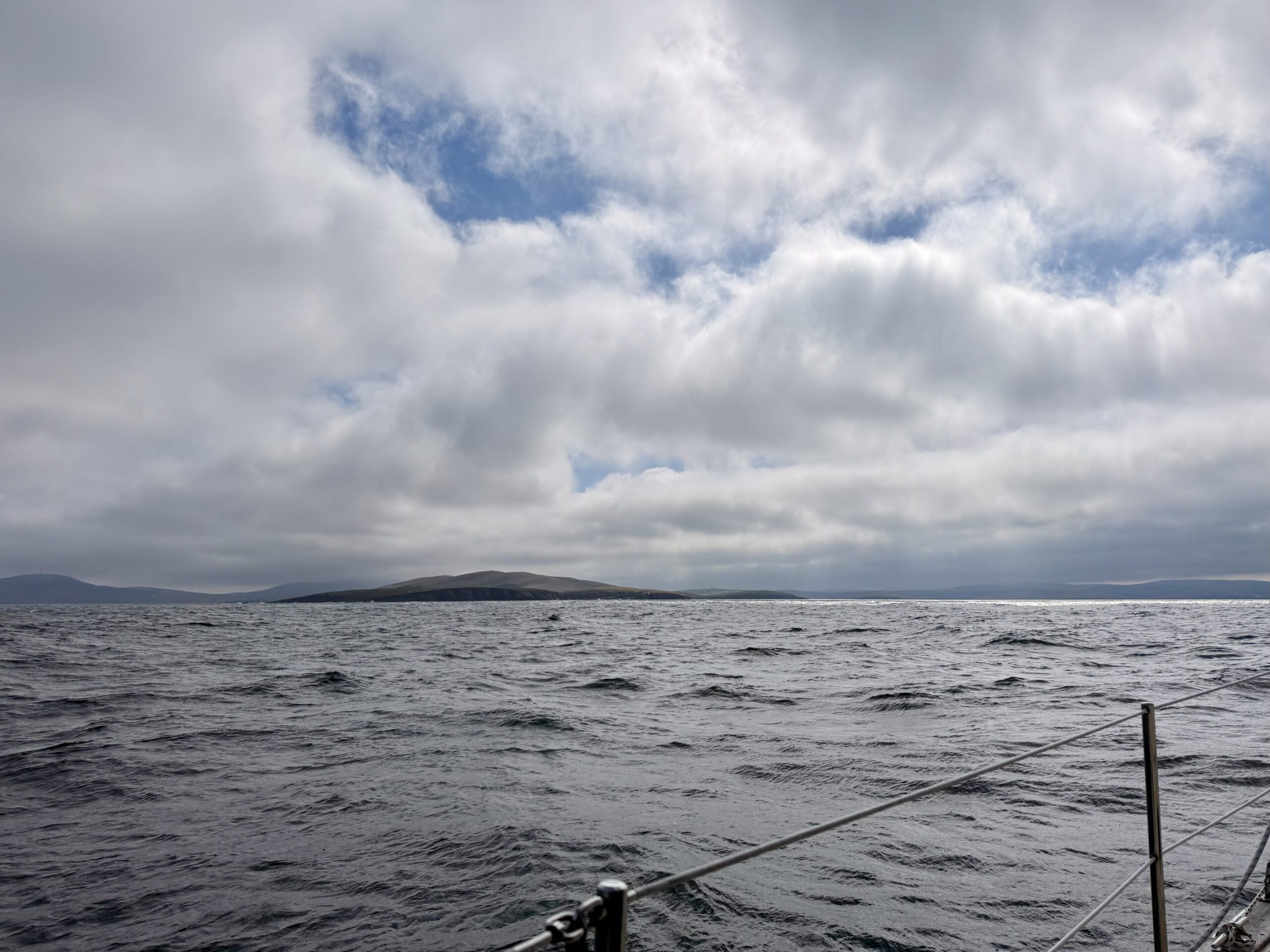
📍 Our route
Preparations
We had been waiting a long time for a really good weather window. Because we still remembered from spring 2023: the North Sea is still very temperamental at this time of year. Ideally, we wanted southerly winds, preferably south-easterly. These winds are (often) less strong than a northerly and they give you a lovely beam reach on this route. Of course, the strength had to be right too (under 30 knots), and the sea state needed to be moderate as well.
We sailed to Bulandet, the westernmost inhabited island in Norway, on 26 April to wait there for suitable conditions. We grew to love the island, and the locals got to know us too. Because we ended up waiting there quite a while. There was almost nothing but northerly wind, usually north-west, mostly strong and mostly with waves over 3 metres. We did not fancy that at all. And as the saying goes: the patient sailor always gets good wind. On 7 May, because of an engine problem, we had to head back to Florø again. After that, we also went to Fedje, which had still been on our wish list.
Casting off in Fedje
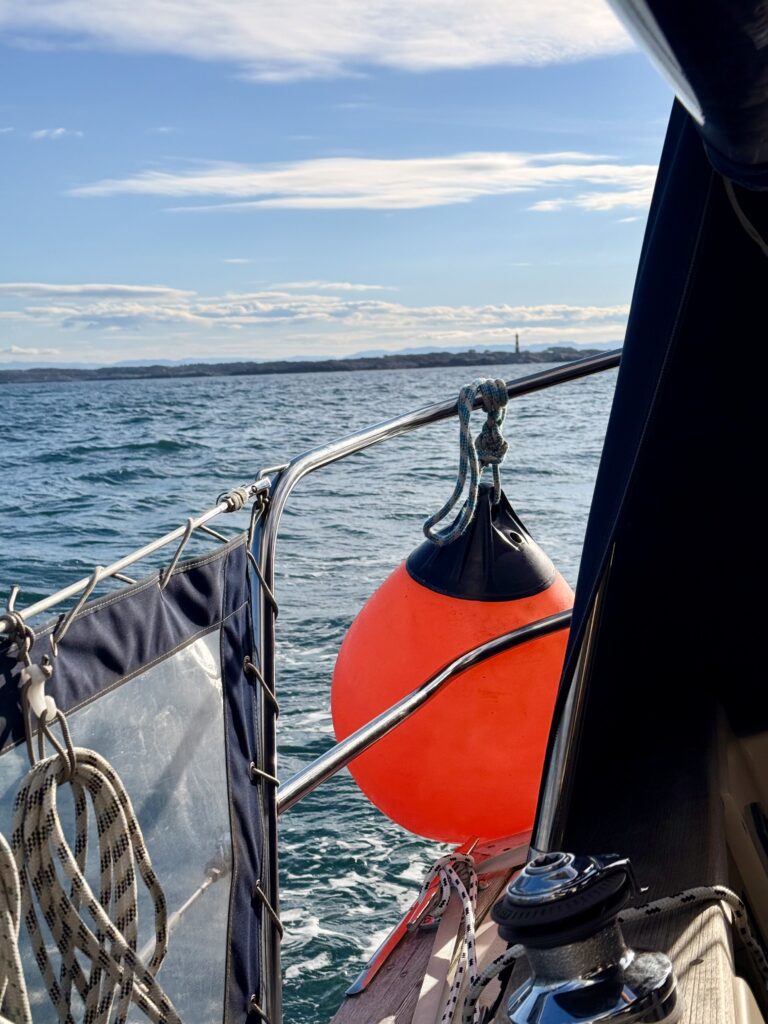
And then at last it arrived, our southerly wind, and so we set off on the Norwegians’ national day, 17 May. Before we cast off at 7 o’clock, a cannon salute rang out. Perhaps the Norwegians wanted to give us a proper send-off, or perhaps they were simply glad that we were finally disappearing again. At half past seven we left Fedje.
The promised southerly wind was already coming more from the south-east right from the start, so we had to adjust our course and sail a little further north to avoid sailing too close to the wind. At around half past nine, we crossed the 12-mile zone. A dream start with an almost flat calm sea, sunshine and 10 to 15 knots of true wind. With one reef in the mainsail and the genoa fully out, TIAMAT was beautifully balanced and made around 6 knots on average. Around midday, the first oil platform came into sight (Troll A).
Instead of passing to the south of it, we made a detour to the north. Late in the afternoon the wind freshened and we put the second reef into the mainsail and carried staysail and genoa with the main in the second reef. It turned out that this was ideal for 18 knots of true wind. The autopilot had next to nothing to do. The Øseberg platforms came into view and we sailed between them. Originally, we had wanted to spend as little time as possible near the platforms. But it turned out that they actually provided a bit of entertainment. Otherwise, the sailing quickly became rather boring.
A thankfully uneventful night passage
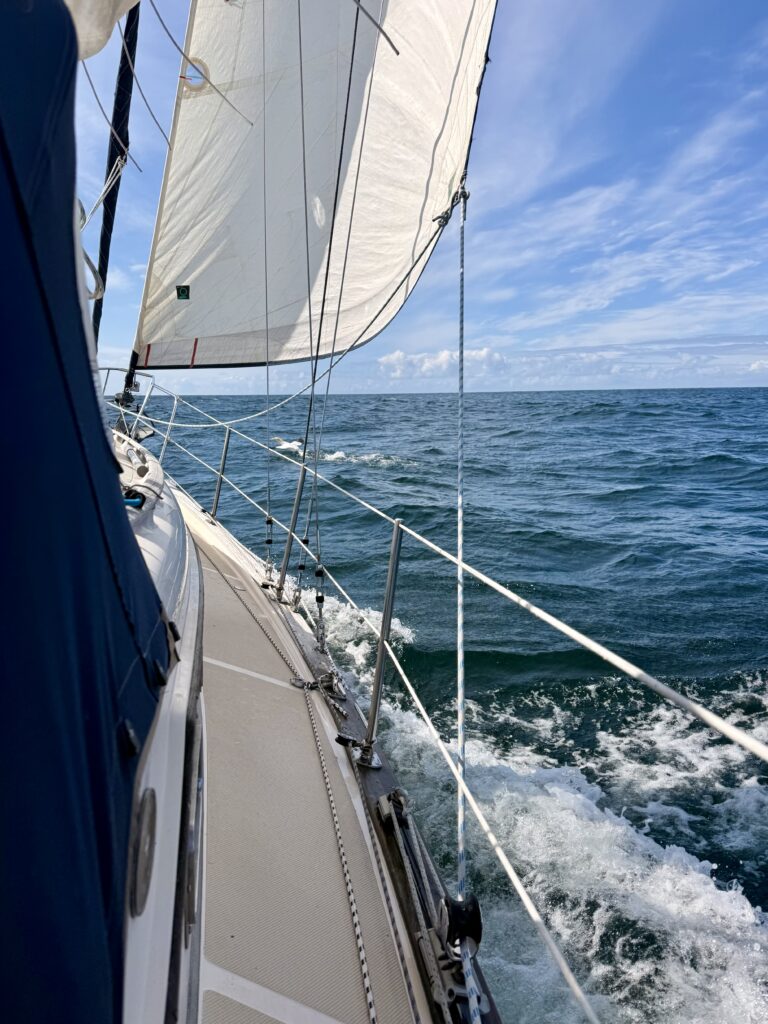
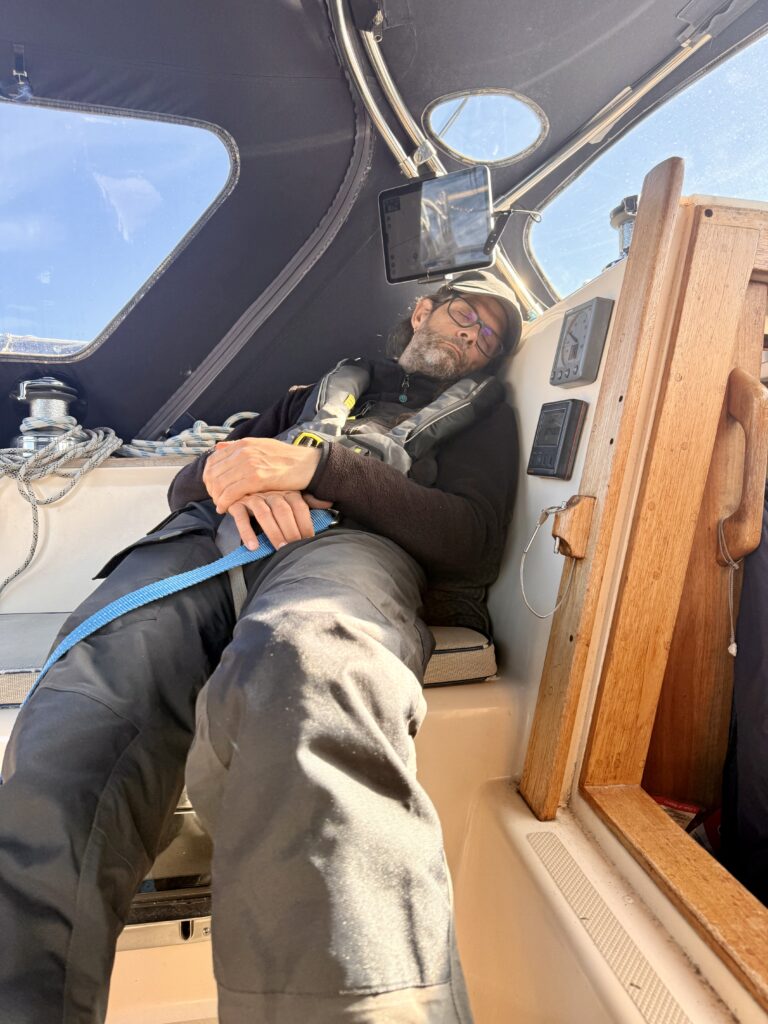
At 9 in the evening, we passed the last platforms, Martin Linge. The wind had increased, and so had the sea. A good one and a half to two metres of significant wave height, with the odd higher one among them. Tommy was pretty tired, so instead of sticking to our agreed watch change every four hours, I just carried on. Then it started to rain. Luckily, we had left the cockpit enclosure up. During the day, with the sunshine, that had also made for pleasantly warm temperatures, despite 10 degrees outside. But at night it became properly freezing. TIAMAT rolled in the waves and Tommy felt a bit seasick. At about 1 o’clock I lay down for two hours. The horizon was already starting to brighten again. Thankfully, because I was pretty chilled through. During the night I saw a few cargo ships on AIS, but otherwise we were completely alone out there. Really boring. But also good. The forecast for the night had shown a limited rain area with gusts of around 30 knots. Thankfully, that passed us by. In that case, boring was definitely better.
Half past nine in the morning on the North Sea
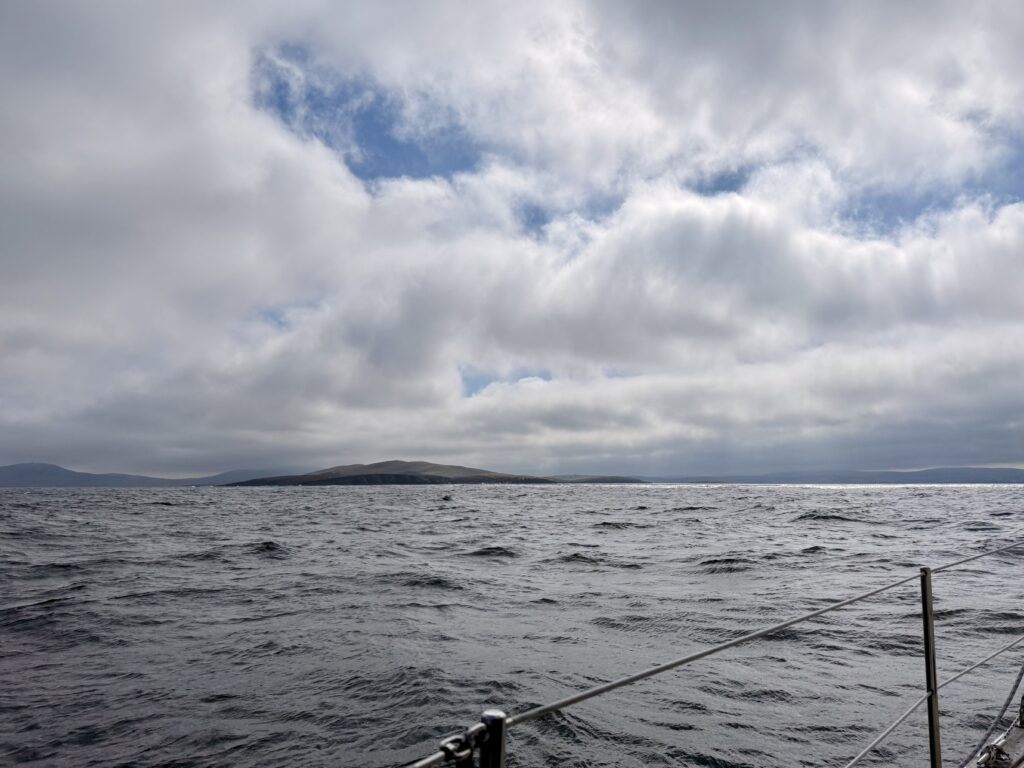
In the morning the wind then turned in our favour, and with our 60-degree close-hauled course we could now reach Lerwick instead of passing north of Shetland. We then crossed the 12-mile zone of Great Britain. The sun was shining again and before long the yellow Q flag was fluttering beneath the spreader. We had filled in the sPCR (small pleasure craft report) before departure in Fedje, as required, and had given an arrival time of 3 to 5 pm. As things looked, we would be in Lerwick on time after all. We are German, after all.
Behind Bressay we took in the sails, called Port Control on channel 12, and were given permission to head for the small boat harbour at Victoria Pier. Inside the harbour, there was no sign of the fresh wind from outside, and we managed to grab the last berth on the pontoon. Phew, that was done.
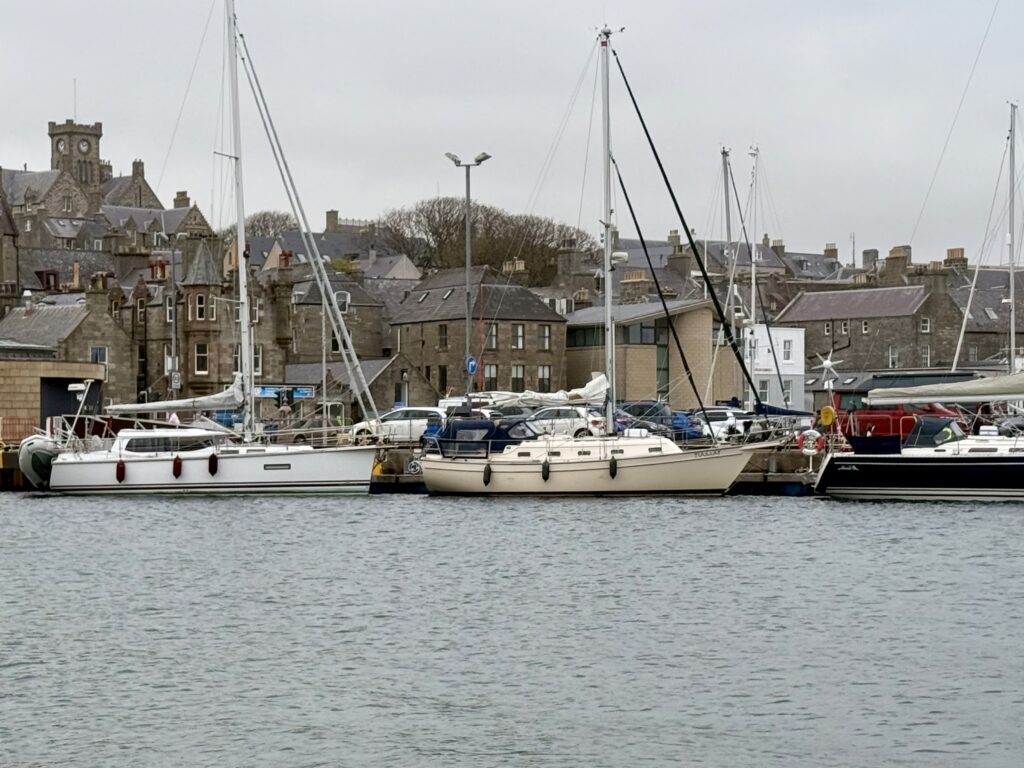
190 nautical miles in around 34 hours, including an hour and a half under engine to get past Fedje and out to sea, and then motoring through Bressay Sound to the harbour. That is exactly how it should be. We used all three sails, from fully unreefed to everything in the second reef. Only the gennaker was not allowed out.