
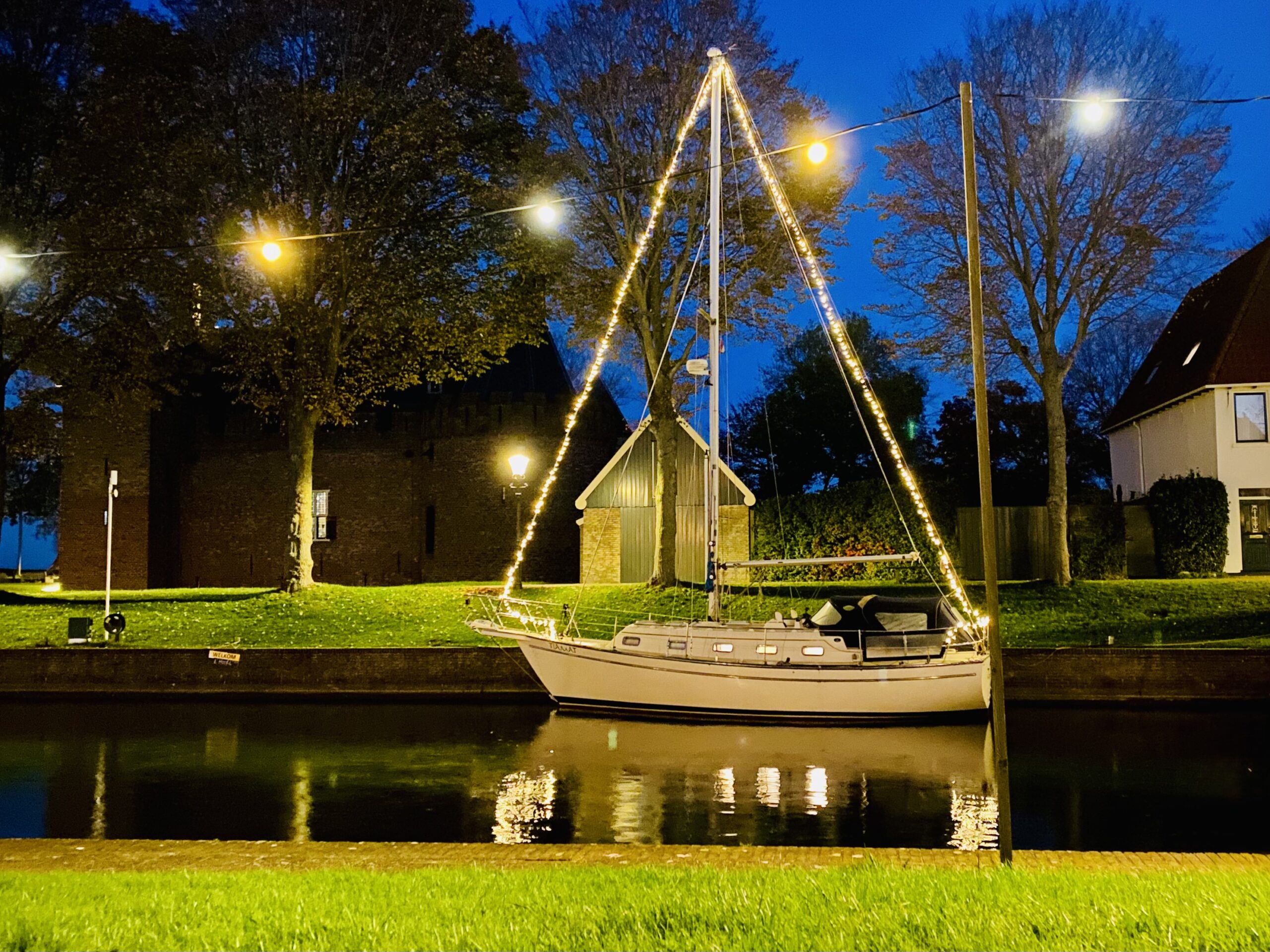
Unlike many other liveaboards, we’ve been cruising northern Europe since 2022 and also spend the winters on board. After one year in the Netherlands, we spent two years in Sweden. In 2025, we’ll be overwintering in Norway. Temperatures around — and below — freezing are not uncommon there. How we still manage to keep the boat feeling like a cosy home, and which tricks help us get through the cold, dark season, is what this article is about. These are the must-haves that have truly made a difference for us — and the things we wouldn’t want to be without anymore. All linked for browsing and buying.
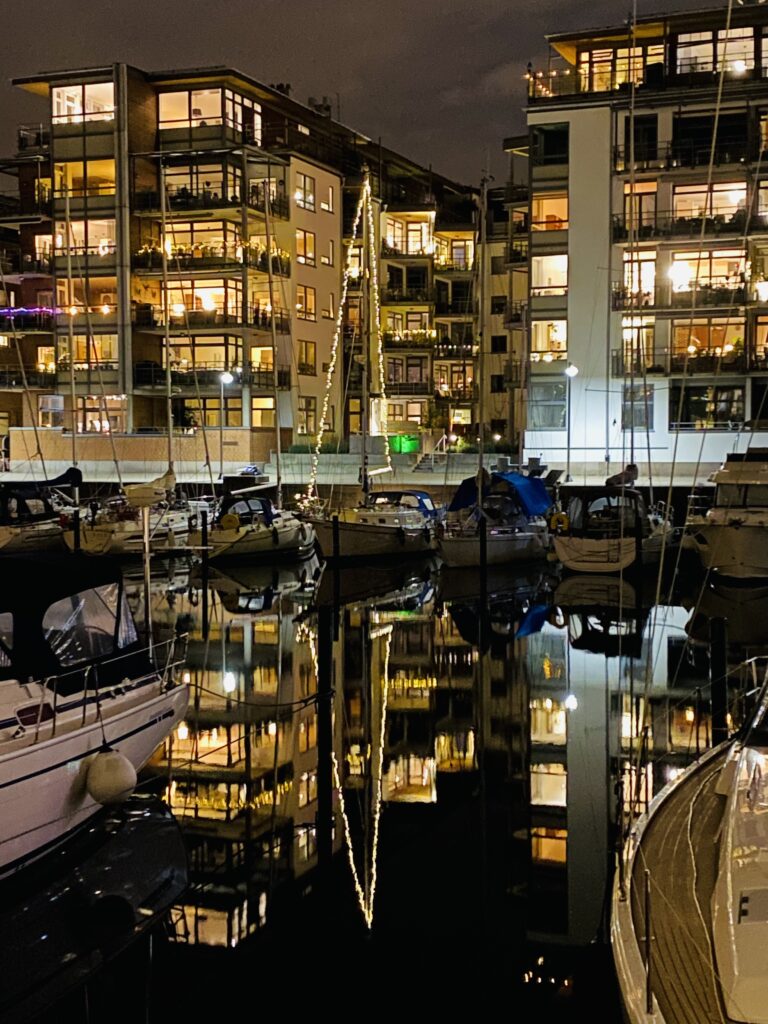
Of course, it’s primarily the low outside temperatures that make winter life on board challenging. But keeping the boat warm is actually the smallest problem. We use several different heating systems, depending on need, sometimes in combination. Much more of a challenge is usually moisture and condensation.
In winter, we’re usually berthed in a marina. Not only because it’s practical, but also because these months are a time of calm for us. A time of not travelling. During winter, we tend to work a bit more and take the opportunity to tackle longer-term boat projects. Some of our must-haves rely on shore power — but that’s not an issue during this time of year.
Warmth & heating
After a lot of consideration, we decided against installing a diesel or wood-burning stove. There simply wasn’t an ideal spot for it without having to modify or rebuild parts of the interior — something we didn’t want to do. Cutting a large hole through the deck was also a major deterrent. Instead, we heat the boat using four different systems, each serving a specific purpose.

- Webasto diesel heater: For quick base warmth and for heating while at anchor or underway.
- Ecomat 2000 ceramic electric fan heater: Used for quickly warming the air and as frost protection when we’re away from the boat for longer periods.
- Infrared heater: Like a small stove, it doesn’t heat the air but instead warms nearby surfaces — and you, if you sit in front of it. A wonderfully cosy heat source for evenings on the sofa. Ours is from Clas Ohlson in Sweden.
- Oil-filled radiator: Since the other heaters are either noisy and/or carry a higher fire or exhaust risk, we only leave the oil radiator on overnight. If frost is forecast, we trust the fan heater instead and accept the noise.
- Electric blanket: A total game changer for us. It sits under the sheet and pre-warms the bed beautifully.

Ecomat 2000 heater
Our small Ecomat 2000 fan heater — affectionately known as the “stock cube” — certainly isn’t cheap. But the high-quality build, the low 450-watt setting, and the stable design were well worth the extra cost for us.
Power consumption: In winter, we use roughly 600–700 kWh per month in total, most of it for heating. At an average electricity price of €0.35 per kWh, that comes to around €230. Fortunately, electricity is significantly cheaper in Scandinavia.
Insulation
- Yoga mats: Since much of the cold comes from below, insulating the cabin sole makes a lot of sense. We use interlocking puzzle-style yoga mats from Biltema (a Scandinavian DIY store), though similar ones are available on Amazon. The advantage: they’re easy to take apart and store again in spring.
- Windows: After initial experiments with bubble wrap, we adopted a great trick from our Swedish neighbours. We fit Plexiglas panels on the outside of the window frames and secure them with tape. They stayed in place all winter and made a huge difference. The insulating air layer prevents condensation, and our power consumption dropped by around 100–200 kWh. Removing the adhesive residue in spring is a bit of a nuisance, though.
Moisture & condensation
- 3D mesh: To prevent condensation between mattress and bunk, we use a thick air layer made from plastic mesh, about 3 cm thick.
- Moisture absorbers (granules): In areas that can’t be ventilated regularly — behind sofa cushions or in the bilge — we place granulate dehumidifiers.
- Electric dehumidifier: Absolutely indispensable and more important to us than any heater is the MEACO Junior DD8l dehumidifier. We’ll probably keep using it even when we eventually head for warmer climates.
Tip: ventilate even in freezing temperatures. As hard as it may be, airing the boat thoroughly on a cold, sunny winter’s day works wonders. That’s why moisture was less of an issue for us in Sweden than during the rainy, mildly warm winter in the Netherlands.
Affiliate notice: This page contains affiliate links. If you make a purchase through these links, we receive a small commission at no extra cost to you. Thank you for your support!