Our trip along the west coast of Sweden
- four months
- 554 nautical miles
- 23 harbours
- 9 anchor bays
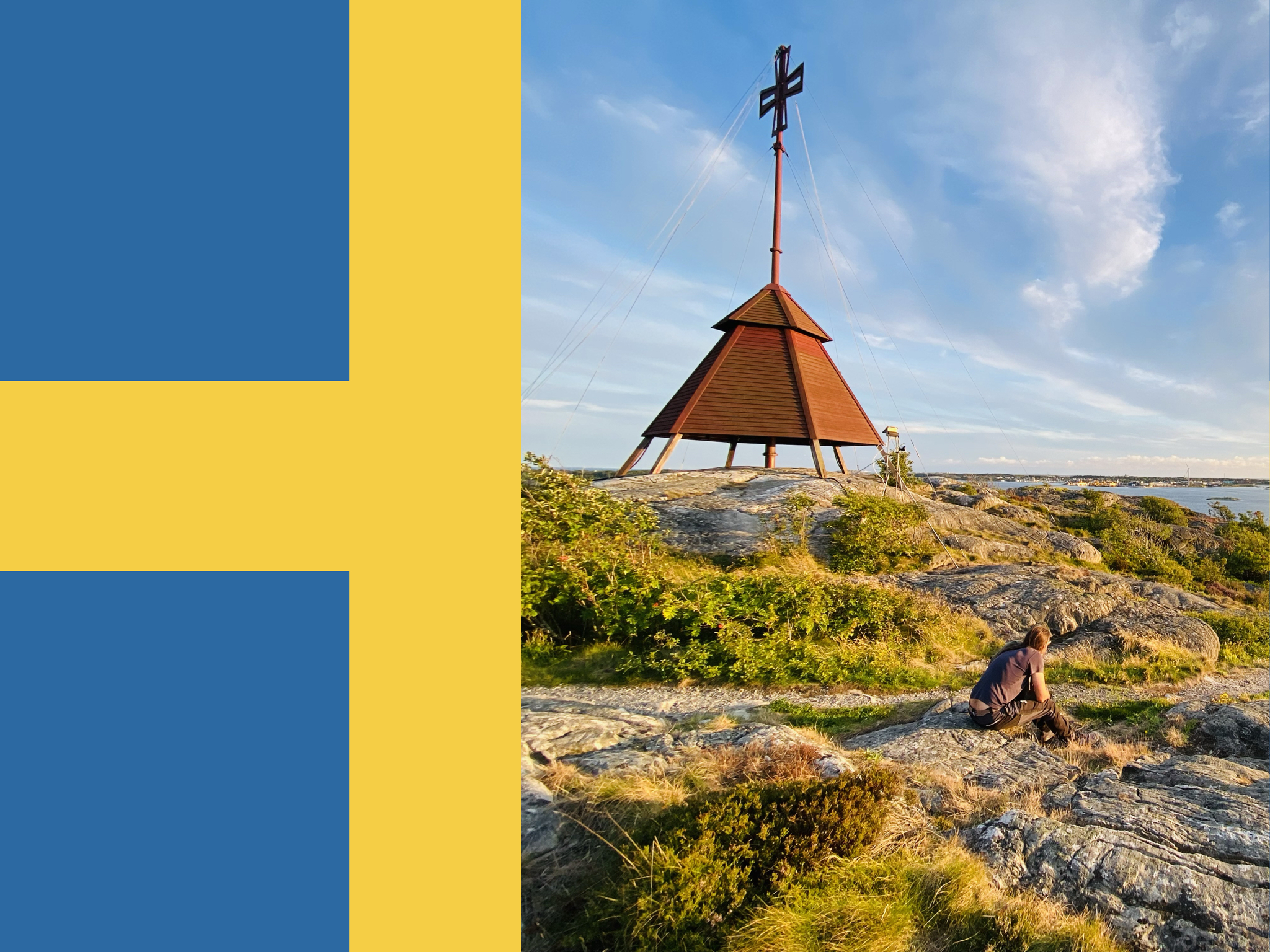
Sweden is a breathtaking country that captivated us from the very beginning. Along the spectacular west coast, we were again and again enchanted by the stunning archipelago landscape and fell in love with the small, picturesque coastal towns. The coastal stretch that extends from Gothenburg to the Norwegian border, with its more than 8,000 islands, islets and skerries, was the absolute highlight for us.
Harbours & marinas
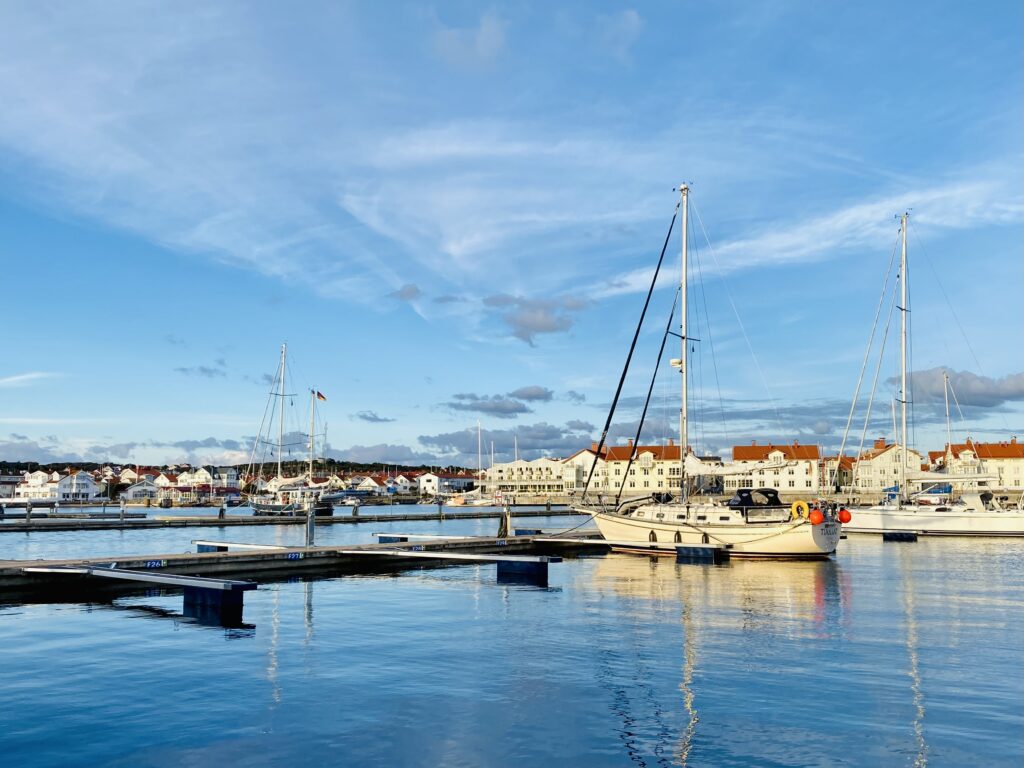
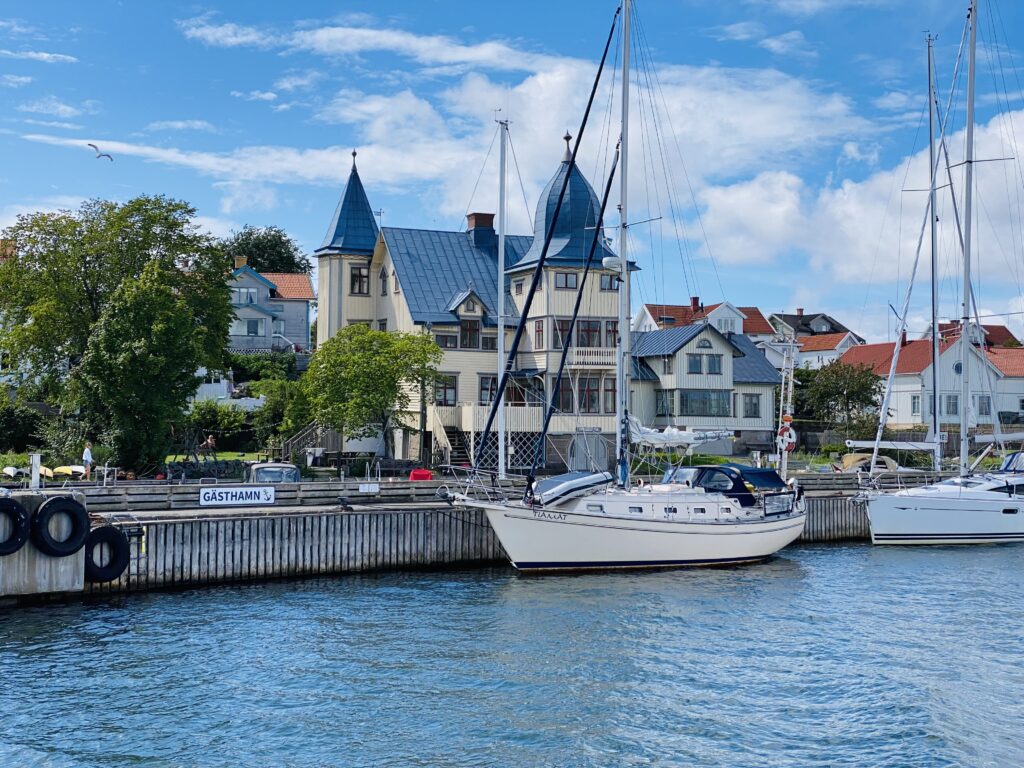
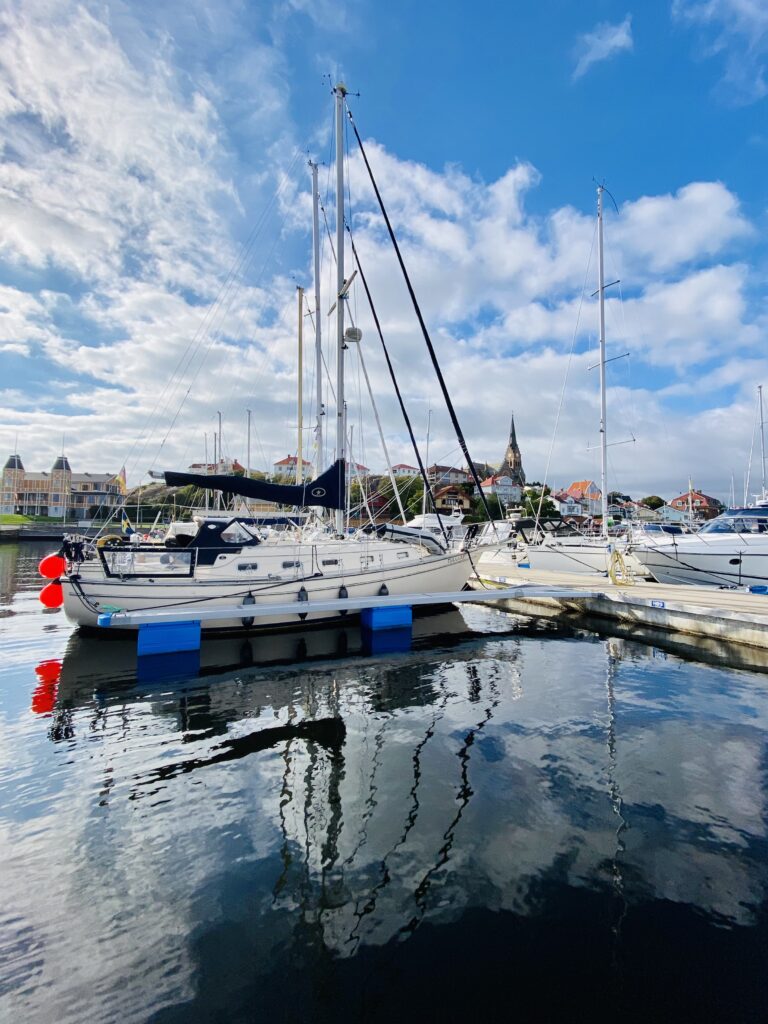
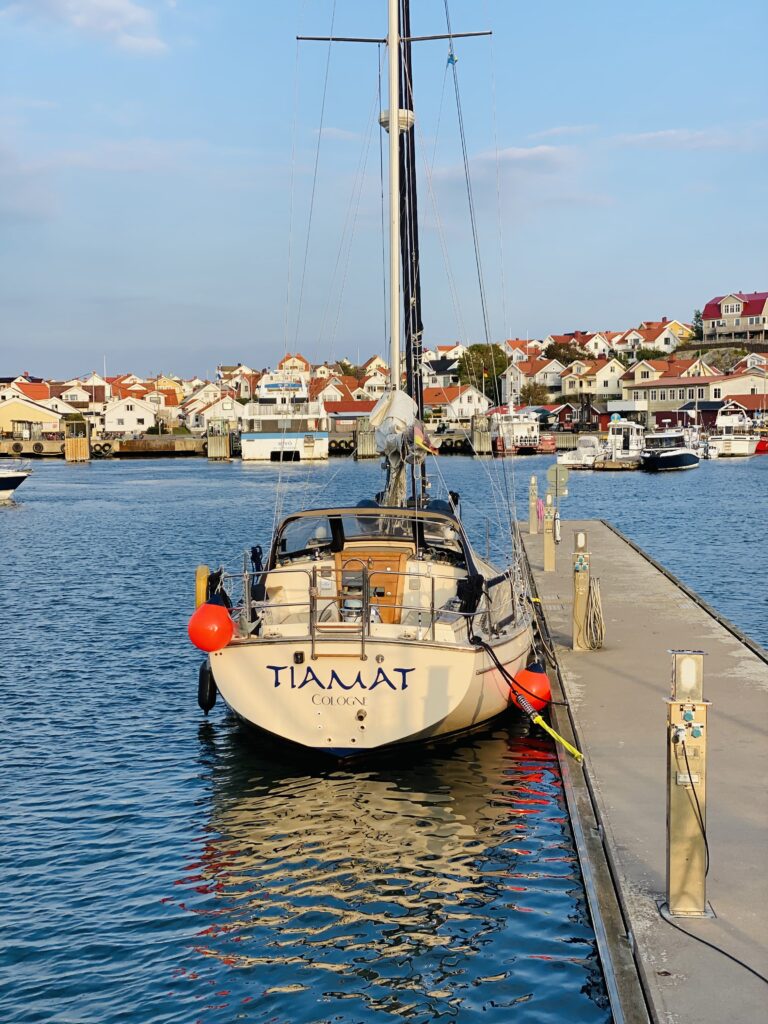
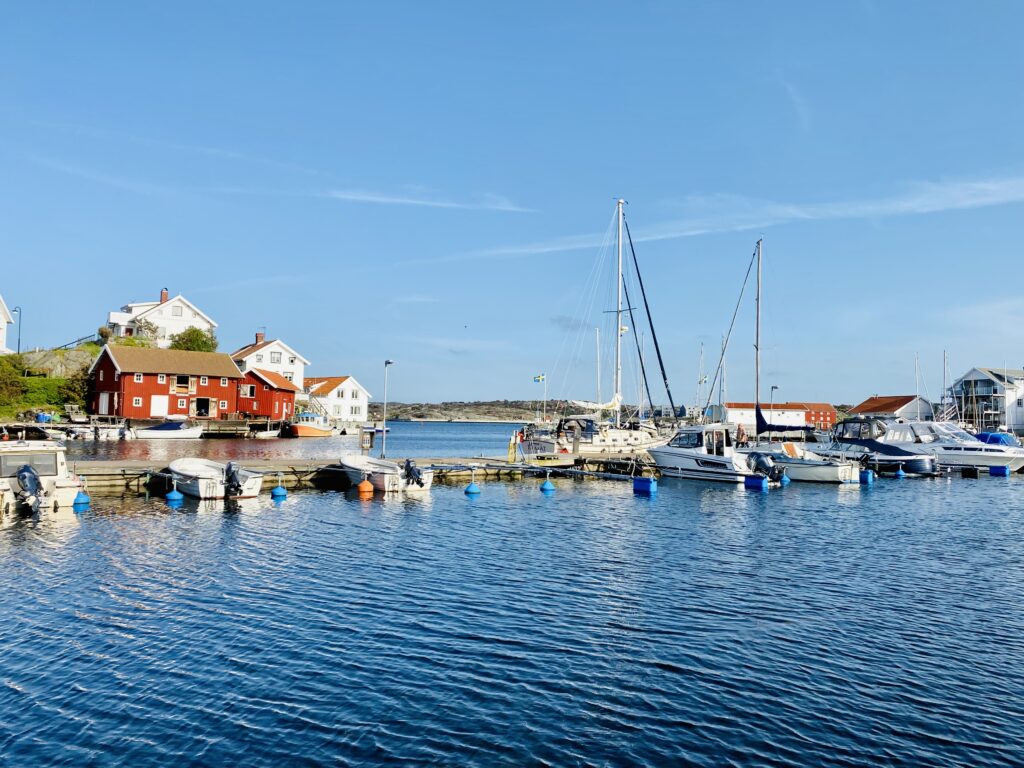
Along the west coast, there are mainly medium-sized to small harbours and rarely large marinas. But it’s exactly these small harbours that make Sweden so appealing, at least in our opinion. We therefore avoided all larger marinas in the main tourist areas – especially during the high season – and instead preferred quieter anchorages and natural harbours.
The sailing season in Sweden begins after midsummer (late June, early July) and ends at the end of August. In autumn, there was hardly anyone else out on the water apart from us. In between, sailing hotspots like Gothenburg or Marstrand are rarely as quiet as they are in September. Harbour facilities vary greatly depending on their size. Larger ones usually have boxes or pontoons, while smaller town harbours often only offer stern buoys or lazy lines. On land, cleats are rare but rings are common. To secure your boat, you often have to step onto the jetty. Even more difficult for boats with a long keel and/or high freeboard are the finger pontoons (Y-booms) often found in smaller harbours. However, they’re ideal for smaller to medium-sized boats up to 30 feet, especially motorboats.
Information on harbours and marinas for sailing in Sweden
- Coastal handbook Baltic Sea: The book provides a wonderful overview of all nine countries bordering the Baltic Sea. The chapters on Denmark, Germany and Sweden also describe the North Sea coast. We have the English edition by Imray, but there is now an up-to-date German translation available.
- Harbour guide (Hamnguiden) is available in German and English as printed editions or as an app at Harbourguide.com. We used the digital version as an add-on for our navigation app “Skippo Sweden” (skippo.se), which was much cheaper.
- Guest harbour guide (Gästhamnsguiden): This Swedish magazine is available in some marinas or online and offers a quick overview of berths, services and contact details.

Anchor bays
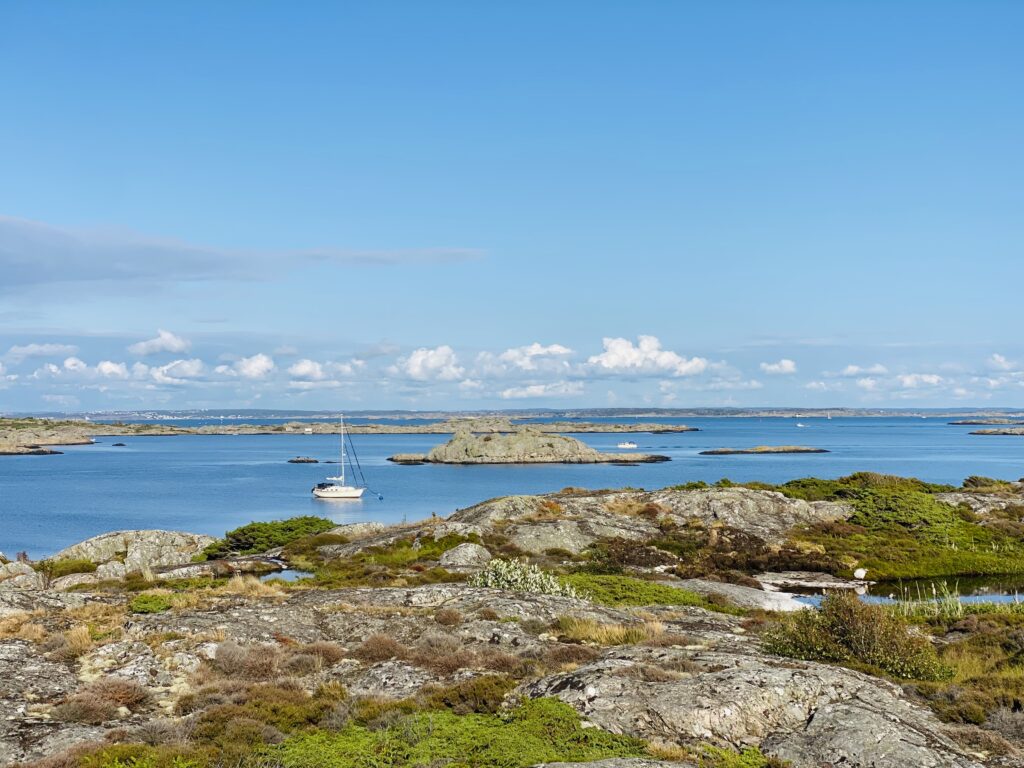
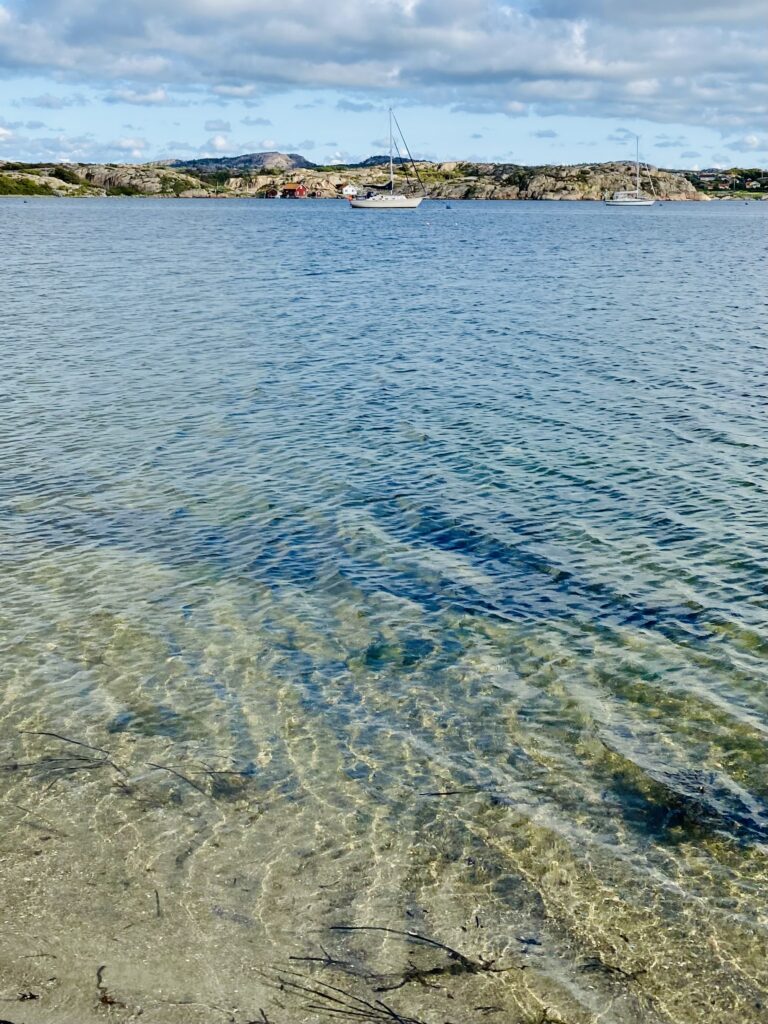
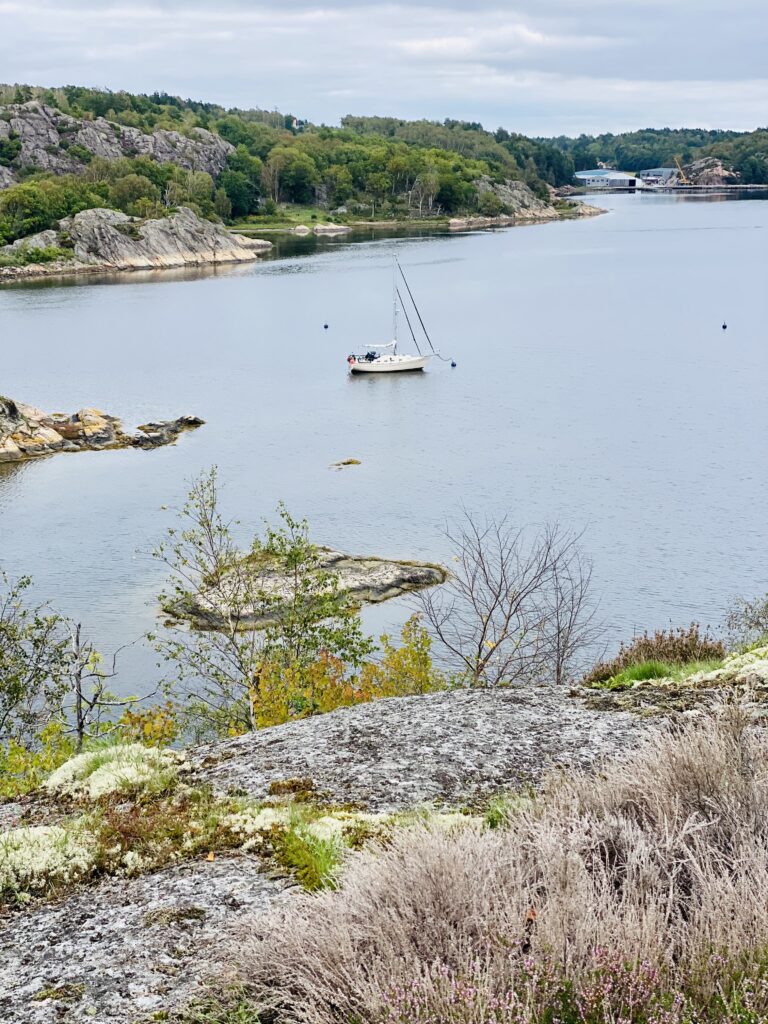
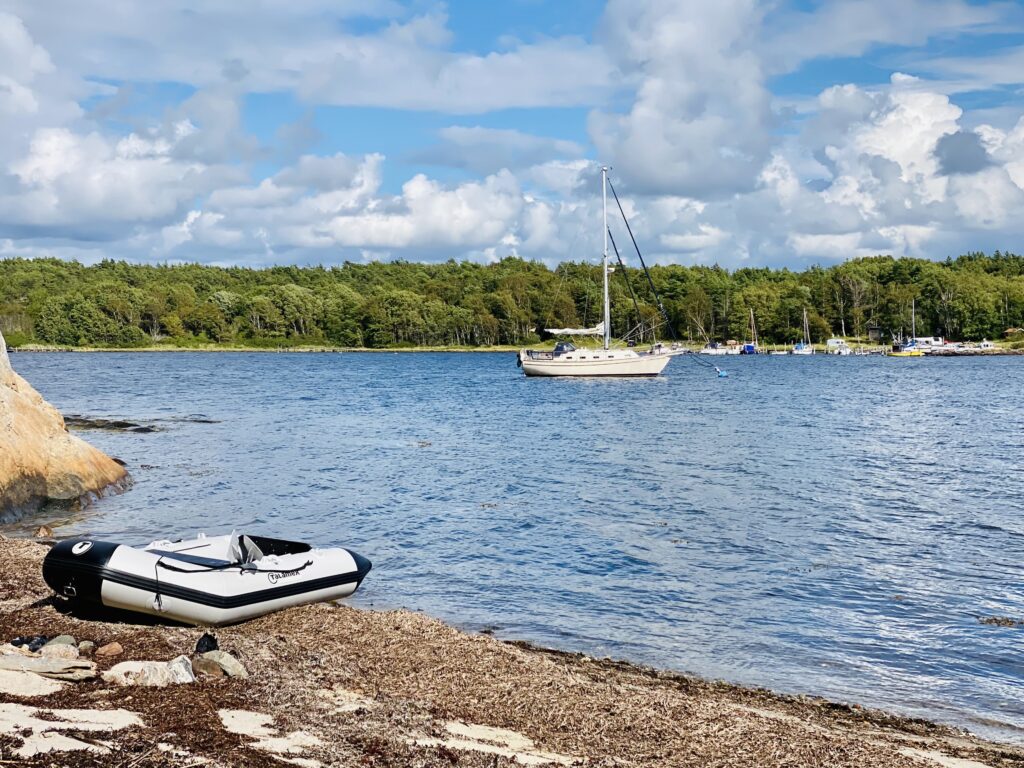
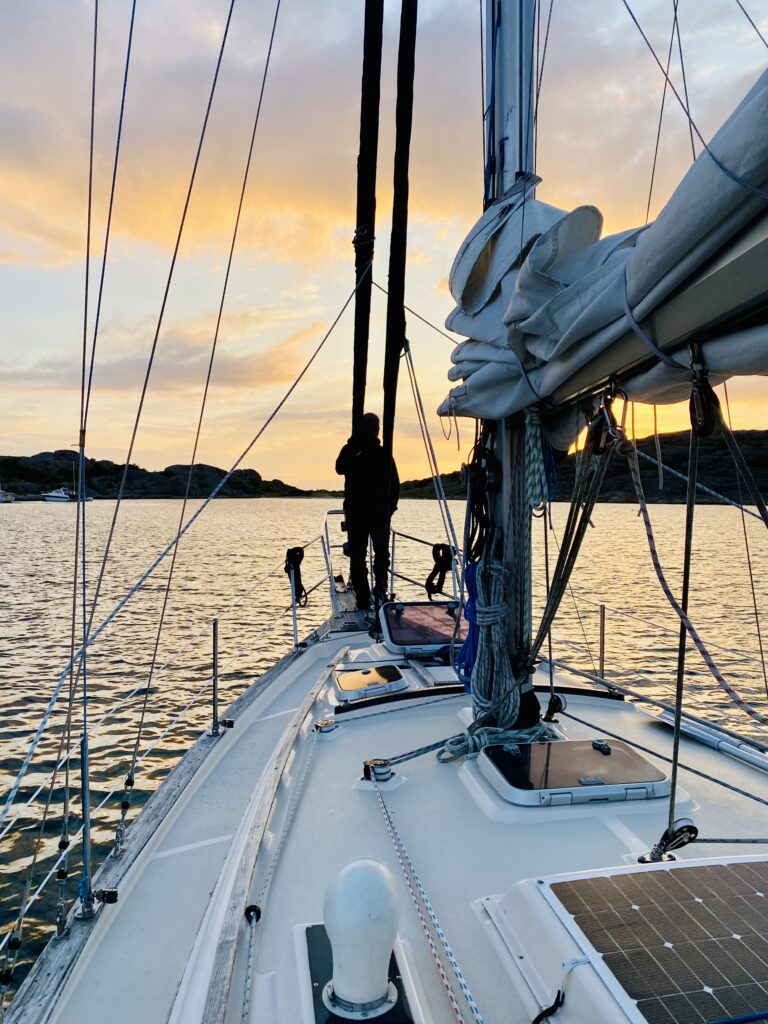
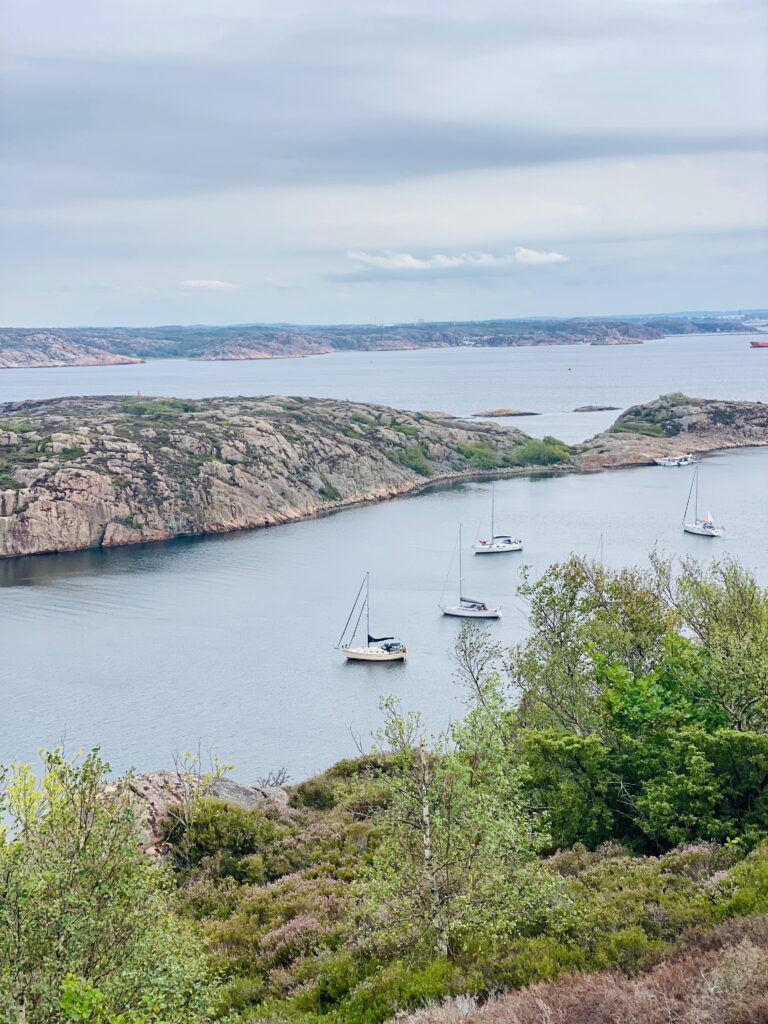
As beautiful as the harbours are, along the Swedish west coast you simply have to spend a few nights in natural harbours or anchor bays. Ideally, you can tie up directly to the rocks if conditions allow. Even during the sailing season from July to August, it’s still possible to find a vacant spot. Often, there are also blue buoys available.
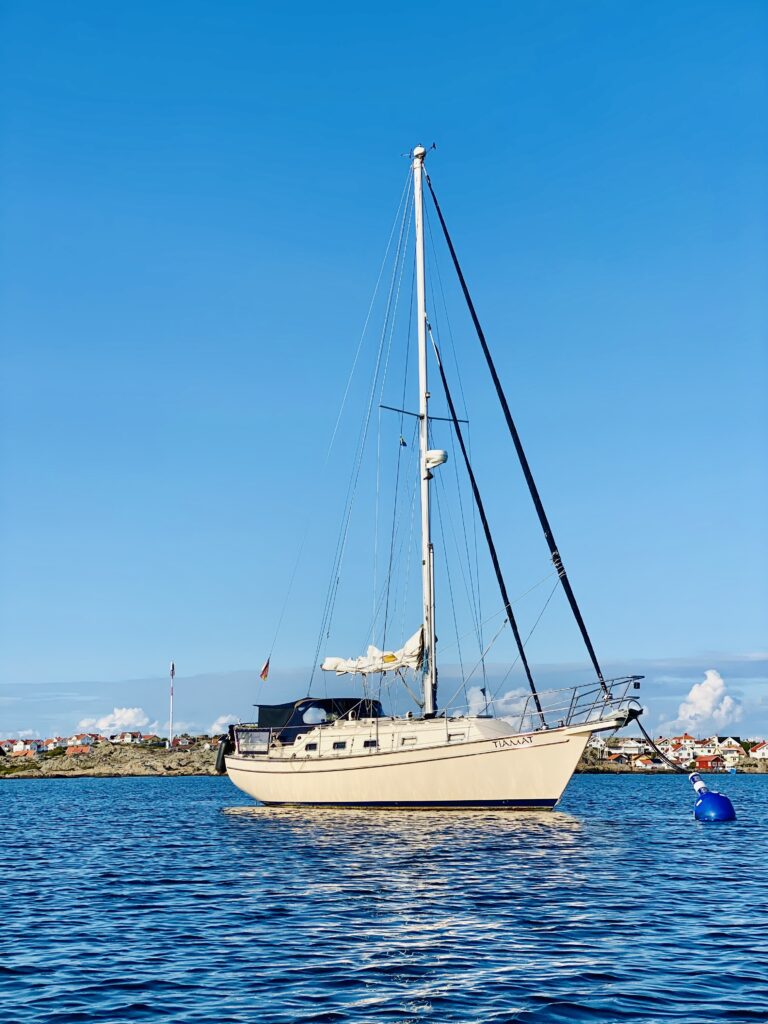
The buoys in this area serve two purposes: protecting the seabed and increasing mooring capacity even in narrow spots. Unlike in Denmark, they are reserved for members of the Svenska Kryssarklubben (SXK). However, tourists can also become members for a small fee (75 EUR per year). You can find more information at sxk.se.
Although the buoys can also be used without membership and there are usually several available, we thought it was a worthwhile investment to support the sailing association and the maintenance of the buoys.
Weather & sea
Along Sweden’s west coast, the weather can vary quite dramatically throughout the year. Summers are usually mild and pleasantly warm. During the sailing season, the region enjoys long daylight hours, making it perfect for outdoor activities. However, the west coast is also known for its changeable weather, where sunny conditions can quickly shift to cloudy or rainy. Strong winds from the Atlantic can also affect the region, particularly in the autumn and winter months. On our journey south in September, we had to stop several times to wait out a storm.
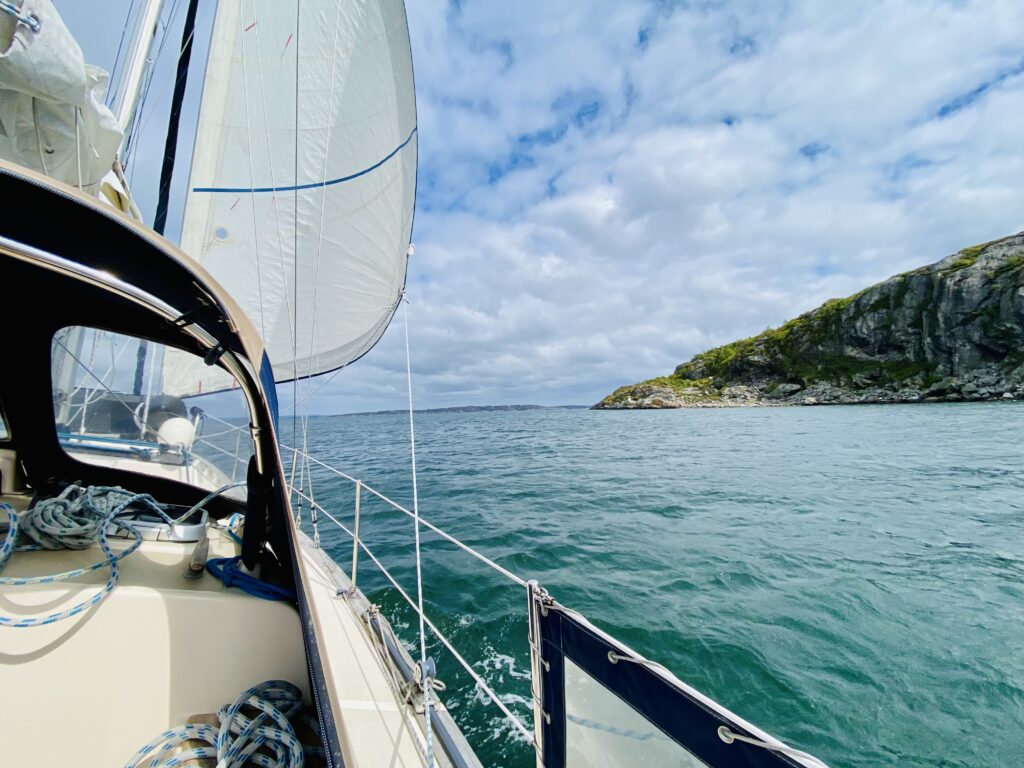
Autumn brings cooler temperatures and more rainfall, with average highs between 12 and 18 degrees Celsius. The coastal scenery becomes even more picturesque during this season as the leaves turn vivid colours.
We mostly use Windy, usually in combination with the local Swedish weather forecast from SMHI, which gives a fairly accurate idea of conditions for the next 24–48 hours. If you’re sailing in the Öresund, it’s worth keeping an eye on the currents there. We used the Danish website DMI (dmi.dk) to check forecasts for current direction and strength, which can reach up to 5 knots between Helsingør and Helsingborg. Navigation information and warnings can be found on the website of the Swedish Maritime Administration.
Life on board in Sweden
Money
The Swedish krona (Svenska krona, SEK) was worth around 0.090 EUR in 2023. During our entire stay in Sweden, we only had to pay in cash twice. Even small ice cream stalls and restaurants, and yes, even public toilets, accept credit cards. In most marinas, you can pay for berth fees or use of facilities with a credit card or via app.
Grocery shopping
Almost every small island along the west coast has a supermarket (ICA, Coop, Willys) or at least a small grocery shop. In fact, we came across only a few islands without one (e.g. Fotö and Kalven in the northern Gothenburg archipelago). However, prices are quite high compared to the Netherlands or Germany. In Sweden, drinks containing more than 3‰ alcohol can only be purchased from Systembolaget, which isn’t available in every town or village. In the end, we preferred the lighter supermarket beer (Lättöl) anyway.
Mobile internet & Wi-Fi
Although network coverage is excellent, reaching even several kilometres offshore, the Wi-Fi provided by harbours or towns is almost unusable, even in the off-season. That’s why we bought a mobile SIM card for our on-board router with a prepaid option at the first harbour or nearest town. Unfortunately, the cheaper subscription models are only available for Swedish residents.
Laundry
On our journey, we found several marinas (e.g. Malmön, Marstrand, Varberg, Lysekil) that provided free washing machines and dryers. This allowed us to do most of our laundry for free. In all other marinas, prices are typically around 30 SEK for a washing machine and 40 SEK for a dryer.
Waste water & diesel
Many Swedish marinas have pump-out stations for black water tanks. As we have a composting toilet on board, we didn’t use them. Diesel prices during our trip were around 20 SEK per litre.
Our favourite harbours and anchorages in Sweden
Sailing in Sweden: our tips for worthwhile destinations. On our short trip, these harbours and anchorages in Sweden were our highlights.
Marinas or harbours
- Lysekil (Havsbadet) The large marina is very well organised and has ultra-modern facilities. The harbour fee includes the use of washing machines and dryers. A fuel station is nearby. The downside is the constant swell caused by the ferry.
- Malmön (Fiskehamnen) Perfect for smaller boats and much nicer than the larger marina. It’s significantly cheaper, with new and clean showers and free washing machines.
- Marstrand Expensive in high season, but definitely worth it, at least in the off-season. The island offers the perfect blend of nature and town life, plus the impressive fortress. Sadly, we never managed to visit it despite several attempts.
- Varberg (Innerhamnen) A lovely town with a harbour close to the centre. In my opinion, it offers the most luxurious facilities, including usable Wi-Fi and free washing machines/dryers.
- Fotö A cosy small harbour that doesn’t offer much beyond showers and toilets but is located on a beautiful island in the Gothenburg archipelago. There’s no grocery store on Fotö.
Anchorages
- Väderöarna (058° 34.946′ N / 011° 03.911′ E) is a remote island group about 15 miles off the coast. There is a small harbour that’s very busy in season. Between the main island Storö and Stora Hejen is a natural harbour with wooden jetties, which we preferred.
- Långö (058° 29.330′ N / 011° 17.954′ E) a large bay with seven SXK buoys. We read that the holding ground (seagrass) isn’t very reliable.
- Kungsö (057° 33.464′ N / 011° 46.743′ E), a good anchorage or rock mooring with a stern anchor, toilets and bins. Perfect sandy beach, unfortunately facing east.
- Rörbäcke kile (058° 15.340′ N / 011° 33.360′ E), three SXK buoys, good holding and good shelter.
- Näverkärrskilen (058° 20.806′ N / 011° 22.509′ E), lovely beach and a great hiking trail around the bay.
Affiliate notice: This page contains affiliate links. If you make a purchase through these links, we receive a small commission at no extra cost to you. Thank you for your support!