Our trip along Sweden’s east coast
- 724 nautical miles
- three months
- 21 harbours
- 22 anchorages
After our tour along the west coast of Sweden, we thought we already knew Sweden pretty well. But Sweden’s “Baltic side” surprised us with completely new facets. Along the lovely Baltic coast, we were blown away time and again by the green skerries. Even though the stretch of coast that runs roughly from Trosa up to the Ålands is beautiful, Gotland in particular really cast its spell over us. The big island in the middle of the Baltic Sea, with its capital Visby, is simply stunningly beautiful. One thing we skipped: the trip to Haparanda. We’re saving that for later.
Harbours & marinas
Along the east coast you mainly find medium-sized to small harbours. Bigger marinas like Nynäshamn are more the exception. But it’s exactly these small harbours that make Sweden so appealing, at least in our opinion. East Sweden is, or at least it seemed that way to us, a bit busier in summer thanks to the many sailors from the Baltic Sea countries. Since we only spent the pre-season there, we always got a spot in harbour and never had to move on.
The sailing season in Sweden begins after Midsummer (late June, early July) and ends in August. The facilities in harbours depend heavily on their
size. Very often, and noticeably more than in West Sweden, you’ll find stern buoys or lazy lines. Ashore you rarely find cleats, but all the more often rings. So to moor the boat, you need to step onto the pontoon. Harbour fees in the east are significantly higher than in western Sweden. And not just in the Stockholm archipelago. In fact, these months were the most expensive of our trip so far when it comes to harbour fees (over €800 in May 2024), because we were still moored in harbour the whole time.
Information about harbours and marinas for sailing in Sweden
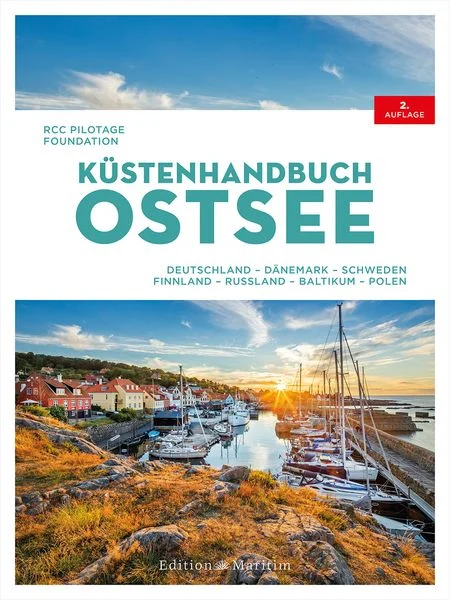
- Baltic Sea coast pilot: This book is a great overview of all nine Baltic Sea bordering countries. The chapters on Denmark, Germany and Sweden also describe the North Sea coast. We have it in English from Imray, but there is now also an up-to-date German translation.
- Harbour guide (Hamnguiden) is available, among other languages, in German and English in printed editions or as an app at Harbourguide.com. We used the digital version as an add-on for our navigation app “Skippo Sweden” (skippo.se), because it was significantly cheaper.
- Guest harbour guide (Gästhamnsguiden): This Swedish magazine is available in some marinas or online and provides a quick overview of berths, services offered and contact details.
Anchorages
As lovely as the harbours may be, in Sweden you also have to spend a few nights in natural harbours or anchorages. Ideally, of course, moored to the skerry if conditions allow. Even during the sailing season from July to August, it’s still possible to find a free spot. Often there are also blue buoys laid out.
These buoys serve two purposes: they protect the seabed and increase boat capacity, even in narrow spots. Unlike in Denmark, however, they are reserved for members of the Svenska Kryssarklubben (SXK). Tourists can also become members for a small fee (€75 per year). You can find more information at sxk.se.
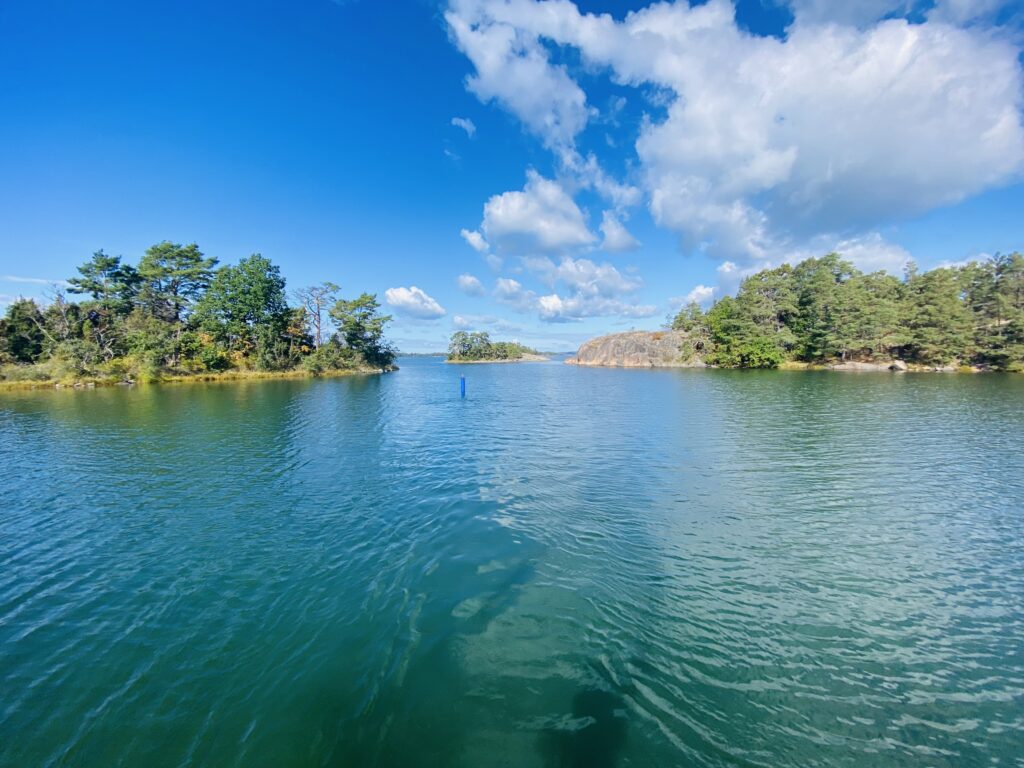
Although, because of the Right of Public Access, the buoys can theoretically be used even without membership (so a Swede explained to us), and there are usually several available, we felt it made sense and was worthwhile to support the sailing association, and the deployment and maintenance of the buoys, with our membership. We used them more than extensively and, with our Bojflagga, we also showed that we’re “allowed” to. Besides the buoys, the SXK also has small club harbours, and we moored up at one of those once as well.
Weather & sea
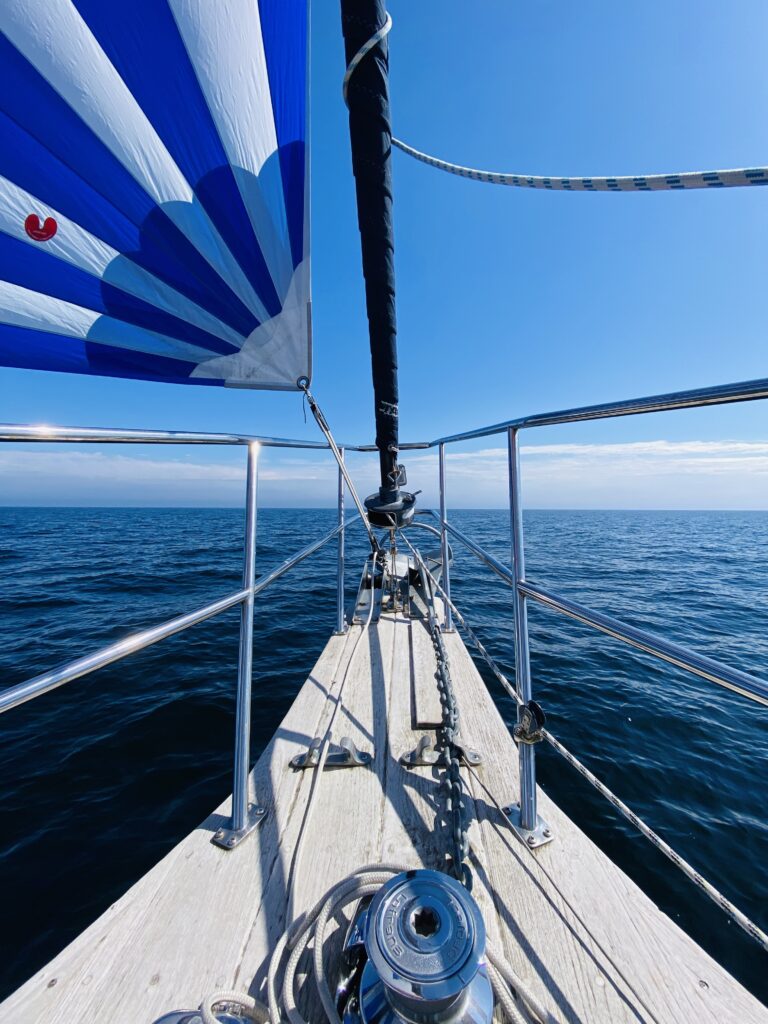
After the stormy, wave-filled Skagerrak and Kattegat with their pleasantly balanced climate, the Baltic Sea was a joy. Most of the time we had too little wind rather than too much. And when there was a lot of wind, it was from the west and, accordingly, there was very little swell.
We mainly used Windy, usually in combination with the local Swedish forecast from SMHI, which gives a relatively accurate impression of the weather conditions for the next 24 to 48 hours. You can find navigational information and warnings on the website of the Swedish Maritime Administration.
On top of that, there are a few firing ranges to watch out for (among others near Ystad, in Hanö Bay and close to Nynäshamn). In the harbours along the way, there’s usually information posted about when you’re not allowed to enter the area.
Life on board in east Sweden
Money
The Swedish krona (Svenska krona, SEK) was worth about 0.090 EUR in 2024. Throughout our entire stay in Sweden, we only had to pay cash twice. Even in small ice cream parlours and restaurants—yes, even public toilets—you can pay by credit card. In most marinas, you can pay the berthing fee or the use of facilities by credit card or via an app.
Food shopping
Supermarkets (ICA, Coop, Willys) are well represented in the larger towns. The further north you go, the fewer there are. Prices are high, as everywhere in Scandinavia, but still within reason. Across Sweden, only drinks with less than 3 ‰ alcohol can be bought in the supermarket. Stronger drinks are only available at Systembolaget, a state-owned company. On the upside, you’ll find a selection of wines and beers that’s more curated and tends to be higher quality, as well as spirits. We found the supermarket beer perfectly fine too.
Mobile internet & Wi-Fi
Network coverage is perfect and is available even miles off the coast. In the Baltic Sea we had reception everywhere except on the crossing to Gotland. So we continued to use our mobile SIM for our onboard router with a prepaid option. Unfortunately, the cheaper subscription models are only available to residents of Sweden. The Wi-Fi offered in some harbours or towns isn’t really usable even in the shoulder season.
Laundry
During our trip we found several marinas that provided free washing machines and dryers. That allowed us to wash most of our laundry for free. In all other marinas, prices are usually around 30 SEK for a washing machine and 40 SEK for a dryer.
Pump-out & diesel
In the Baltic Sea, most harbours had a pump-out station for black water tanks. Since we have a composting toilet on board, we didn’t use them. We had the feeling the infrastructure here is even better than in the west—probably because of the water quality in the Baltic Sea. Diesel prices during our trip were around 20 SEK per litre.
Our favourite harbours and anchor spots in east Sweden
Sailing in east Sweden: our tips for worthwhile destinations. On our short trip, these harbours and anchorages in eastern Sweden were our highlights.
Marinas or harbours
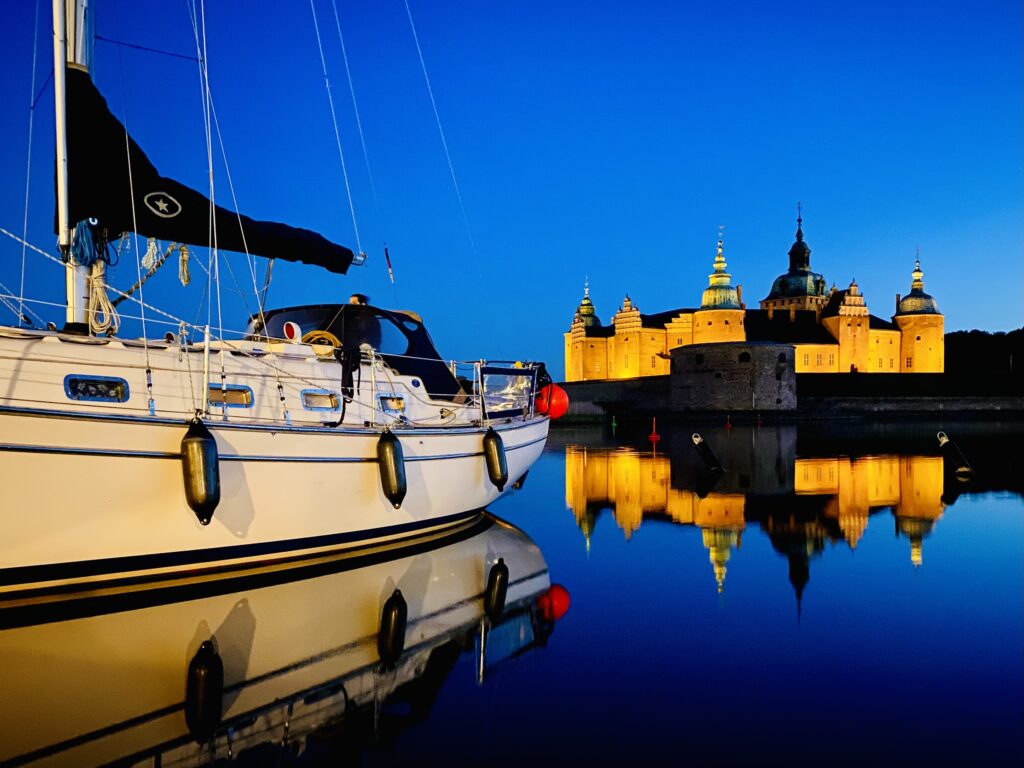
- Kalmar (castle) If you don’t draw more than about 1.60 m, you should head for the small, sheltered harbour by the castle instead of the big city harbour. Beautiful, with a view of the castle. The somewhat narrow and shallow entrance did make us break into a sweat, but it was worth it.
- Utklippan This almost-famous refuge harbour is pretty much a must. The fee of 185 SEK, which you annoyingly have to pay with a parking app (that you have to install just for this if you don’t even own a car), is worth it. You even get little rowing boats to explore the island.
- Visby (Gotland) Lying just outside the gates of this beautiful city was simply dreamy—at least in the pre-season (late May). After that the city is overcrowded and the harbour gets tight. The harbour fee isn’t cheap either: just under €50 for our 35 ft boat.
- Nynäshamn Not exactly a pretty town, but simply perfect for lots of things: crew changes (with a fast train to Arlanda Airport), Stockholm visits without the boat, provisioning. The harbour is one of the best organised in all of Sweden (in our opinion), with nice cafés and restaurants around it. Everything is clean, the sauna is pre-heated. €30 for 35 ft. There’s also a boat wash facility here (cleaning the underwater hull with brushes).
Anchor spots
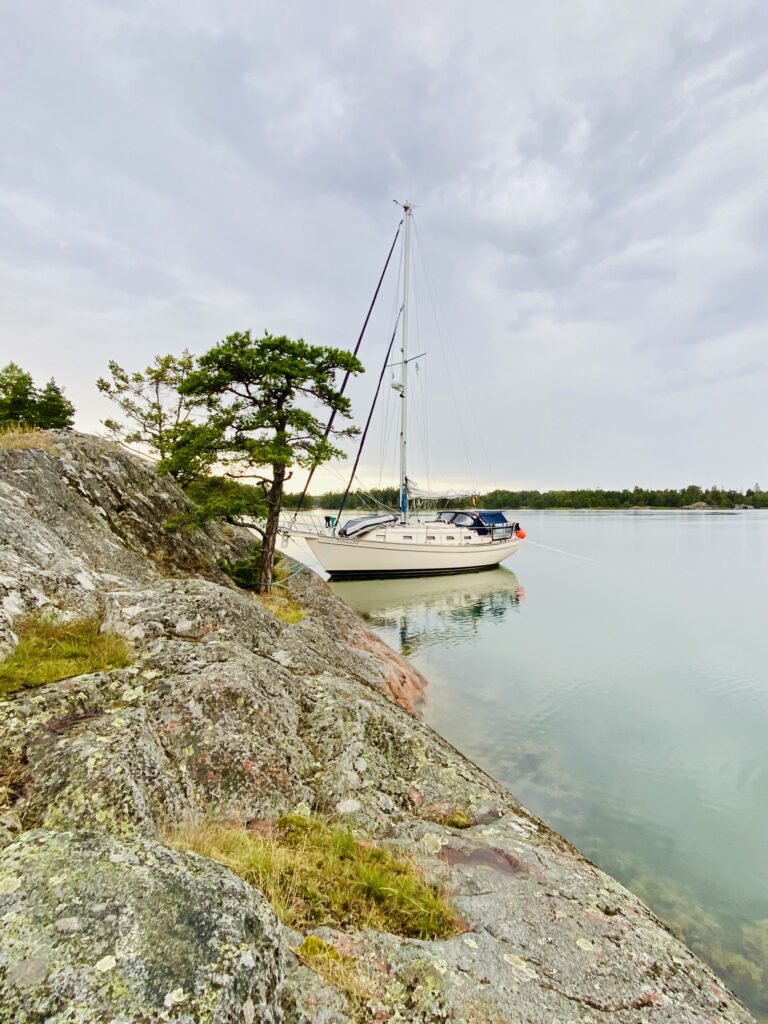
- Ringsön, Västerfjärden (058° 43.960′ / N 017° 26.637′ E) The largest island in the Nynäshamn archipelago has several beautiful bays. We chose the wonderfully sheltered south-western one and spent a day tied up to the rock.
- Ägnö, Napoleonviken (059° 14.230′ N / 018° 24.056′ E) A superbly sheltered anchorage just before Stockholm. Not much space for boats at anchor, but plenty of spots tied up to the rock.
- Runmarö, Norrviken (059° 16.318′ / N 018° 43.639′ E) A small SXK club harbour on one of the largest islands in the Stockholm archipelago, with a pontoon, sauna and a few buoys. If you’re a member, you shouldn’t miss this lovely little place.
- Västra Runmaren (058° 59.511′ / N 018° 19.710′ E) An absolutely beautiful anchorage, open to the north. Perfect in nice weather, with a beach and a barbecue area. There’s also a toilet. Good holding in shallow water (2.50 m).
Affiliate notice: This page contains affiliate links. If you make a purchase through these links, we receive a small commission at no extra cost to you. Thank you for your support!