Buying a boat
When it comes to buying a boat, as so often, anything goes: from cheap to expensive. Popular, high-quality boats, especially those from Scandinavian yards, command a handsome price even in small sizes. If they don’t, you should look for the catch straight away. On the other hand, production boats such as Bavarias or Beneteaus can often be bought for small money.
What we were looking for and what we chose
We wanted
- a solidly built, seaworthy boat:
- around 12 metres long,
- preferably a ketch and/or cutter-rigged (i.e. with two headsails),
- width a full-keel or a moderate full-keel.
Our budget was a maximum of €60,000, because we also wanted something left over for equipment and repairs.
We looked at a number of boats in that size and price bracket, including a Colin Archer 32, Najad 343, HR 352/38, Rival 36 and Transworld 47. All of them had flaws of one kind or another. Only the Colin Archer was perhaps perfect, but sadly it was too small and lacked the standing headroom to live on permanently, and with its 2-metre bowsprit it would still have been expensive in the harbour.
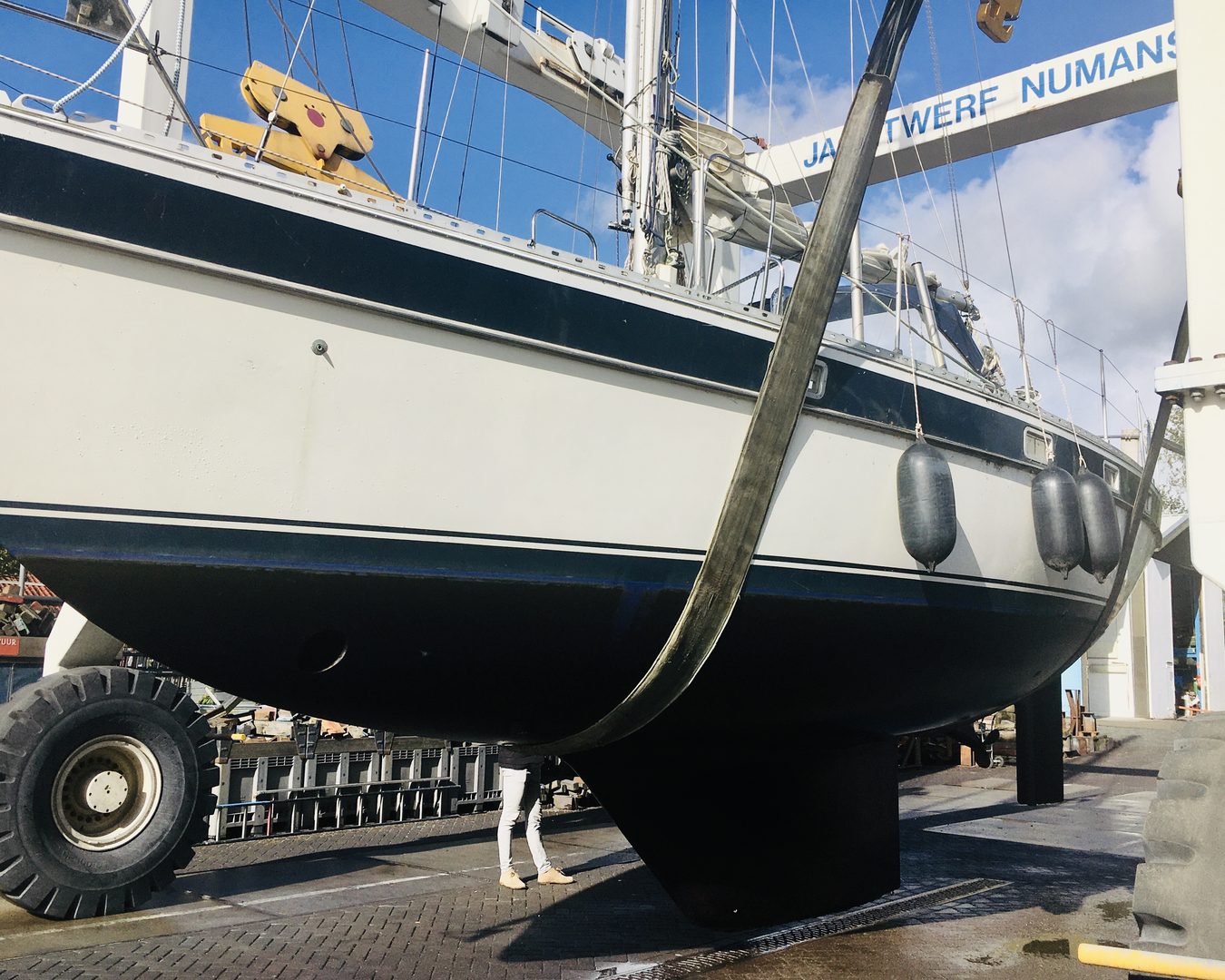
It quickly became clear to us that we would have to compromise and make sacrifices. Either on size (smaller than 38 feet) or on condition (e.g. a damaged teak deck, engine problems or osmosis). We decided it was better to start small and not have to spend ages tinkering with the new boat.
Our slightly unexpected decision
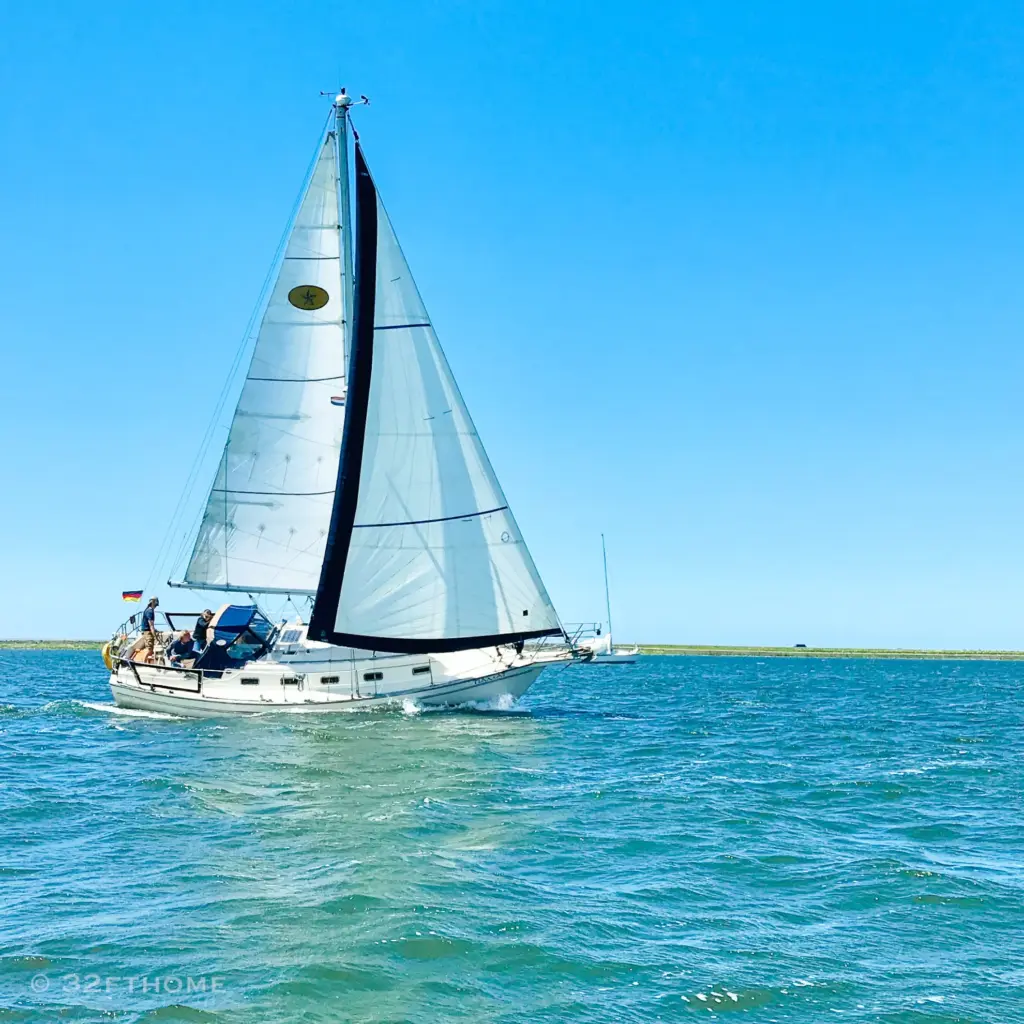
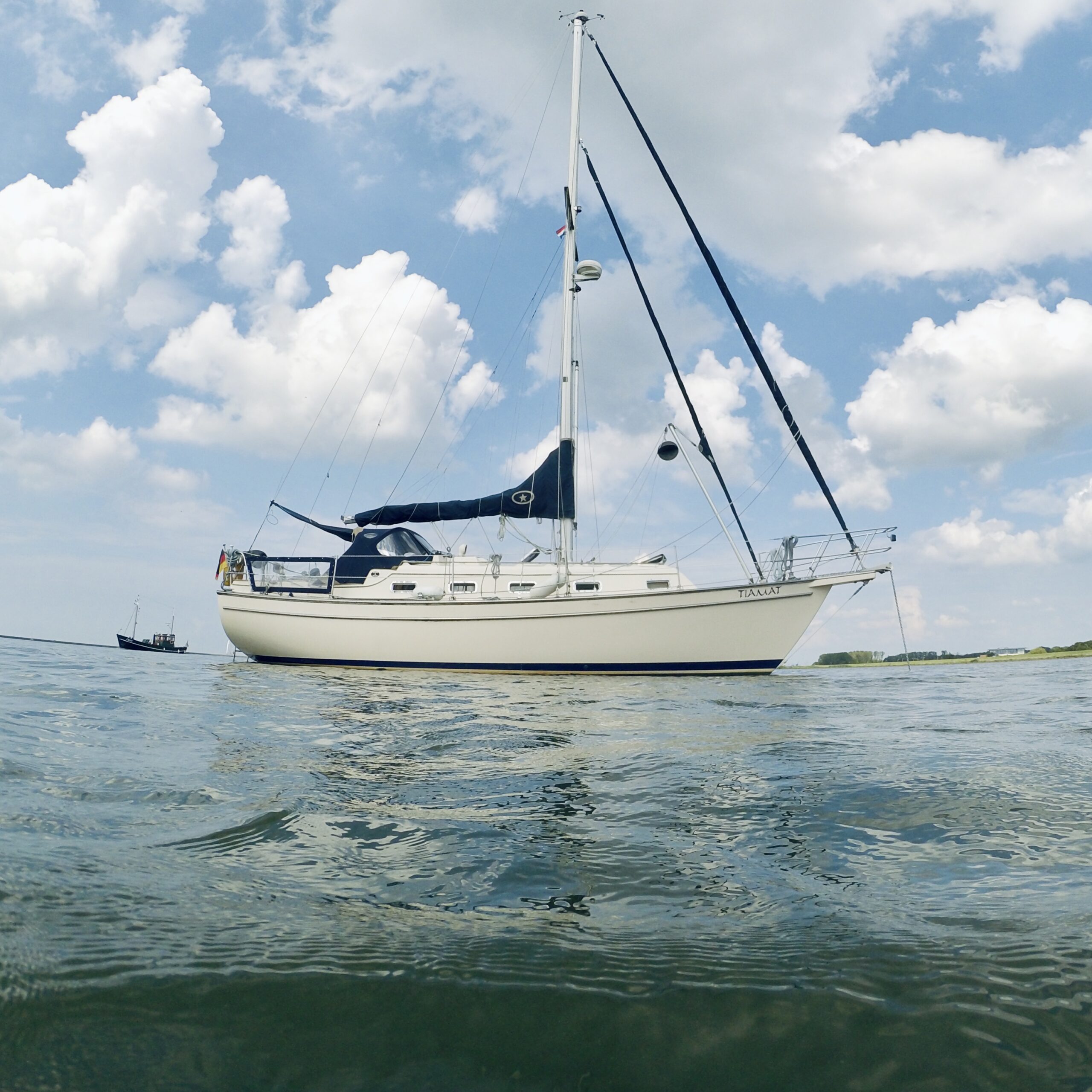
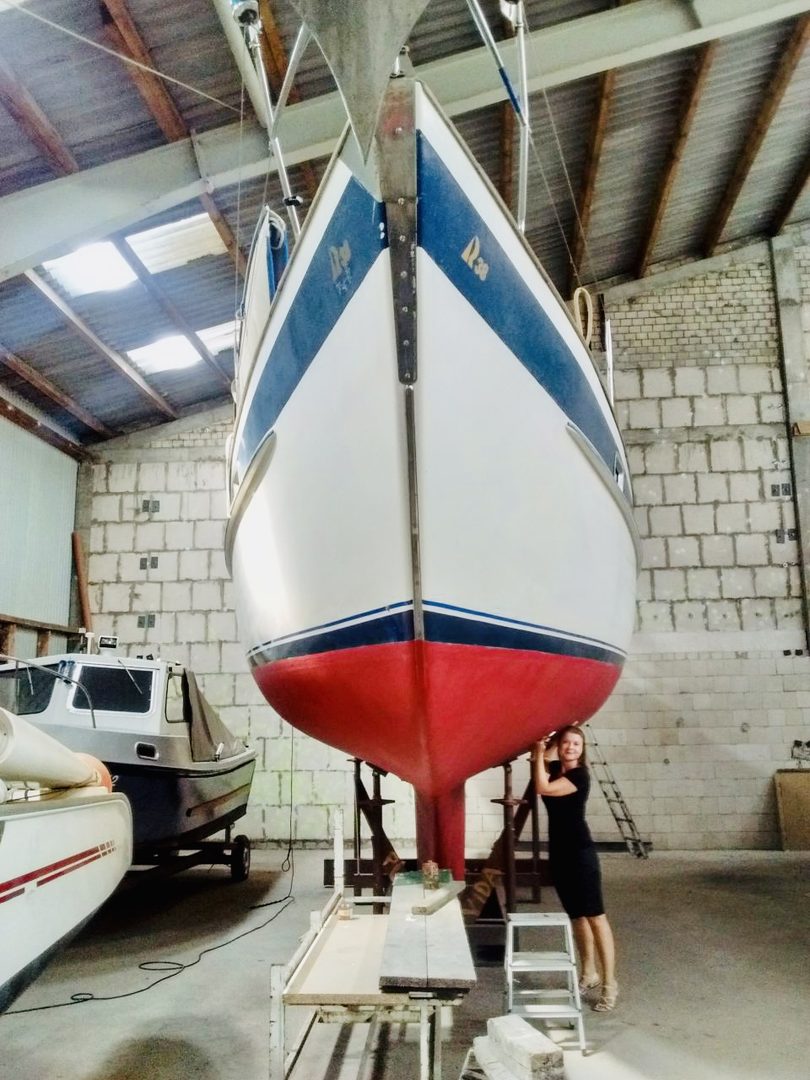
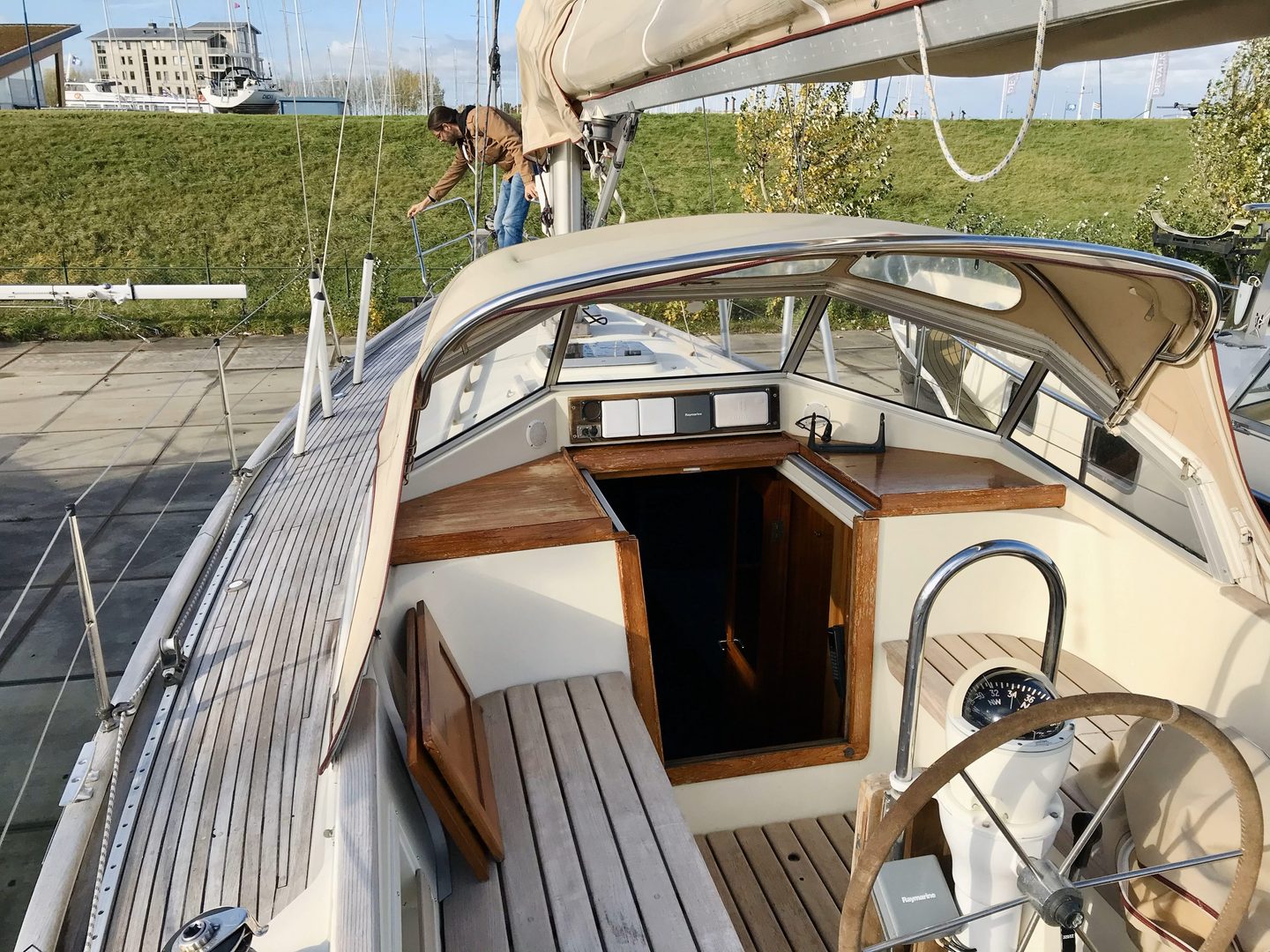
In the end, our boat turned out much smaller than we had first thought: we almost didn’t look at the Island Packet 32 (10.67 m, 1994) at all. We already had the yard and the boat type on our radar, but really more as a larger model. Although the IP 32 is a 35-footer going by length overall (LOA), it offers only 32 feet, so just under 10 metres, of living space. But, as we found after a viewing, that space was well laid out.
For a boat under 11 metres she was rather expensive at the time (2019) (asking price €69,000), but solidly equipped and well looked after. Island Packets are very sturdily built and are one of the most popular long-distance cruisers in the USA. For a 35-footer on the market at that time, the owner wanted €89,000. Those extra 3 feet weren’t worth the money to us. So we chose the IP 32.
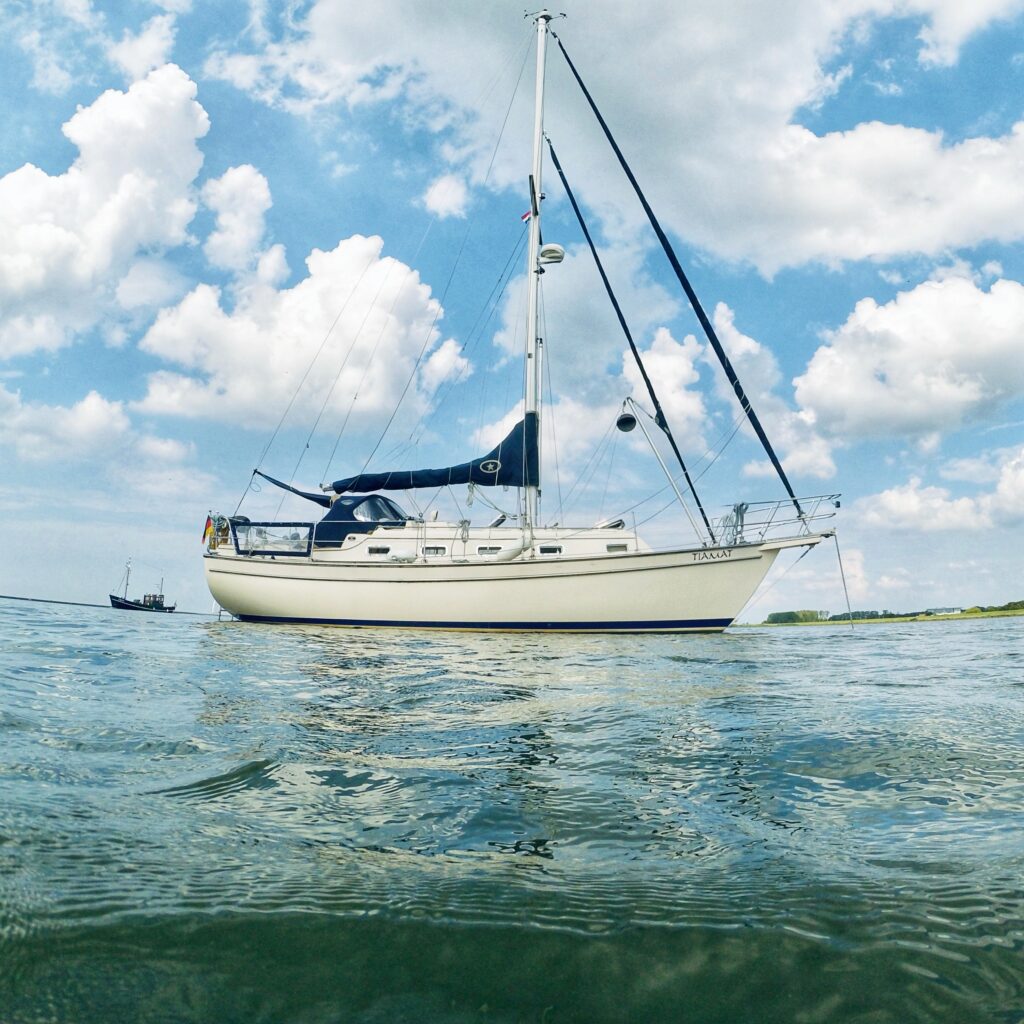
Our little home on the water
Here you can find out more about our boat: what we like about her and what we sometimes wish we had.
In our experience, there is usually room for negotiation of around 10 to 15% of the asking price. On that basis we made an offer, which, after a few emails with counter-proposals, suited both sides. We paid a deposit and booked a date for the survey.

Best to get a survey before buying
The one piece of advice we would give anyone who wants to buy a boat and (like us back then) doesn’t know much about boats: put a bit of extra money aside and hire a marine surveyor. In most cases you earn the fee back when defects (and you always find some) lead to a retrospective reduction of the agreed price.
The Trintella 38, which would have cost us €40,000, turned out to be a project boat with rotten electrics, osmosis and leaks in the deck. We hadn’t noticed any of this at the first viewing. Luckily, our surveyor saved us from an expensive mistake here.
During the survey of our TIAMAT he found, among other things, a leak in the aluminium tank. On the IP, that means cutting open the floor, replacing the tank and fitting a new floor. We would have had to pay around €4,000 for a new tank plus installation costs. The surveyor’s fee was €1,200. The repair costs were deducted from the agreed purchase price after the survey. If only minor defects are found, you get a good feeling and a short to-do list. That can be very useful too.
In December 2019, TIAMAT was then practically under our Christmas tree. It was just in time, before the second-hand boat market was virtually swept bare and prices exploded during Covid. Sometimes timing really is everything.
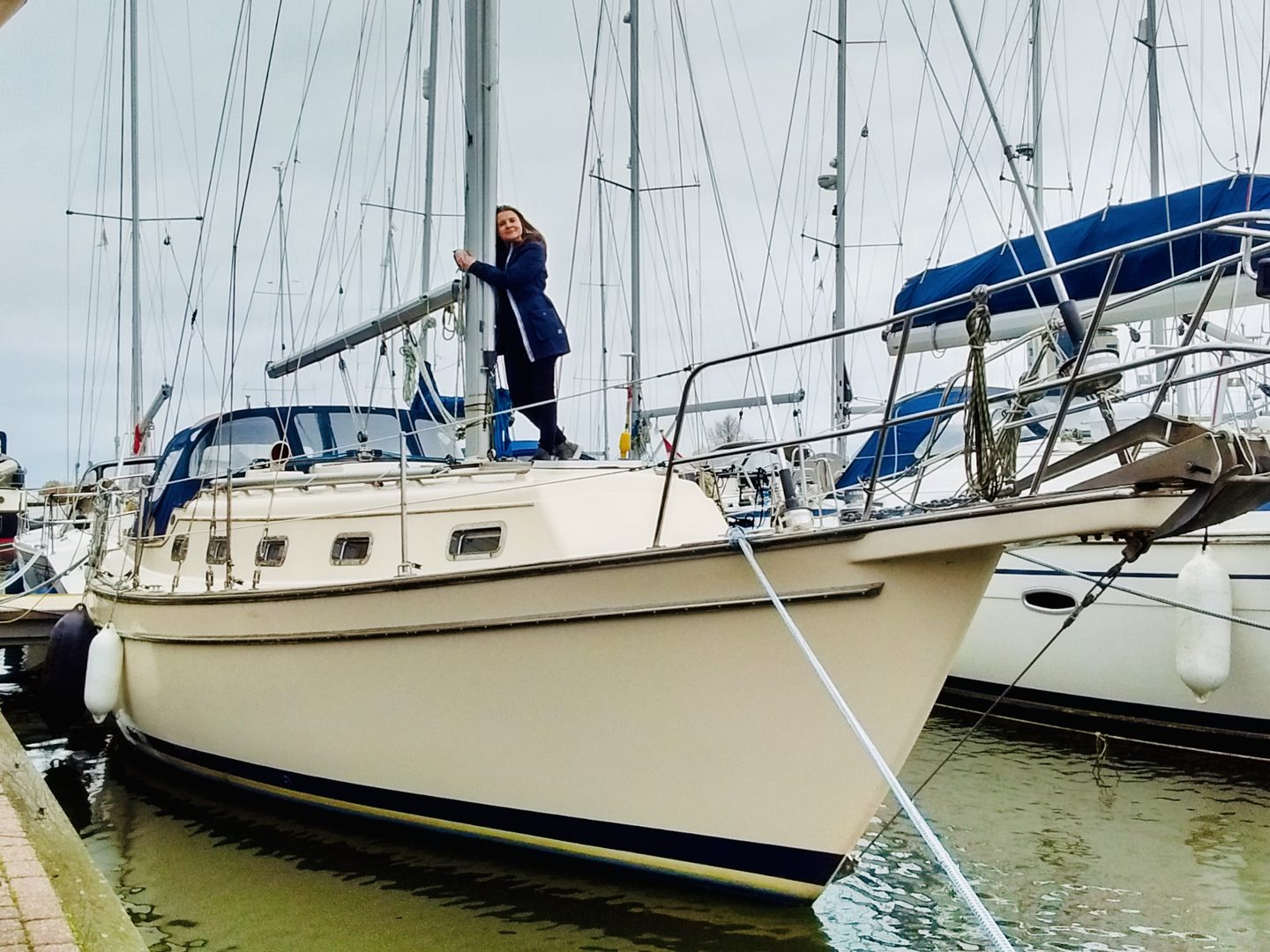
Equipment after the purchase
In the first year after the purchase we didn’t invest much. Until about mid-2020 we couldn’t get to the boat in Holland anyway because of Covid travel restrictions. Our investments in the first 24 months after the purchase were:
- an inexpensive dinghy: €500
- solar panels (one fixed and 2 folding panels) + installation materials: €1,550
- lithium batteries (2×100 Ah) + installation materials: €2,500
- light-wind sail for the IP 32 (€1,200)