🧭 Factsheet
Route: From Newlyn to Vannes
Dates: 4 to 20 October 2026
Log: 173 nautical miles
Highlight: Through the Raz de Sein at 10 knots SOG.
📍 Our route & legs
Leg: L’Aber Wrac’h → Brest

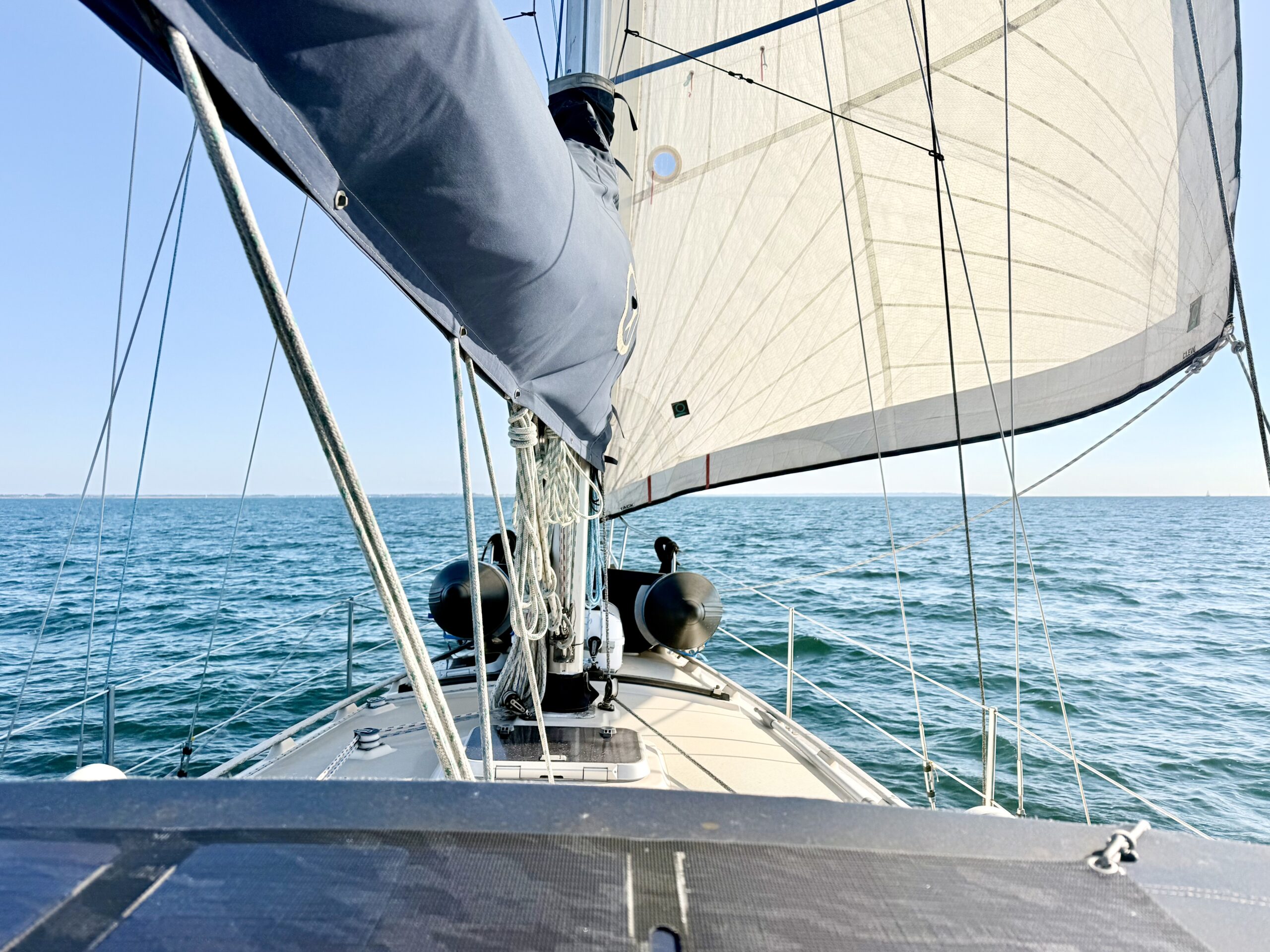
France treated us to the best day’s sailing we’d had in what felt like ages, right from the start. First, we had to motor out of the estuary from L’Aber Wrac’h in thick fog. But just off the coast, beyond the wall of fog, we found brilliant blue skies and a perfect 15-knot north-easterly with no waves.
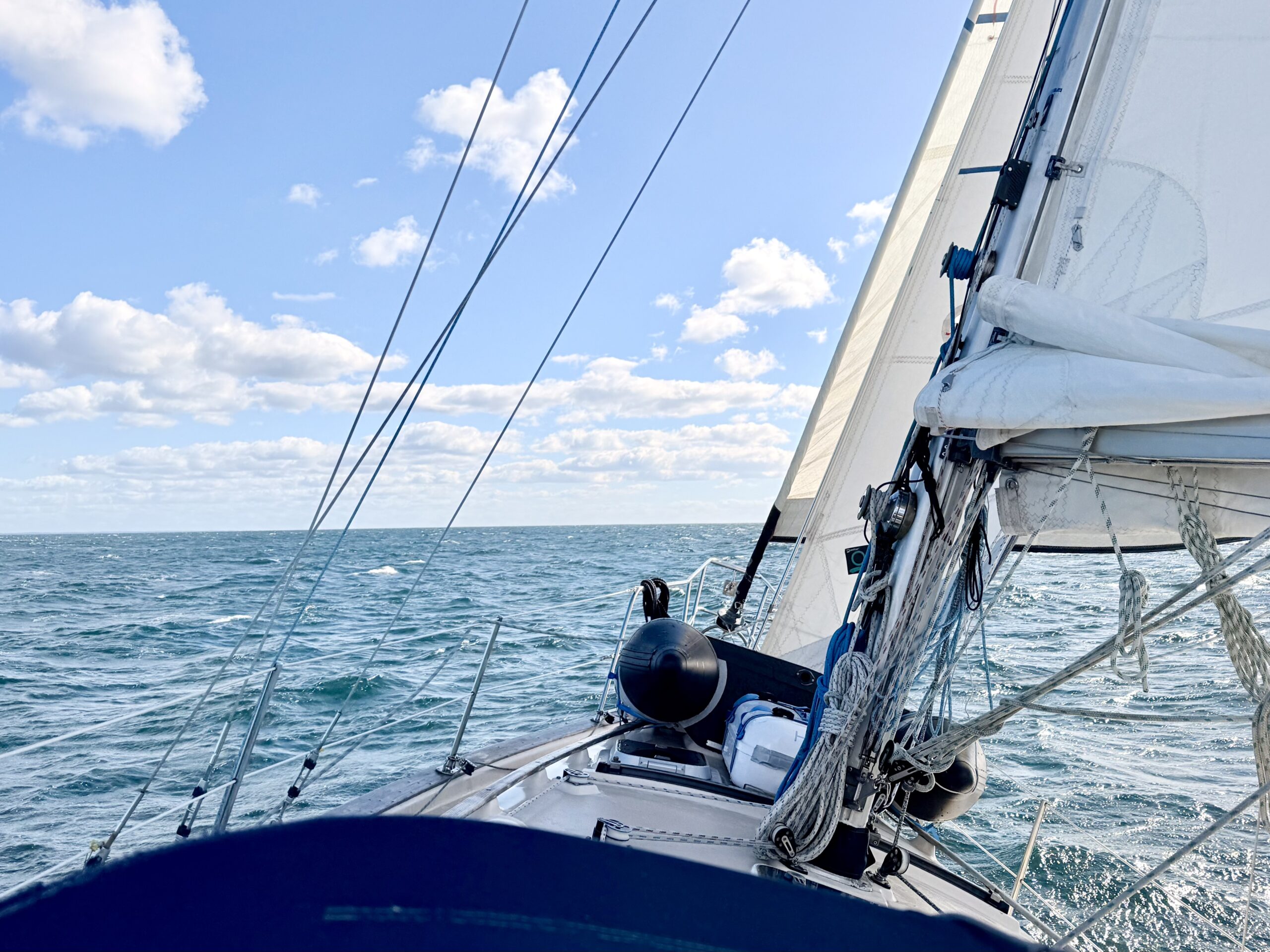
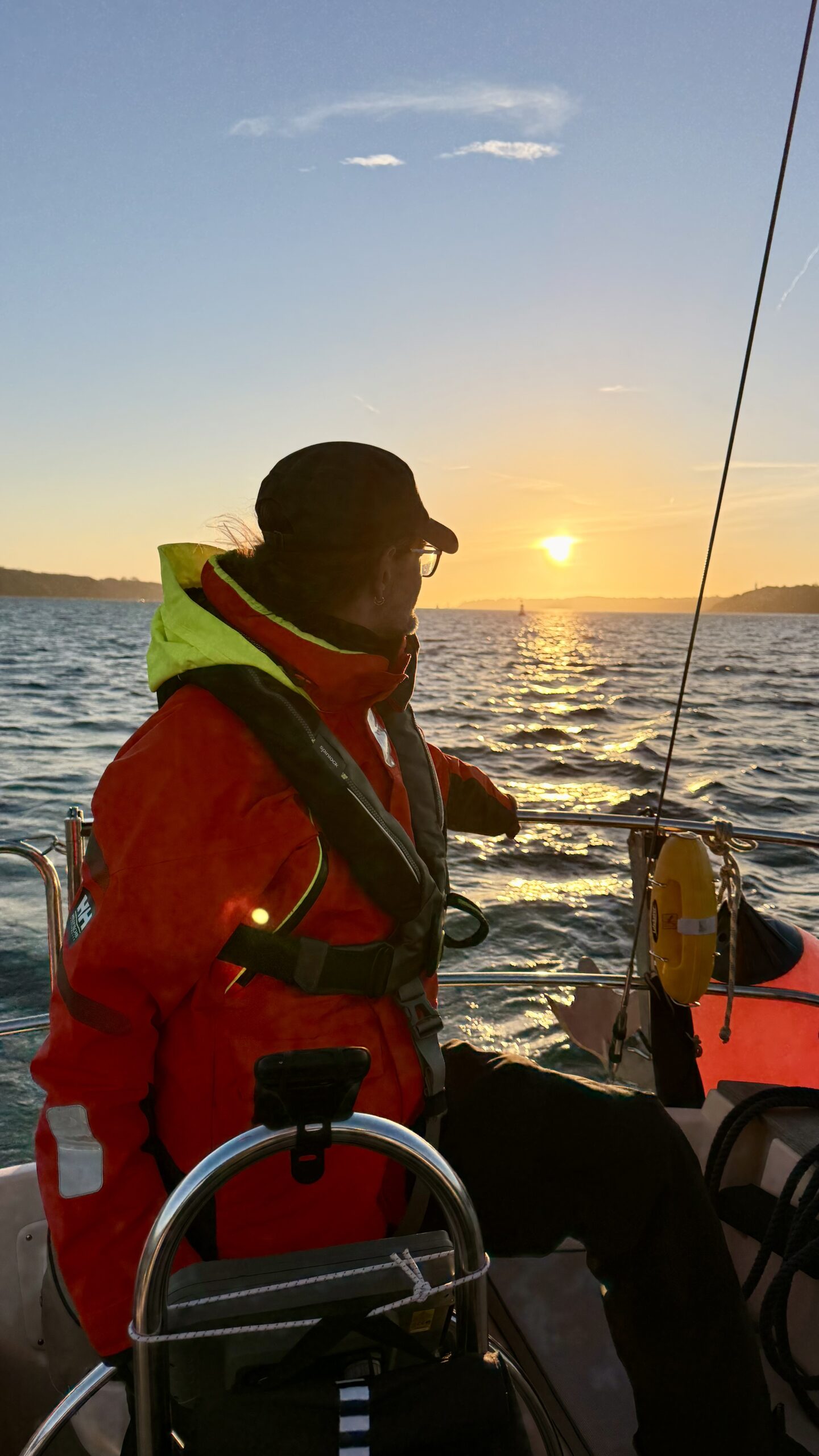
We started with a still-comfortable beam reach, then sailed goosewinged through the Chenal du Four, which turned out very benign and friendly today, and finally close-hauled at 30 degrees almost all the way into the Rade de Brest. Just before sunset, we reached our destination, Marina du Château. Luckily, I’d reserved us a berth on the way, because the visitors’ pontoon was full.
We wanted to stay for at least a week. For one thing, we wanted to explore Brest at our leisure, and a bit of housework was overdue too. Brest’s low-season berthing fees (19 € per day for 11 metres) were a welcome relief for our travel budget. And after Newlyn’s somewhat rough-and-ready facilities, the new shower and toilet block felt like a spa. So there was no rush.
Leg: Brest → Camaret-sur-Mer
To give ourselves a good starting point for the next longer leg at the weekend, we left the Rade de Brest on Thursday and headed out to Camaret-sur-Mer. With the ebb tide, we had a favourable current for more or less the whole way. Unfortunately, the wind was on the nose. The captain refused to indulge my wish for a lovely beat, and the engine stayed on. To be fair, the gloomy weather and rather chilly wind weren’t exactly tempting us to spend a few extra hours on the water either.
Leg: Camaret-sur-Mer → Lesconil
Setting off on Saturday morning, we first crossed the Mer d’Iroise towards the Raz de Sein. Another thoroughly notorious stretch of water, best navigated at slack water. But that timing wouldn’t have allowed us to cover the 50 miles in daylight. So we let the fresh north-easterly and a following tide (Brest HW +4) carry us through the narrows. As it was neaps, it was all manageable, with no dangerous overfalls. At times, though, the GPS log showed almost 10 knots.

The wind freshened a little more later and veered further east, so instead of the beam reach we’d expected, we had to sail pretty close to the wind. Once around Cap Penmarc’h, we had to start the engine and motor into the wind for the rest of the way. There was plenty of room in Lesconil harbour, so we stayed there rather than anchoring outside.
Leg: Lesconil → Quiberon
Looking at the weather chart, with the first forecast autumn storms already on their way, we decided during the passage to Lesconil to push straight on to Vannes that weekend. So Sunday brought another full day’s passage: 54 miles to Quiberon. Another north-easterly was forecast (more like NNE), at a pleasant 15 knots.
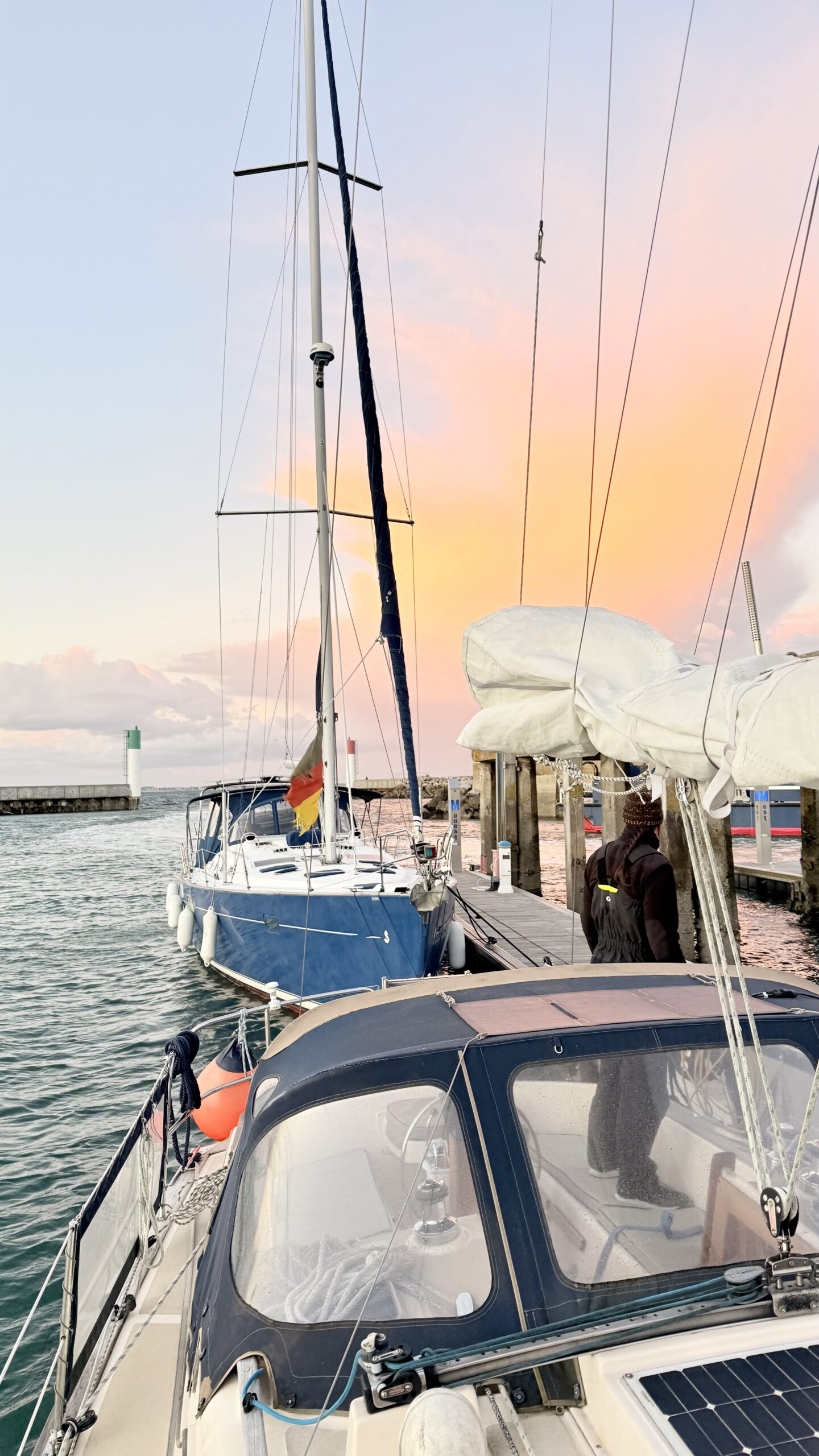
We had to motor at first. Our route took us between the Glénan archipelago and the Île aux Moutons. Luckily, the sun was already up. We had to dodge countless fishing nets. Getting through here unscathed in the dark would be absolutely impossible. After half an hour, we could switch off the engine and really enjoy our penultimate sail before our winter berth. With a smooth sea and sometimes reaching hull speed, our TIAMAT glided through the water. All in glorious sunshine and pleasant temperatures.
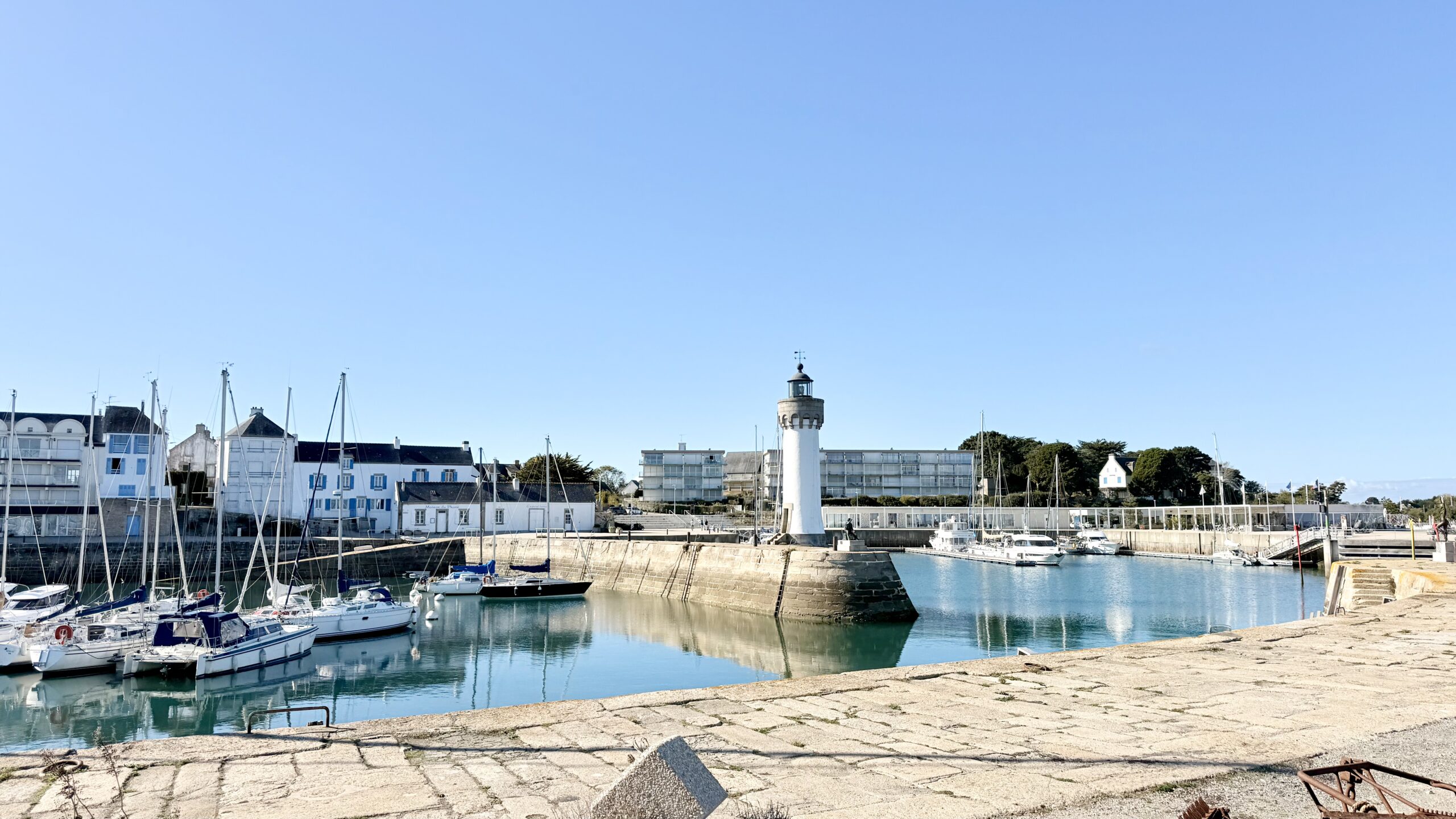
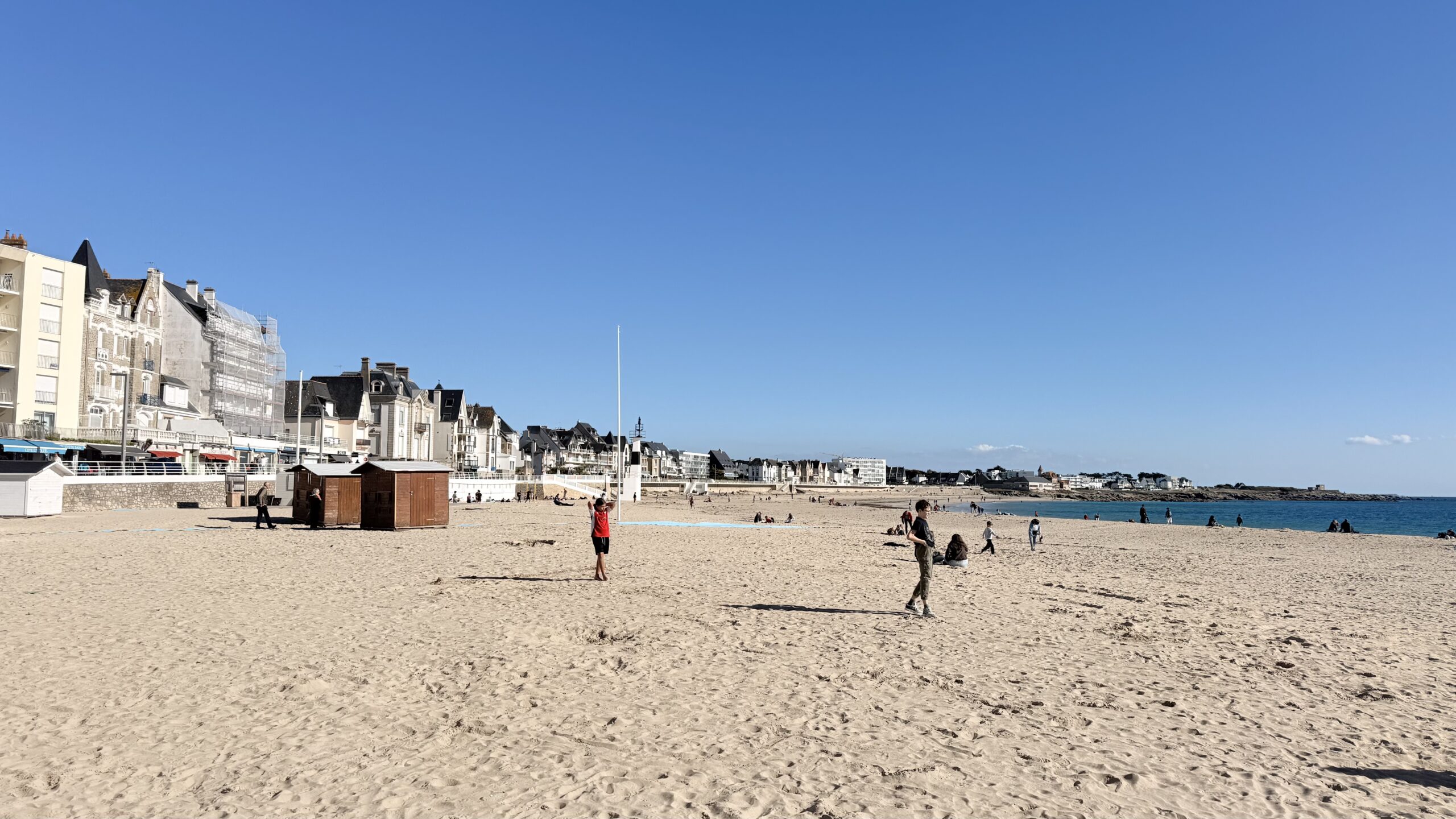
Later, at Pointe du Conguel, the southern tip of the Quiberon peninsula, we had to push through the narrow passage against the wind and waves. It was a bit bumpy, but soon over. We moored up before the rain in the last available space on the visitors’ pontoon, directly opposite the harbour entrance. Next time we come here, we’ll try to bag a berth in the inner harbour basin instead. The walk to the showers and toilets is simply too long, and with a northerly wind, too much swell rolls into the entrance.
Leg: Quiberon → Vannes

On a Tuesday after work, we set off on our final leg of 2026. Another 18 miles, across the Bay of Quiberon and through the Golfe du Morbihan.
Despite it being a weekday, the bay was quite busy. Plenty of windsurfing schools were out (presumably the autumn school holidays had already started in France), along with quite a few sailing boats. We sailed for about another hour in the light wind, though it was more like standing still at a slightly faster pace. We couldn’t squeeze out more than 3 knots at most. We’d probably have needed the main for that. But once again, we were too lazy to unpack it.
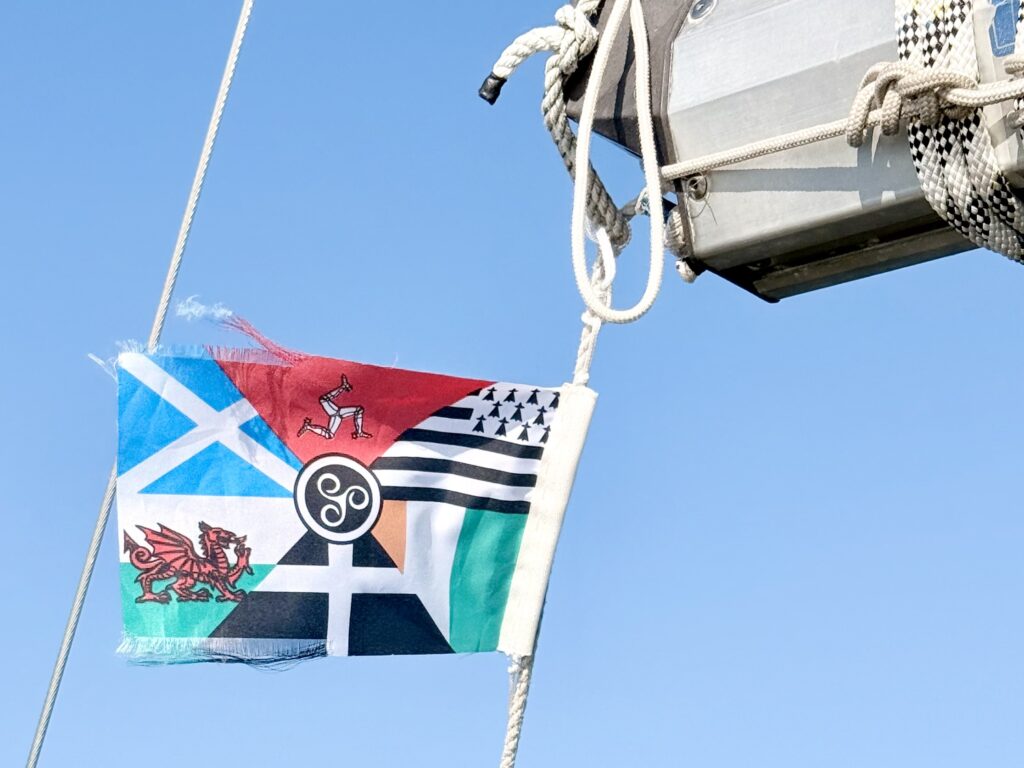
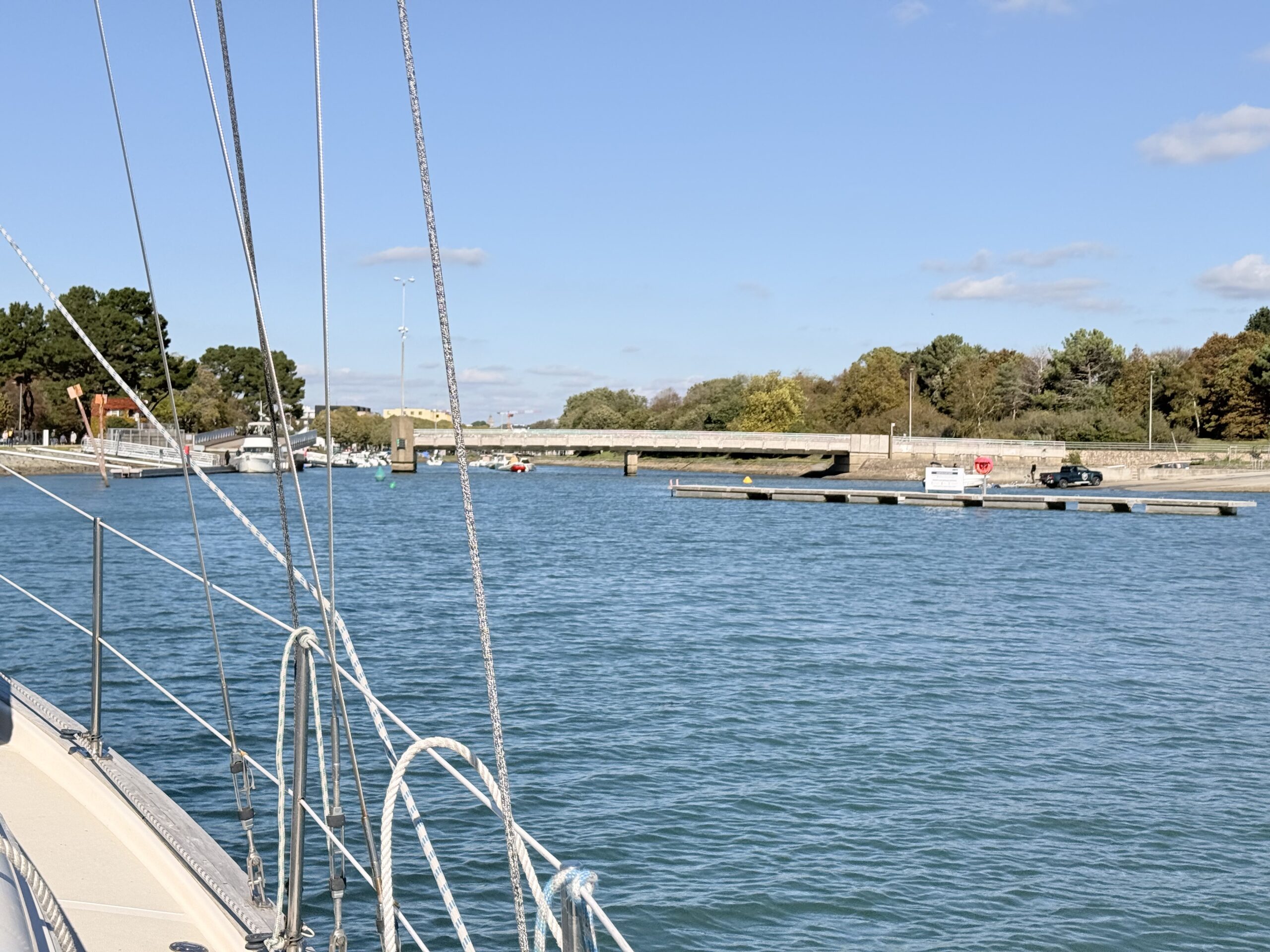
The Gulf of Morbihan is a wonderful, nethertheless demanding, stretch of water. We were sailing at neaps and still had 3 to 4 knots of current in places, thankfully with us. For the passage to Vannes, it makes sense to enter the gulf about half an hour before high water at Port-Navalo. That way, you’ll still have the flood tide with you all the way to Vannes (HW Vannes is about 2 hours later). The harbour is tidal too. Opening times for the lifting bridge and the tidal gate depend on high-water times and the harbourmaster’s office hours.


🗺️ Memorable moments & lessons learnt
- With good timing, sailing through the Raz de Sein was very pleasant.
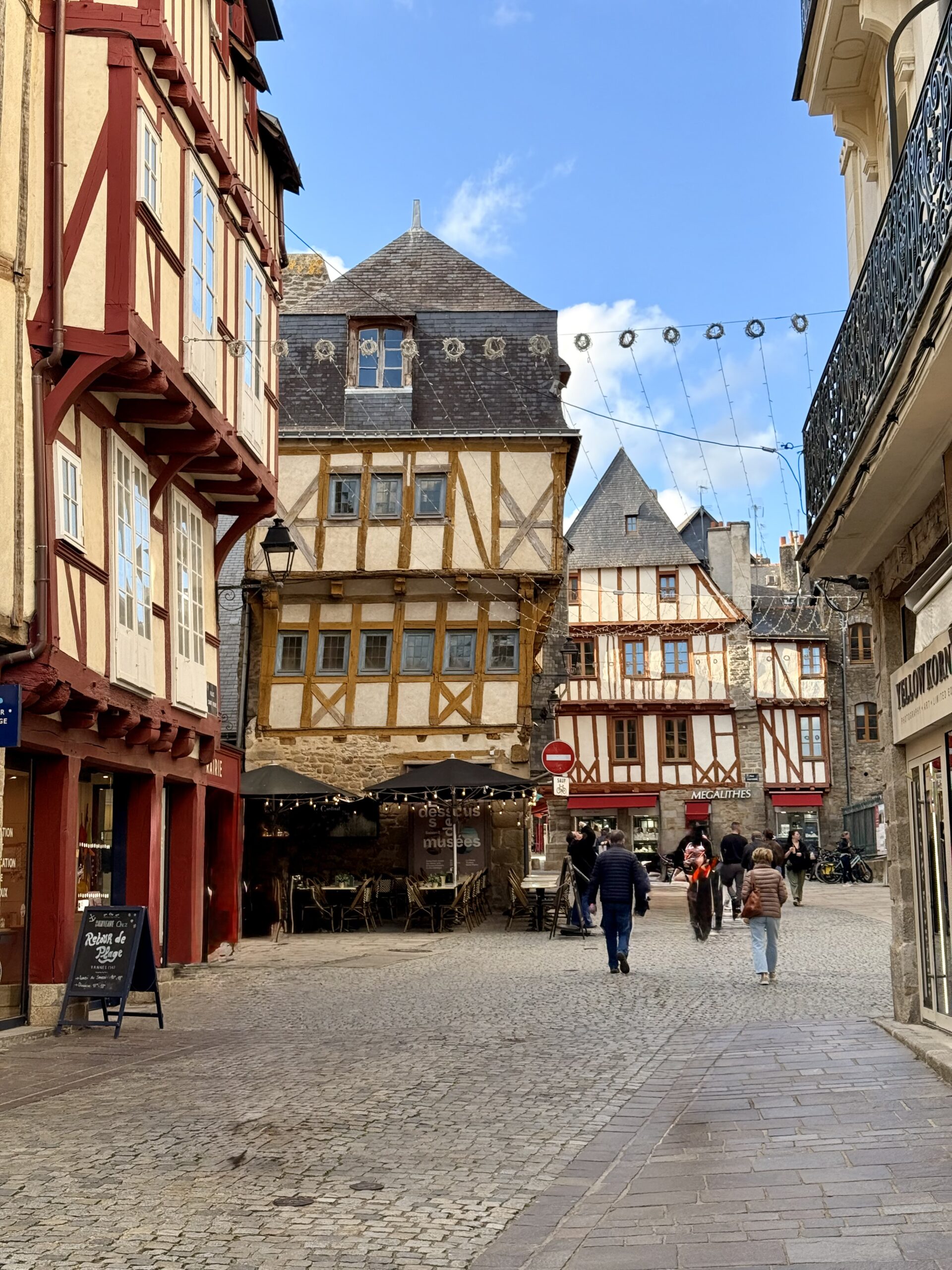
- Mooring up in Vannes, which we’d talked about so often with our Swedish neighbours during the winter of 2024/25. Sadly, they decided to spend the winter in La Rochelle.
⚓ Our favourite place on this trip
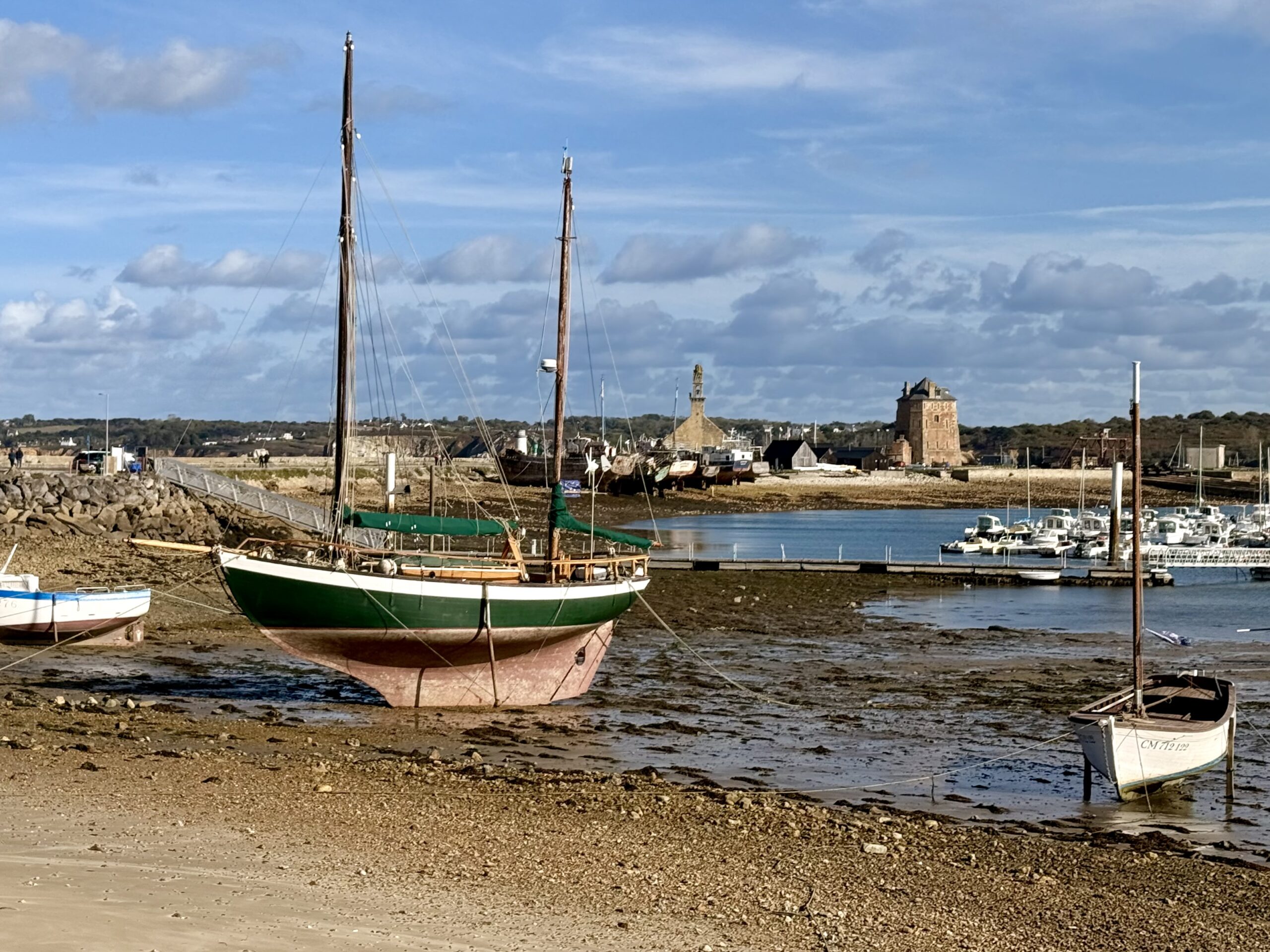
- Camaret-sur-Mer
💡 Practical tips for those following in our wake
- The French Shom website makes it very easy to look up tidal information for numerous ports.
- We weren’t particularly impressed with Shom’s tidal stream charts, so Tommy built us an app for passage planning in France using the freely available data.
- The Vannes harbour widget shows the harbour basin’s opening times.
🖼️ Gallery