🧭 Factsheet
Route: From Stoksund to Haukland (Lofoten)
Dates: 1–31 July 2025
Logged: 362 nautical miles
Days in harbour: 10
Days at anchor: 5
Highlight: Our overnight passage to Lofoten
📍 Our route & legs
Leg 1: Stoksund → Vingsand → Villa

After what felt like an eternity in the harbour of Stoksund (we arrived here on 24 June), we finally got moving again. Storms and rain had kept us stuck for far too long. Five hours and 25 miles later we reached Vingsand, in pleasant sailing winds and with just the genoa. The very next day we continued on to the beautiful island of Villa – unfortunately once again under engine only. The weather was becoming more summery, but the wind was mostly absent. Villa is a pretty little island with a lovely old lighthouse that, when it was built, was still properly lit with fire. Today, an association not only looks after the jetty, but also the paths and Villa fyr itself. Absolutely worth seeing.
Leg 2: Villa → Rørvig
As sad as it was to leave Villa again the very next day, we had to take advantage of the wind when it did blow – especially when it came with sunshine. So out onto the water we went. In four hours we flew the 24 miles to Rørvig. Beautiful sailing with a beam to slightly broad reach on Tiamat’s chocolate-coloured bow. And in Rørvig we just managed to grab the last visitor berth. Northern Norway is slowly filling up.
Sailing in Norway
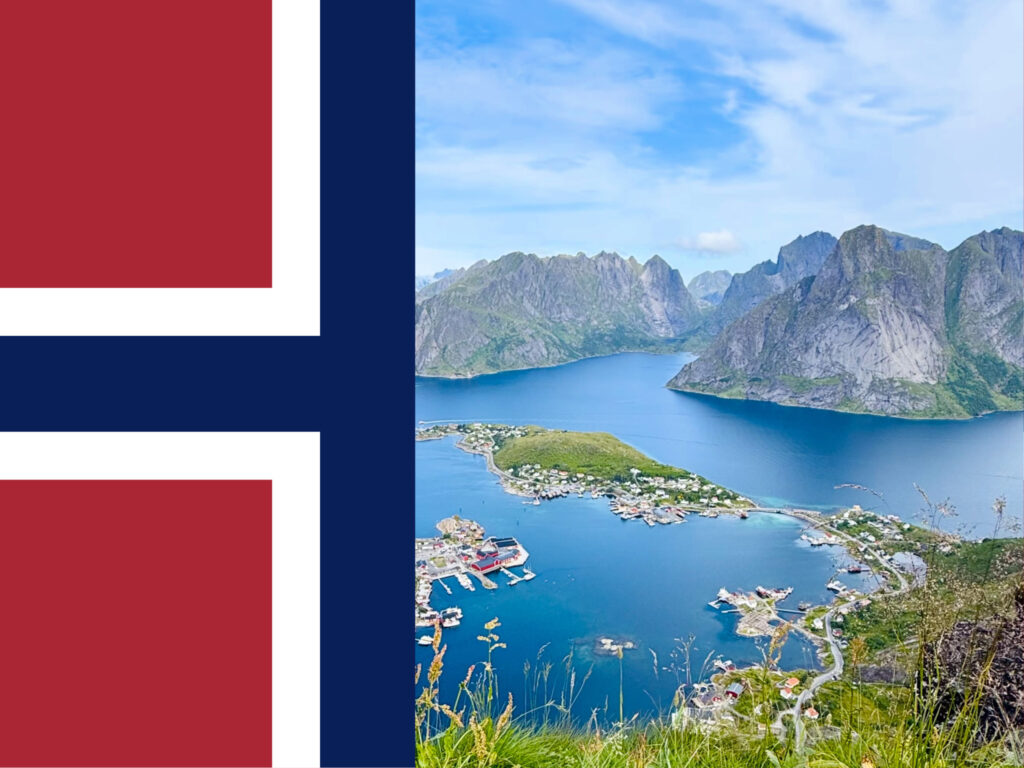
Discover the best sailing tips for Norway: cruising areas, anchorages and practical advice for your next sailing adventure along the Norwegian coast
Leg 3: Rørvig → Torget
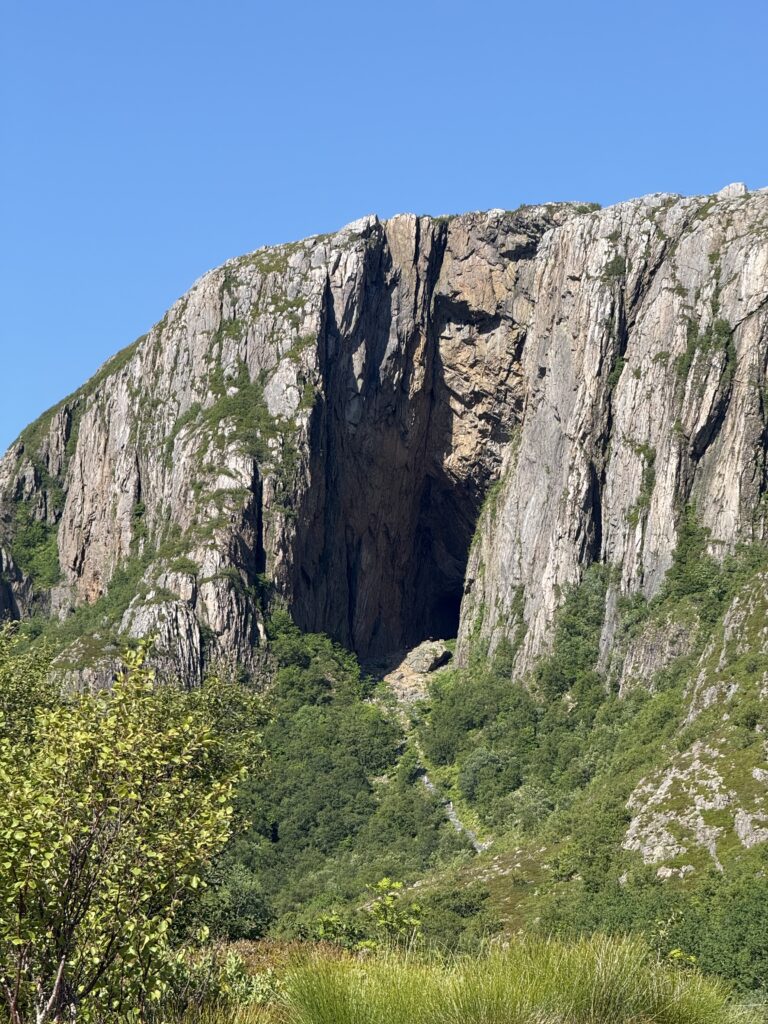
We found our first anchorage of the summer in the well-protected bay off the island of Torget. On Monday after work, we hiked up to Torghatten – the mountain with the hole in the middle, which, according to legend, owes its shape to the hot-headed king’s son Hestmannen. He shot an arrow at the beautiful Lekamøya and her rescuer, the troll king Suliskongen, who threw his hat to save the maiden. The arrow pierced the hat, which landed on Torget. This legend would accompany us along the coast. The hike itself was fairly easy, taking us up to the hole, through it, and back down on the other side of the island.
Leg 4: Torget → Indreøya → Vega → Tjøtta → Hjartøya

Continuing north, our route took us from Indreøyan (a lovely little natural harbour with a jetty and barbecue area) via Vega (Vegstein) to Tjøtta. At least the final leg had enough wind again to sail with the gennaker. The next day it suddenly became so warm that we could continue in shorts to the anchorage at Hjartøya. A truly beautiful spot: well protected all round and crystal-clear water. That finally tempted me (Antje) into my first swim of the season.
Leg 5: Hjartøya → Lovund
A long-held dream destination on our trip was Lovund, ever since we first heard about this island. Every year on the exact same day, 14 April, puffins come ashore here to breed (Lundkommerdag). After Runde, this was another chance to watch these cute little birds. We had to beat our way towards Lovund against a fresh north-westerly. With all the skerries and shallows along the route, that wasn’t exactly easy. But an even bigger surprise was still waiting for us. The Novvika anchorage we had picked lay in the south, at the foot of the rather steep mountain: dream beach and azure-blue water. What we hadn’t considered was one thing: katabatic winds. So instead of a sheltered anchoring idyll, we were met with more than 30 knots of wind in the bay (outside it was 15–20 from the NW), enough to heel Tiamat heavily even under engine. So we beat a quick retreat and headed for the harbour on the north side. Contrary to expectations, it was wonderfully calm there. We were told, however, that it offers little protection in southerly winds. Lovund was one of our highlights in July.

Leg 6: Lovund → Arctic Circle → Myken

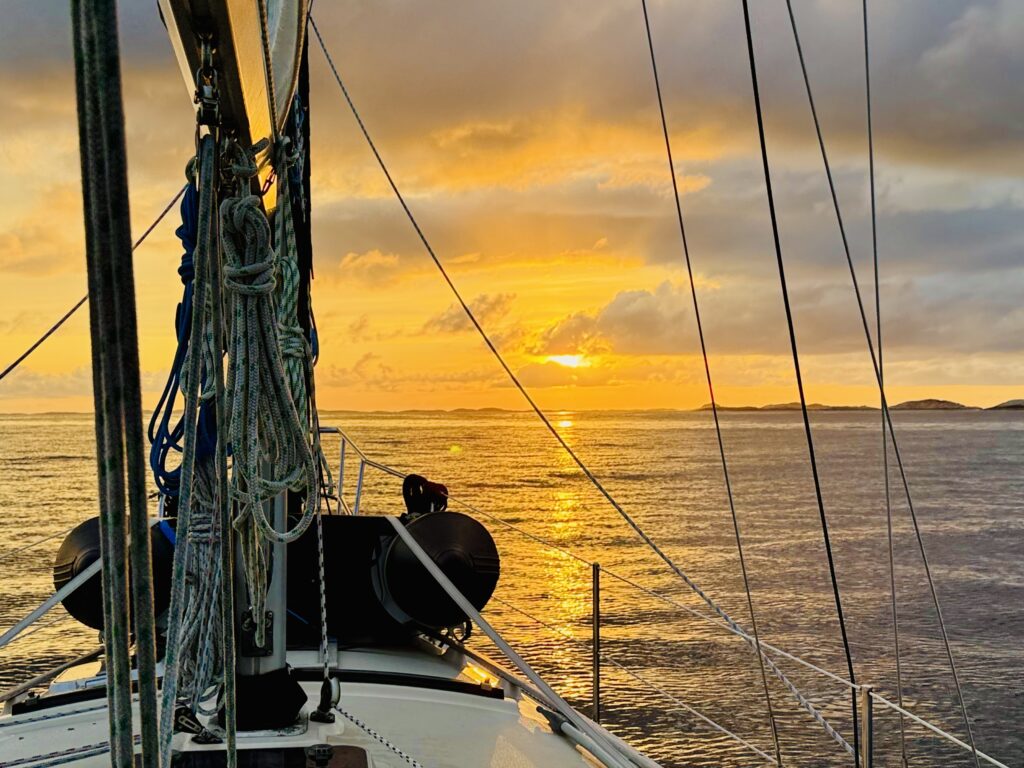
The 26 miles of this first leg were an absolute experience and one of the most beautiful passages of the summer. At last a southerly wind – light, but enough to gently push us north. Sailing on a beam reach, sometimes with the mainsail, later without it. 23 degrees, sunshine. And as if that wasn’t already amazing enough, just above the Arctic Circle we spotted our first whale (probably a minke whale, or several) and puffins fishing.
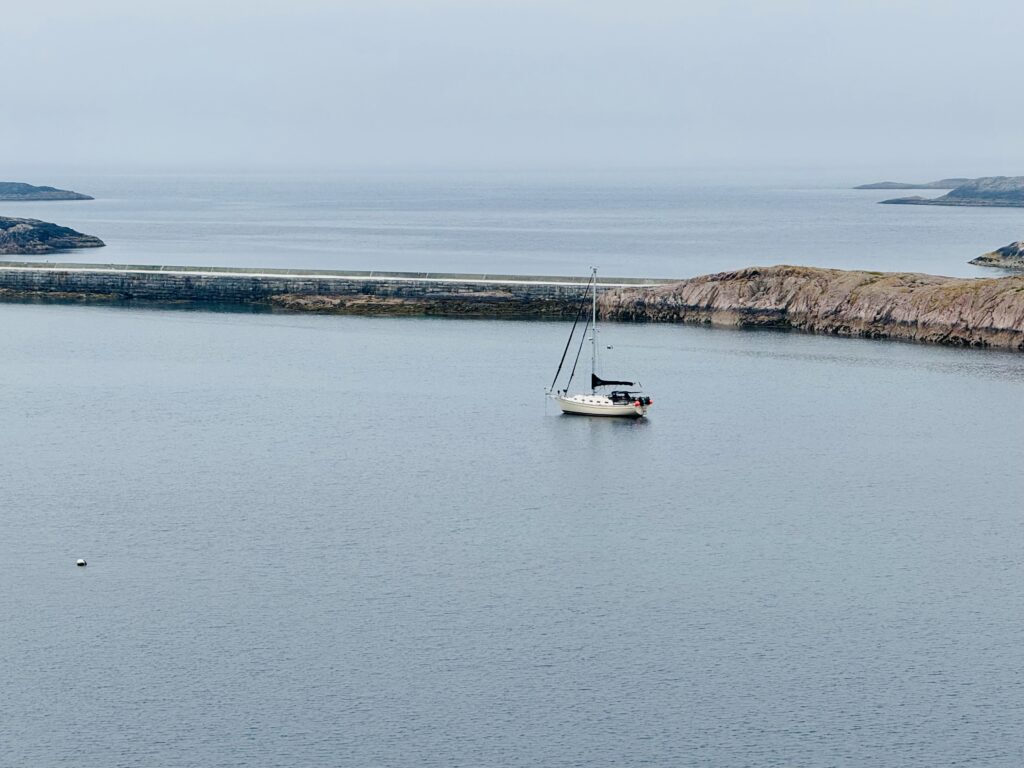
On arrival at Myken, we anchored once again, as the small harbour was already quite full. In general, we quickly noticed that Norwegians seem to prefer lying rafted up in harbours rather than anchoring. For whatever reason. Myken is a lovely island far offshore, with just a handful of permanent residents and a whisky distillery. You can visit it and even take part in a whisky tasting, but due to strict Norwegian regulations you can only buy the whisky at Vinmonopolet. A shame.
Leg 7: Myken → Tykthuset → Fugløya → Sandhornøya → Bodø
Apart from the first 25 miles back towards the coast, we motored almost the entire 70 miles to Bodø. But the fantastic weather held. Luckily so, because all the harbours we had actually planned to visit were full – holiday season for the Norwegians. Unlike in Sweden, though, the bays and natural harbours were largely empty. Of the three anchorages we used, Langsanden beach on Sandhornøya was the most beautiful. Bodø is useful for provisioning, laundry and crew changes, but otherwise not particularly worth seeing.

Leg 7: Bodø → Reine
Night sailing in Norway’s polar summer nights is particularly fun. The midnight sun makes staying awake easier, and the light is simply magical. We set off at 10 pm on the 51-mile leg to the Lofoten. We planned to choose a harbour along the way, depending on where the wind would carry us. At first, though, there was no wind at all and we were close to giving up – we really didn’t want to motor for that long. But further offshore it suddenly appeared: first a pleasant 10 knots from the south-west, later a bit more and veering further west. By morning we even had to reef again. As the wind continued to back west – making the course too high for Lofotodden at the very tip of the island chain or Å – we opted for Reine and were welcomed there by a rainbow just before 10 o’clock. We had both managed to get a few hours’ sleep, so we started the day feeling fairly relaxed.
Leg 8: Reine → Straumøya → Hauklandstranda
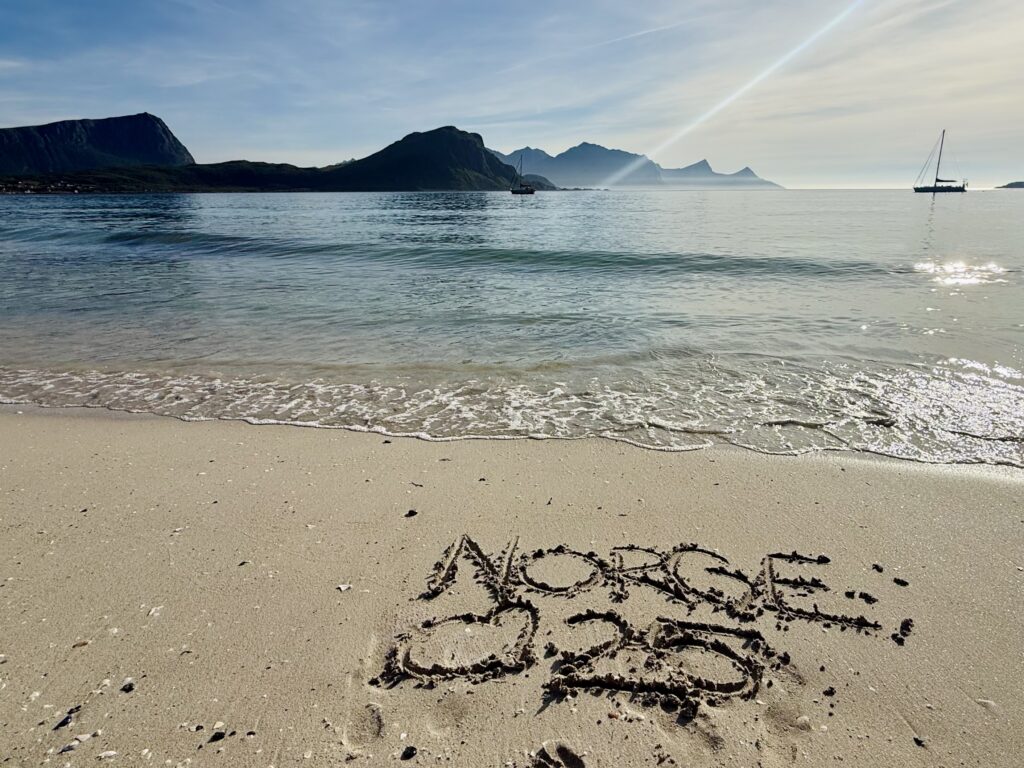
In the harbour of Reine, payment had to be made in cash if – like all non-Norwegian tourists – you don’t have VIPPS. At 400 NOK per night, our cash ran out quickly. So, also because strong north-westerly winds were forecast, we moved on to a well-sheltered anchorage and stayed there for two days. At the end of the month we then visited the iconic Hauklandstranda (Haukland beach) on the northern side of Vestvågøy. An Arctic bathing paradise that could just as easily be somewhere in the Caribbean, with crystal-clear azure water and fine white sand. Naturally, in perfect summer weather we weren’t alone. But apart from lots of swimmers and campers, there was only one other boat besides us. So no fighting over the best anchoring spot. We couldn’t have ended July any better.
🗺️ Special moments & learnings
- Always pay close attention to the topography around an anchorage. Steep slopes don’t always offer good protection. Katabatic winds are nasty.
- Crossing the Arctic Circle in perfect summer weather.
- Whale sighting.
- Night sail across the Vestfjord to the Lofoten.
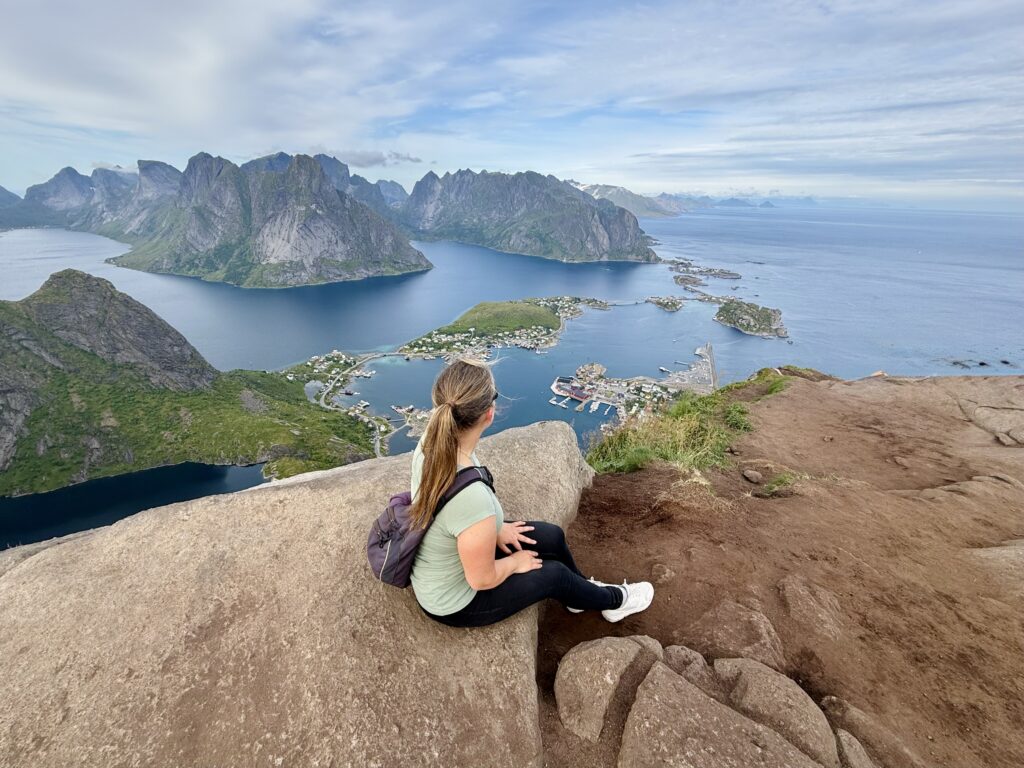
- Reinebringen hike.
⚓ Our favourite place of this trip
💡 Practical tips for fellow sailors
- In addition to Windy, we used Barentswatch.no for passage planning. It helped us assess currents and sea state more accurately.
- The Norwegian hiking app ut.no is excellent for planning walks and hikes.
- Sailing and life aboard in Norway
🖼️ Gallery