The idea of getting by with fewer things in life had already taken hold of me some time before the desire to travel the world by boat. When we eventually had a third bookcase in the flat, I asked myself why we had actually bought it. Just to put the books we had already read or would never read into it? Or clothes hanging in my wardrobe. Unworn. That doesn’t just waste money. It wastes energy too.
Minimalism: the beginnings before life on a boat
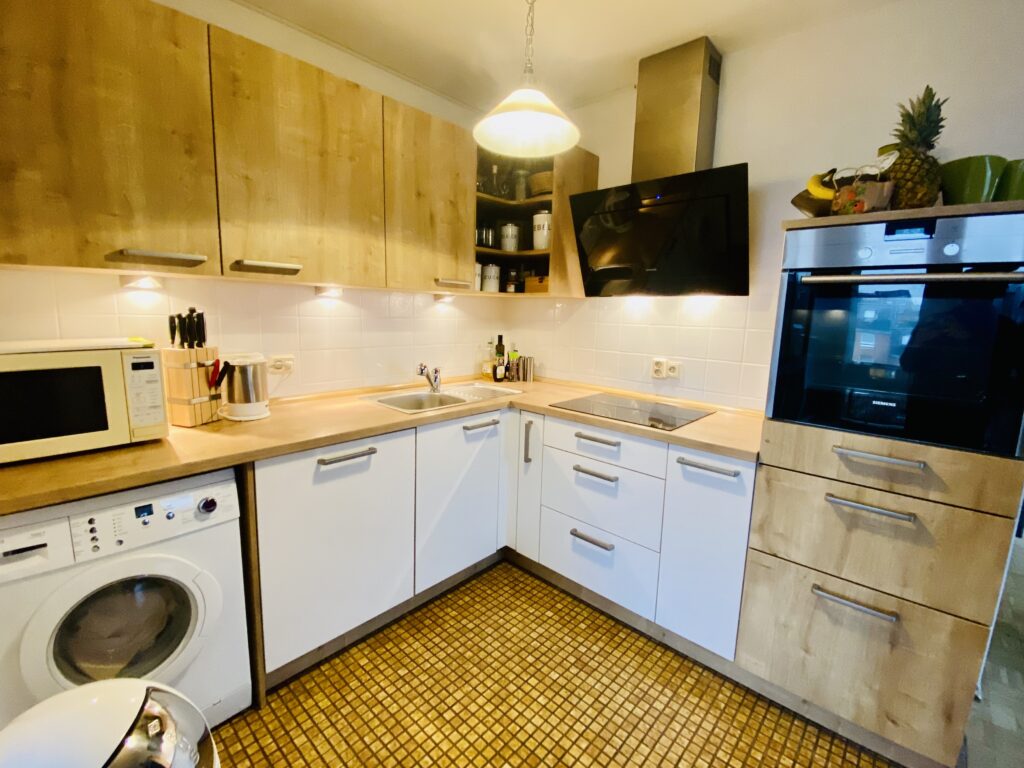
The energy you have to invest in looking after things. That’s why I already found my first “decluttering sessions” incredibly liberating. I mainly sorted out clothes and books. Everything I didn’t really use was given away, sold or donated. There was still plenty of stuff left. But also a lot more space in our 74-square-metre flat at the time.
Together with questioning unnecessary possessions and consumption came another thought: what if, instead of being rich in things, you were rich in time. Getting by with less and living modestly, but saving more money. Not for even more consumption, but to one day live off it. In English there’s a movement called FIRE. Looking back, it turned out to be the perfect mindset for life on a boat. At the time, though, neither of us was even remotely thinking about anything that crazy.
Now it gets serious: decluttering for the move onto the boat
When we later started downsizing radically for life on the boat, reducing things became harder. Items with mainly emotional value were now under scrutiny too. It’s especially difficult when memories are attached. Old photos, letters, children’s books. In the end, we still parted with almost everything. Because, hand on heart [idiom flagged]: how often do you really flip through old children’s books or photo albums? I digitised photos, donated books. And after the initial pain, I still felt a bit freer.
In the end, we also sold a few heirlooms and pieces of furniture we no longer needed, because we no longer had anything to store. We only took a few items with us to our new small flat in eastern Germany, which now serves as our home base when we’re back visiting. Back then we moved to Cologne with a lorry. Now everything fit into a small van.
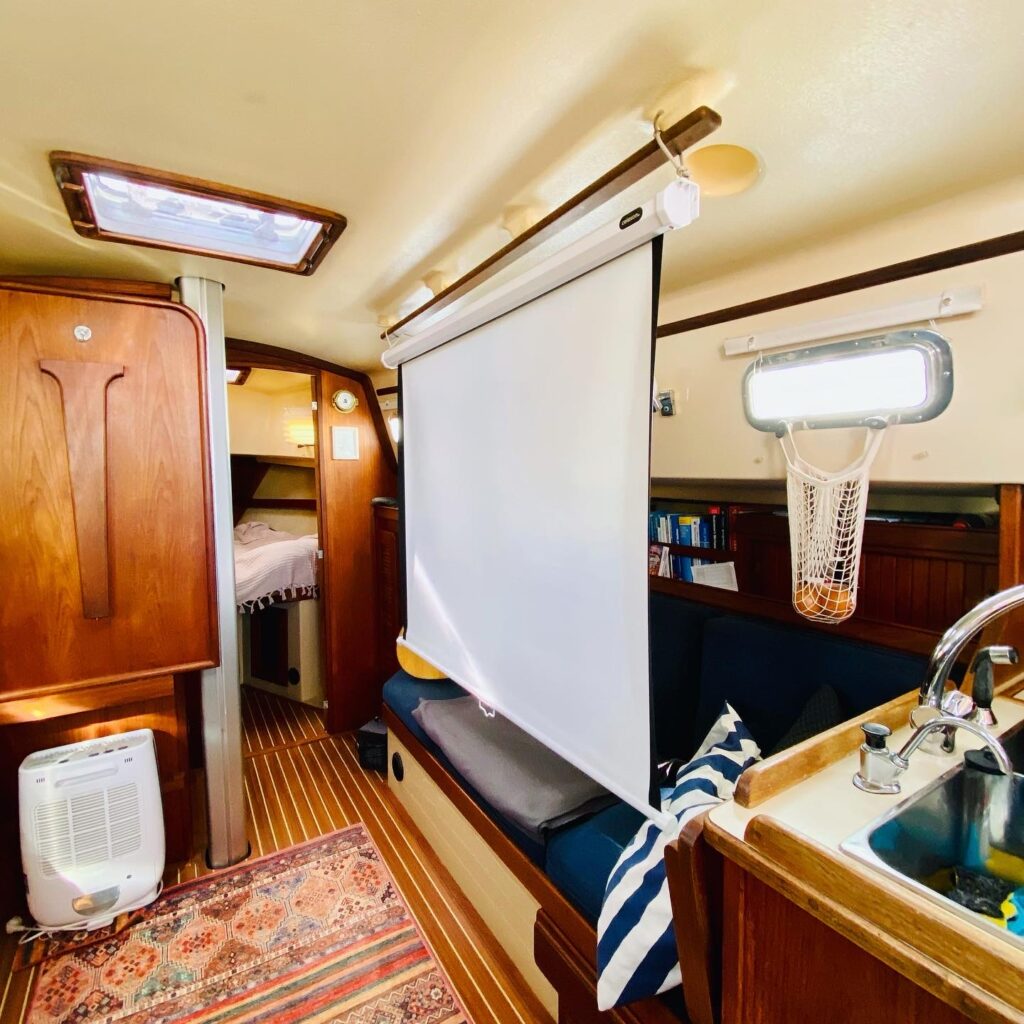
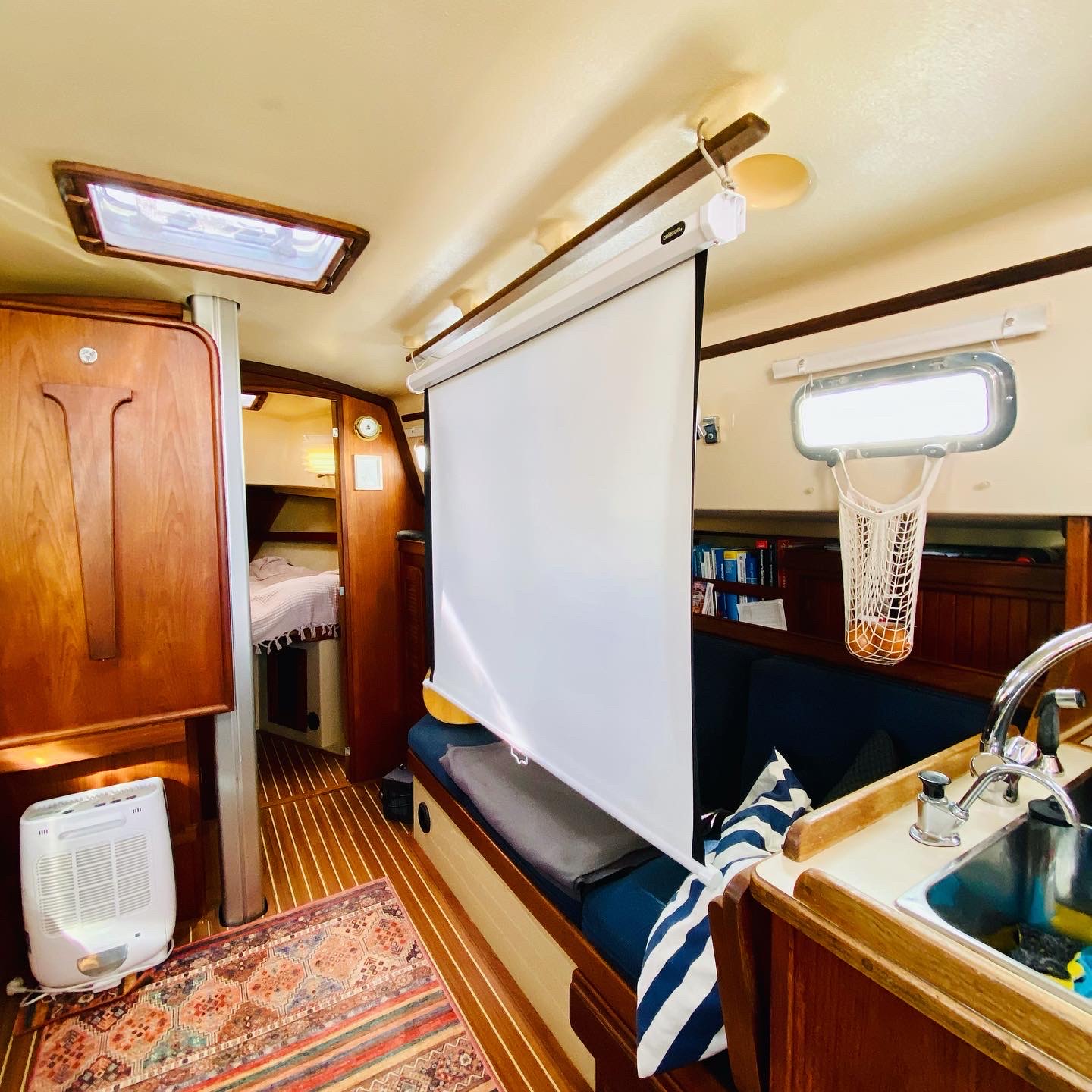
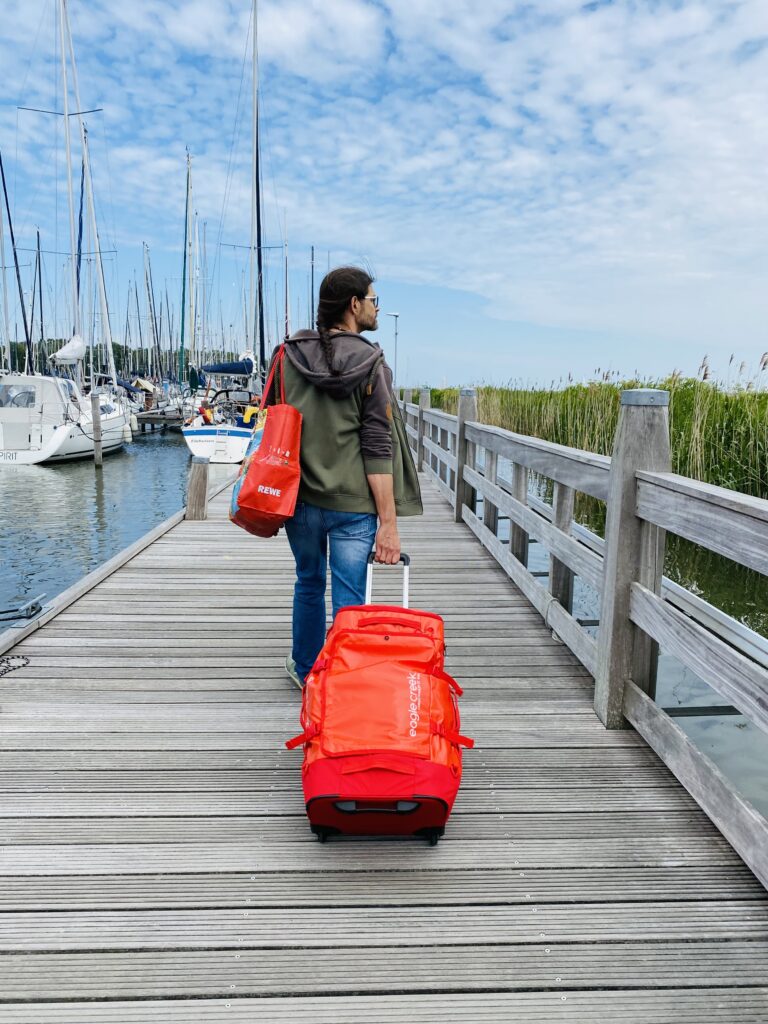
Everything we needed on board we drove to the Netherlands in the boot of our Volvo. And when choosing those things, it once again became clear what you merely manage and what you truly need. Once everything was on the boat, we initially didn’t believe we’d be able to fit it all in. But our little boat is surprisingly big when it comes to storage. And we still have compartments that are empty. And that reassures me immensely. Especially when the rule we set for ourselves — if something comes in, something else has to go — gets broken again.
Minimalism on land versus on a boat
Since living on the boat, we’ve tried to buy multifunctional items. And we pay more attention to quality. Better not to buy the cheapest tools, because they always break exactly when you need them most. We also focus more on quality, especially with clothing and kitchen tools. Because if things last longer, you spend less time having to find and buy replacements.
On a boat, living minimally also means using resources as sparingly as possible. At least that has been and still is our approach. Even though nowadays, with highly efficient solar panels and watermakers, it’s possible to have an almost unlimited supply of electricity and water. For us, it still makes sense to keep an eye on our own resource consumption. Not only because it’s better for the planet, but also because these things cost money to buy and time to maintain. And they take up space on board. With a small boat, you simply have to question every purchase three times and, if in doubt, accept that sometimes you just won’t have something.
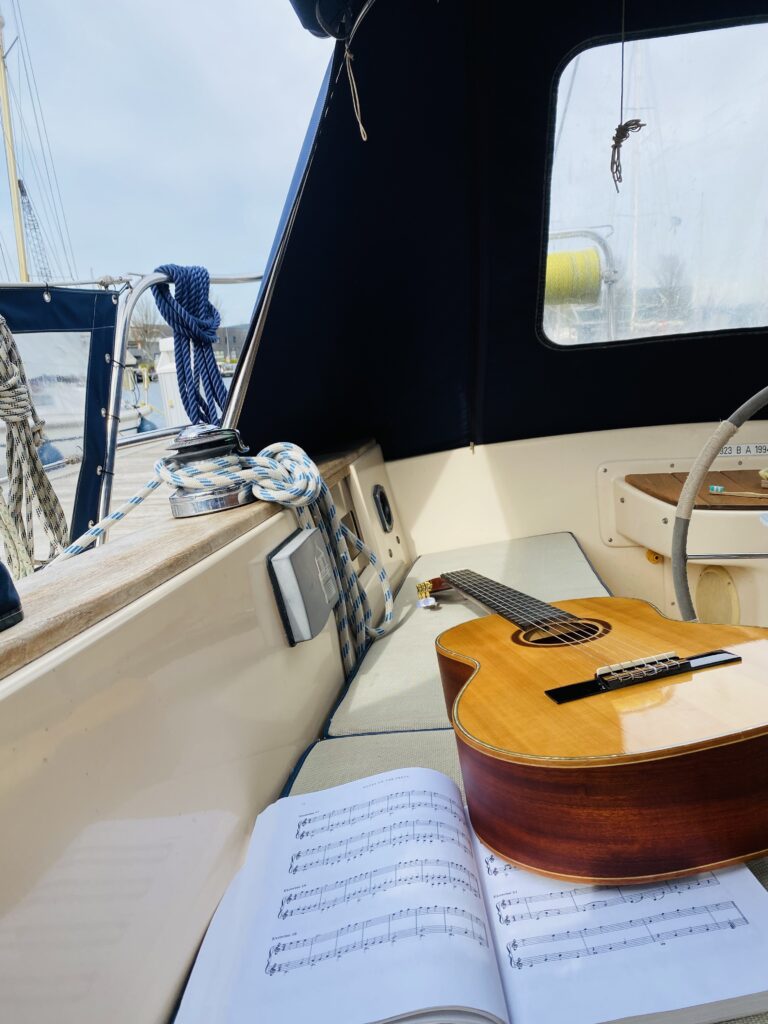
3 things that have (so far) turned out to be unnecessary:
- Sewing machine
- PlayStation
- DSLR camera
3 things we would take again
- Ice skates
- Guitar
- Airfryer
3 things we sometimes miss
- Folding bikes
- Freezer box
- Canoes
Even without life on a boat, it’s worth thinking critically about your own consumption. The one-in-one-out rule or favouring multifunctional items also helps prevent wasting money or buying unnecessary things on land.
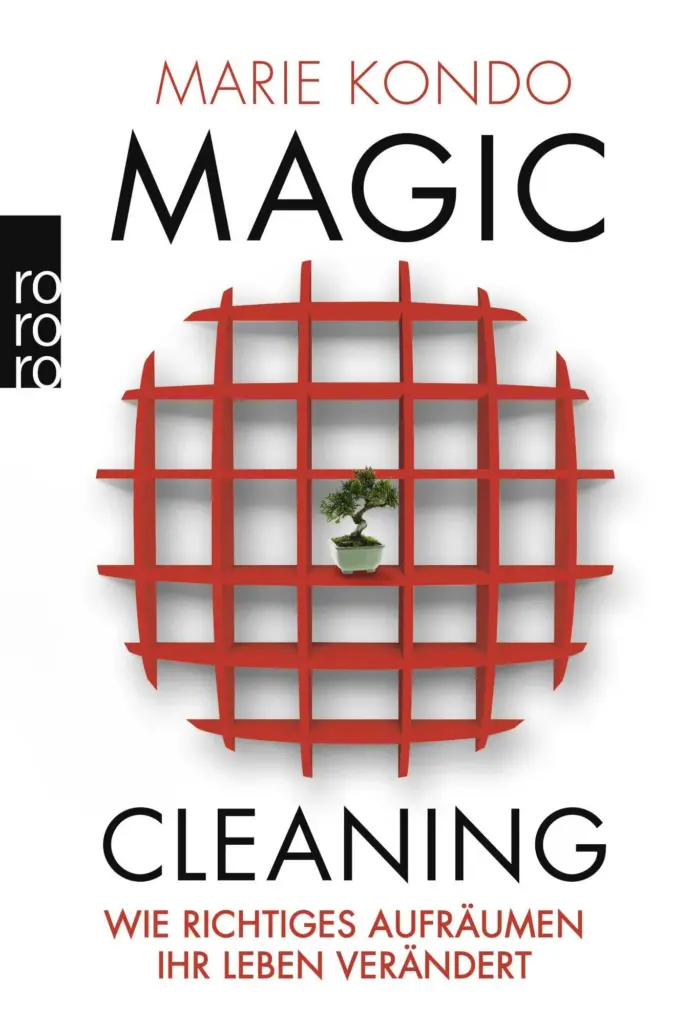
Book tip: Even though I found some aspects of the “decluttering icon’s” approach a bit odd, for example thanking items you throw away, the book quickly got me excited about rigorous decluttering. Not for the process itself, of course, but for the relaxed life with fewer things, of letting go of unnecessary ballast.
Minimalism & freedom – our conclusion
There aren’t really many things we miss when we’re on board rather than on land. Apart from bikes, it’s sometimes the luxury of having your own washing machine or dishwasher. But we get so much in return: a front garden we can choose freely. Sometimes it’s a big city with all its amenities, sometimes untouched nature. And not least, the time to enjoy both.
Affiliate notice: This page contains affiliate links. If you make a purchase through these links, we receive a small commission at no extra cost to you. Thank you for your support!