Life on a sailing boat is a dream for many, but our everyday reality for more than three years: travelling with the wind, living where others go on holiday, anchoring under the stars at night. But what is everyday life really like? What does it cost? And who is this lifestyle actually suited for?
In this article, we’ll take you along – honestly, in detail, and from our own experience.
Is life on a sailing boat even suitable for everyday living?
Instagram often shows the perfect life on board – even on our Insta account you’ll find loads of pictures of beautiful places and perfect sailing days. But is that the reality? It’s often intense, beautiful and adventurous. But sometimes also frustrating, nerve-racking and exhausting.
A typical day on board:
- Get up and make coffee. Nothing works without it.
- If we’re sailing: check the weather, plan the route.
- During the week: work until noon, then…
- Sightseeing instead of after-work beer – or both.
What you need for life on board:
- A feel for technology (fixing things is part of daily life)
- Flexibility (the weather trumps all plans)
- A love of minimalism (less is more)
➡️ Read our first-year experience living on a boat.
What skills should you bring along?
Many people think: “I need a sailing licence first.” But that’s only half the story. Beyond sailing itself, you’ll need a lot more – and ideally, some of it already suits your personality. Otherwise, you’ll learn it along the way. And learning, after all, is one of the most important parts of this lifestyle. That’s one of the things we love about it: regularly stepping out of the comfort zone.
So you should:
- Understand the sailing basics: Learn this at a sailing school or by joining a crew.
- Be patient and good at improvising: bring it along or, like me, learn it on the go.
- Stay curious and open-minded: practise that daily.
In Germany, only two boating licences are actually required: for coastal waters under German jurisdiction, the Sportbootführerschein See, and for inland waters (rivers and lakes), the Sportbootführerschein Binnen. When chartering, the SKS (Sportküstenschifferschein) is sometimes also required. Additionally, if you have them on board: radio licences (for radios) and pyro licences (for signal flares).
Tip: If you’re unsure whether sailing is even for you, start by joining a trip as a crew member. There are several Facebook groups where you can find opportunities, for example “Hand gegen Koje”. For women, I can highly recommend our women’s sailing group.
Which boat is suitable for living on board?
The big questions:
- Monohull or catamaran?
- Comfort or sailing performance?
- New or used?
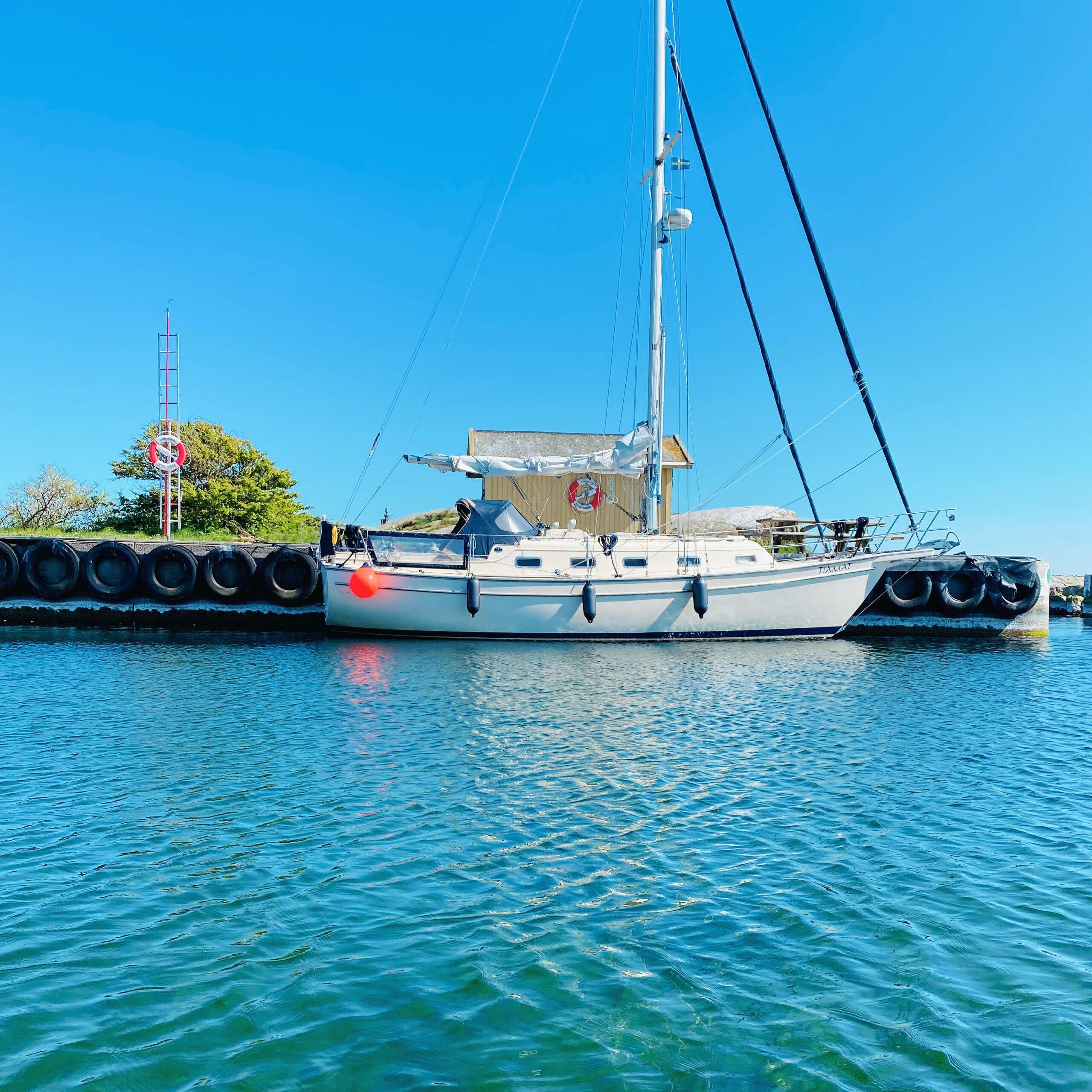
We live on an 11-metre monohull. Why? Because:
- It’s cheaper to buy and maintain than a larger boat.
- Easier to handle in small harbours.
- Solid sailing performance, forgiving for beginners.
➡️ Read our thoughts on buying a boat to live aboard.
Working while sailing – is that really possible?
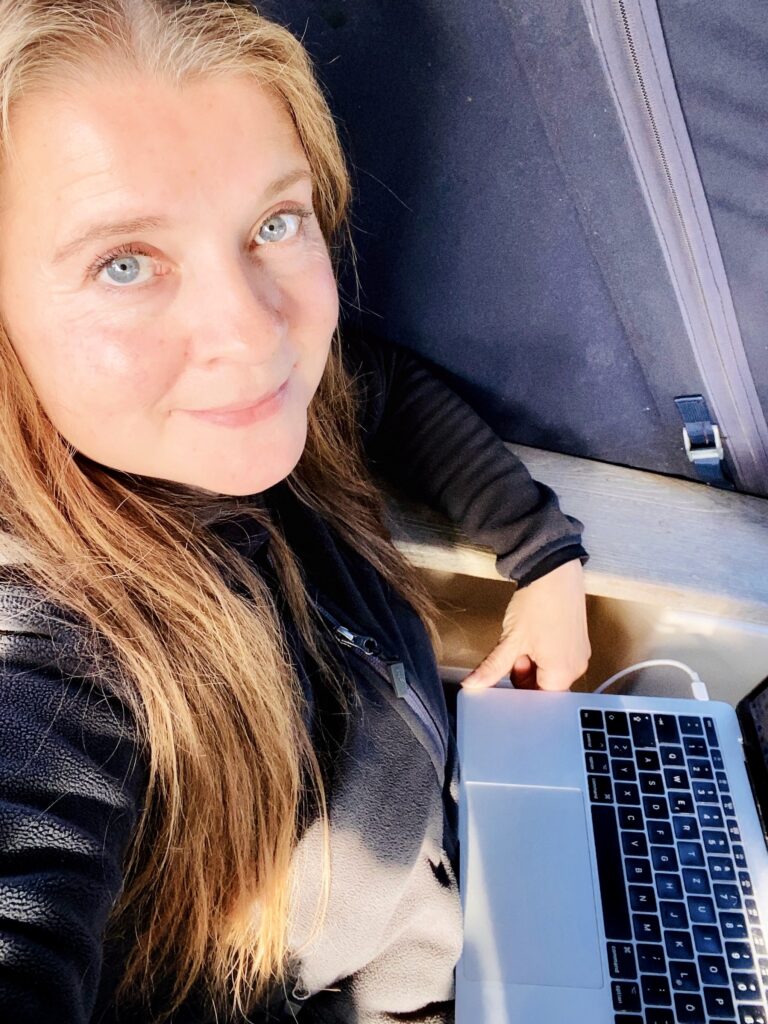
Yes – if you’re organised. And ideally – like us – have an employer who supports this, or you’re self-employed.
Our jobs: Product manager & software developer (employed) and web developer (self-employed)
Our setup:
- LTE router with local SIM card (we consciously decided against Starlink.)
- Laptops (MacBook Pro, Lenovo ThinkPad with Debian Linux)
- Workspace inside the boat and/or in the cockpit (not ergonomic, but with the best view)
What you need:
- A stable internet connection
- Self-discipline
- Good communication skills
➡️ You’ll find our complete guide to remote working from a boat here.
How much does life on a sailing boat cost?
The classic question. And as always: it depends.
Our rough monthly overview:
| Category | Cost (Ø monthly) |
| Berths | 300 € |
| Food | 500 € |
| Diesel & electricity | 100 € |
| Insurance | 50 € |
| Maintenance & spare parts | 450 € |
| Internet & media | 50 € |
| Restaurants & museums | 50 € |
| Total | 1,500 € |
→ Ø 1,500 € for 2 people
➡️ We give a more detailed look in our article “What does life on a boat really cost?”

The biggest lessons from life at sea
What we love:
- The freedom and rhythm of nature
- Living with less – the essentials only
- The people we meet along the way
What sometimes gets on our nerves:
- Bureaucracy when crossing borders
- Constant small repairs
- Weather changes that ruin plans
What we would never change again:
- Remote work with part-time jobs
- Embracing and enjoying minimalism
- Combining travel and work for a better work-life balance
What we still want to do differently:
- Work less
- Be more self-sufficient with more solar power & a watermaker
- Maybe a bigger boat?
Conclusion – who is life on a sailing boat really suited for?
This lifestyle isn’t for people who love control and fixed structures to feel comfortable. And if you need to have close friends and family around you regularly, the nomadic life probably won’t make you happy either. But it’s perfect for anyone seeking adventure, independence and a connection with nature.
If you enjoy embracing new experiences, stepping out of your comfort zone and testing yourself, then sailing might be right for you. If you can sail – or are willing to learn – and are ready to let go of life on land, then the boat life might just be your future.